

President Bola Ahmed Tinubu has continued to receive public commendation from political allies over his economic reform agenda, even as Nigeria grapples with persistent insecurity, communal violence, and rising concerns about governance challenges across several states.
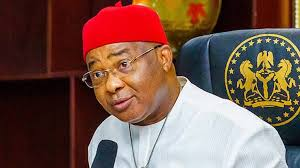
In one of the latest political endorsements, Imo State Governor Hope Uzodinma described Tinubu as the “founder of a new Nigeria,” crediting the administration’s policy direction with stabilising what he called a country previously on the brink of systemic collapse. The remarks were made in Owerri during a public engagement on Friday, May 29, 2026, where the governor said federal reforms had begun yielding fiscal relief for states through improved revenue allocations and restructuring of economic policy frameworks.
Uzodinma’s comments align with a broader pattern of support from key political figures within the ruling All Progressives Congress, who have repeatedly pointed to subsidy removal, foreign exchange unification, and fiscal adjustments as necessary but difficult reforms. However, economic analysts continue to note that these measures have also contributed to inflationary pressures, higher transport costs, and reduced purchasing power for many households, particularly in urban centres.
While political support for the administration’s reforms continues, Nigeria’s security landscape remains volatile across multiple regions. In Katsina State, at least ten residents were killed in Kiliya community in Dutsin-Ma Local Government Area following a reprisal attack linked to earlier confrontations between local security volunteers and armed groups. Local accounts indicate that the attack occurred on the evening of May 29, 2026, when armed men stormed the community, returning again the following morning to disrupt burial rites of victims. The incident has intensified calls for increased military deployment in rural northern communities where banditry remains entrenched.
In Osun State, two police officers were killed during a traffic enforcement operation when a motorist allegedly attempting to evade arrest struck them along the Osogbo–Ikirun axis. Police authorities confirmed the arrest of the suspect shortly after the incident on May 29, 2026, while describing the deaths as a major blow to operational personnel engaged in highway security duties during the Sallah travel period.
Further south in Delta State, police operatives arrested two suspected armed robbers during coordinated intelligence-led operations in Asaba and surrounding areas. Authorities recovered a locally fabricated firearm, live ammunition, and sharp weapons believed to have been used in multiple robbery incidents. The arrests, confirmed on May 29, 2026, form part of intensified security sweeps across urban centres in response to rising reports of violent crime.
In Katsina State again, separate police operations led to the arrest of six individuals accused of violent disruption during Sallah celebrations in Kiliya village under Musawa Local Government Area. Security officials said the suspects allegedly attacked residents with dangerous weapons, causing injuries and panic. The incident occurred on May 27, 2026, with arrests confirmed two days later as authorities moved to stabilise the community ahead of the festive period.
Meanwhile, in Rivers State, civil society organisations and education stakeholders staged protests in Ibadan, Oyo State, demanding urgent rescue efforts for schoolchildren and teachers abducted in Oriire Local Government Area. The victims were taken on May 15, 2026, during coordinated attacks on multiple schools in the Ogbomoso axis. Protesters on May 29, 2026, urged federal and state authorities to intensify rescue operations, warning that prolonged captivity was worsening public anxiety over school safety nationwide.
In Ebonyi State, a major legal proceeding unfolded as 33 suspects were arraigned before a High Court in Abakaliki over their alleged involvement in killings linked to a long-standing communal conflict in Okporojo community, Oso Edda. The violence, which occurred earlier in January 2026, left multiple residents dead and deepened tensions between neighbouring communities. The case remains one of the most significant communal violence prosecutions currently underway in the South-East.
Separately, the Nigerian Army issued warnings against compliance with directives from separatist-linked groups calling for memorial observances in parts of the South-East, insisting that such instructions lack legal authority and could threaten public order. The statement reflects ongoing tensions in the region, where security agencies continue to monitor activities associated with separatist agitation and civil unrest.
Across the country, federal agencies have also intensified warnings over cyber fraud and impersonation schemes. The Nigeria Customs Service recently alerted the public to a fake Facebook page impersonating its operations, urging citizens to rely only on verified communication channels. Authorities say such digital scams remain a growing challenge as fraudsters increasingly exploit government branding to deceive citizens.
Security analysts note that the convergence of economic hardship, political tension, and fragmented security threats continues to place pressure on national institutions. While government officials point to ongoing reforms and operational gains, incidents across Katsina, Osun, Delta, Ebonyi, and Oyo states underscore the uneven security realities facing different regions of the country.
As of late May 2026, authorities at federal and state levels continue to coordinate responses to both violent crime and communal unrest, even as political leaders maintain confidence in the administration’s broader reform trajectory.
📩 Stone Reporters News | 🌍 stonereportersnews.com
✉️ info@stonereportersnews.com | 📘 Facebook: Stone Reporters News | 🐦 X (Twitter): @StoneReportNew | 📸 Instagram: @stonereportersnews
Add comment
Comments