

Reported by: Ijeoma G | Edited by: Oravbiere Osayomore Promise.
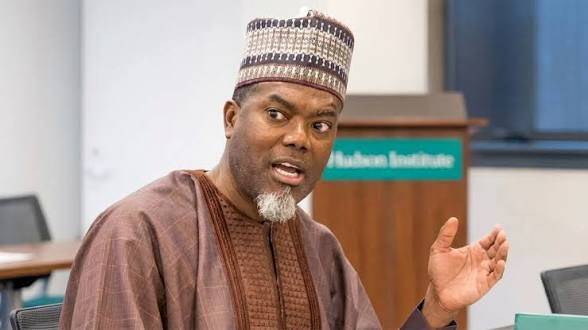
Reno Omokri, Nigeria’s ambassador‑designate to Mexico, has sparked fresh debate over the country’s worsening security crisis by declaring that it is “not practicable” for the Federal Government to guard every school in the nation, following the mass abduction of pupils and teachers in Oyo State. Reacting to the May 15 attack on three schools in Oriire Local Government Area, which left at least 46 people – including seven teachers and 39 students – in captivity, Omokri took to his X handle on Saturday, May 30, 2026, to frame the tragedy within what he described as a realistic assessment of Nigeria’s security capacity.
“Nigeria has approximately 300,000 schools and fewer than 300,000 soldiers,” Omokri wrote. “It is not practicable for the Federal Government to guard every school in Nigeria.” He argued that the sheer scale of the country’s educational infrastructure makes it impossible for federal forces alone to provide adequate protection, a reality he said underscores the urgent need for state police. “That is why President Bola Tinubu proposed State Police and asked the Governors to get on board. Only the State Police can secure Nigeria’s 300,000 schools,” he added.
The Oyo abduction, which occurred on May 15, involved a coordinated assault by armed bandits on Baptist Nursery and Primary School, Yawota; Community Grammar School, Ahoro‑Esinele; and L.A. Primary School, Esiele. The attackers killed an assistant headmaster and a commercial motorcyclist before abducting the victims. Among the 46 captives is a two‑year‑old toddler, Christianah Akanbi. The principal of Community High School, Mrs. Alamu Folawe, and several other teachers remain in captivity, along with dozens of pupils. Days after the attack, a viral video showed the beheading of a mathematics teacher, Michael Oyedokun, sparking national outrage. Rescue operations have continued, with the Oyo State Police Command deploying tactical teams, but as of May 30, the victims had not been freed.
Omokri, who served as a former aide to ex‑President Goodluck Jonathan, urged Nigerians to redirect their criticism away from the federal government and toward state governors, whom he described as constitutionally responsible for local security. “Rather than criticise President Bola Tinubu over the Ogbomosho Abduction, ask your Governor to get on board with the State Police initiative of the Tinubu Administration,” he wrote. He argued that state governments have a primary duty to secure schools within their territories and that increased allocations from the Federation Account have strengthened their financial capacity to do so. Omokri also cited the Lagos State security model as an example of what effective grassroots policing can achieve. He recalled that a community‑based security structure, later legalised in 2016, laid the foundation for intelligence gathering and crime prevention that has made Lagos one of the safest states in Nigeria.
The ambassador‑designate cautioned against the spread of emotionally driven criticism, warning that persistent attacks on the president, his administration and his supporters only deepen national divisions and play into the hands of those who benefit from unrest. “Terrorism thrives on public discord,” he said, adding that some individuals deliberately exploit national crises to weaken unity and fuel fragmentation. He maintained that tackling insecurity requires a shift from blame‑casting to practical, collaborative solutions involving federal authorities, state governments, local communities and school administrators.
Omokri’s remarks, however, have drawn fierce backlash from civil society groups, parents and security experts, who view his comments as an attempt to excuse the administration’s security failures. Critics argue that while the logistical challenge of securing thousands of schools is real, the government’s primary constitutional duty remains the protection of lives and property. Parents of the abducted children have expressed outrage that government officials enjoy heavily armed, state‑funded security details while the safety of ordinary students is dismissed as a statistical impossibility. Many have accused pro‑government commentators of gaslighting a traumatised nation, pointing out that mass abductions penetrating deep into the South‑West demonstrate a severe failure of the national intelligence and defence network.
Despite the public anger, Omokri insisted that education security falls largely under the purview of state governments and that expecting the federal government to physically protect every school in a country as large as Nigeria is unrealistic. He called on school owners, local communities and security stakeholders to play active roles in protecting educational institutions, arguing that security should be a shared responsibility rather than a burden placed solely on the central government.
As of Saturday, May 30, the 46 abducted pupils and teachers remain in captivity. The Oyo State Police Command has continued rescue operations, with the Inspector‑General of Police deploying additional tactical assets to the area. Governor Seyi Makinde has met with families of the victims, assuring them that both the federal and state governments are working tirelessly to secure their release. But for the families waiting in anguish, Omokri’s call for a “practical” reassessment of security capacity has offered little comfort. As one parent put it on social media: “They tell us they cannot guard our schools, yet they guard themselves with billions. Where does that leave our children?”
📩 Stone Reporters News | 🌍 stonereportersnews.com
✉️ info@stonereportersnews.com
📘 Facebook: Stone Reporters News
🐦 X (Twitter): @StoneReportNew
📸 Instagram: @stonereportersnews
Add comment
Comments