

Reported by: Ijeoma G | Edited by: Oravbiere Osayomore Promise.
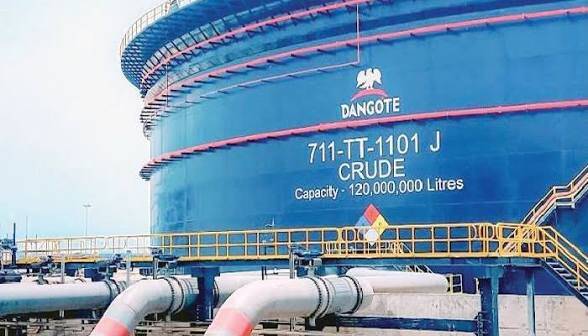
The Dangote Petroleum Refinery & Petrochemicals has announced a fresh reduction in its ex‑depot prices for Premium Motor Spirit (PMS) and Automotive Gas Oil (AGO), cutting the cost of petrol by ₦25 to ₦1,250 per litre and diesel by ₦100 to ₦1,700 per litre. The move, which took effect on Saturday, 30 May 2026, marks the latest adjustment by Africa’s largest refinery as it responds to softening global crude prices and intensifies competition in Nigeria’s deregulated downstream fuel market.
Anthony Chiejina, the Group Chief Branding and Communications Officer of Dangote Group, confirmed the development in a statement, saying the refinery had reduced its gantry price for PMS from ₦1,275 to ₦1,250 per litre and AGO from ₦1,800 to ₦1,700 per litre. The downward revision, which amounts to a 2 per cent reduction for petrol and a 5.6 per cent cut for diesel, was attributed largely to the recent decline in international crude prices. Brent crude was trading at about $91 per barrel on the morning of the announcement, while West Texas Intermediate stood at roughly $87 per barrel, down from the higher levels that had pushed fuel costs up earlier in the year. “We have reduced our PMS price from ₦1,275 to ₦1,250 per litre and AGO from ₦1,800 to ₦1,700 per litre,” Chiejina told newsmen, adding that the adjustment reflects the refinery’s continued commitment to making refined products more affordable and supporting economic activities across the country.
The price cut comes amid extraordinary volatility in Nigeria’s downstream sector. Since the refinery began phased operations, it has repeatedly adjusted its ex‑depot tariffs in response to global oil market gyrations driven by geopolitical tensions in the Middle East, including the US‑Iran conflict and the disruption of shipping lanes through the Strait of Hormuz. A detailed analysis by Leadership newspaper shows that Dangote Refinery changed its petrol price 15 times between 1 March and 30 May 2026 – six increases and three decreases in March alone, followed by two more hikes in April and four adjustments in May. The price journey started on 1 March when the refinery raised petrol from ₦774 to ₦874 per litre; by mid‑March, prices had surged above ₦1,200 and briefly touched a high of ₦1,350 in early May before the latest reduction brought them back to ₦1,250.
Industry observers expect the new ex‑depot rates to influence pump prices across the country, although many filling stations had not immediately adjusted their retail tariffs as of Sunday. Petrol was still selling above ₦1,350 per litre in several major cities, and diesel prices remained elevated, reflecting transportation costs, taxes and the margins charged by independent marketers. Nonetheless, the reduction is likely to ease some of the burden on businesses that rely heavily on diesel for power generation and logistics, as well as on households that have been squeezed by high fuel costs.
The Dangote refinery, which has a nameplate capacity of 650,000 barrels per day, has steadily expanded its supply to domestic distribution channels in recent years. Since coming on stream, it has been a key driver of Nigeria’s efforts to reduce its dependence on imported refined products. The company said the latest price review aligns with its broader strategy to improve supply efficiency, deepen local refining and provide cost relief to consumers. “The price review comes amid the refinery’s continued efforts to improve supply efficiency, deepen domestic refining and provide cost relief to consumers and businesses that depend heavily on petroleum products for transportation, power generation and industrial operations,” the company stated.
The development also comes on the heels of a sovereign credit rating upgrade by S&P Global Ratings, which cited the operational ramp‑up of the Dangote refinery as a factor supporting Nigeria’s balance of payments and economic resilience. S&P upgraded Nigeria’s long‑term foreign and local currency ratings to “B” from “B‑”, noting that “significant refining capacity is now also online; Dangote Industries Ltd.’s large‑scale refinery and petrochemical complex has ramped up to near its maximum capacity of 650,000 barrels per day”.
For consumers, the immediate effect of the price cut may be modest, given that retail pump prices also reflect distribution margins, taxes and other levies. However, the reduction is a welcome signal after months of steep fuel price hikes that followed the outbreak of war in the Middle East. The downward revision of diesel, in particular, could provide some relief to manufacturers, transporters and agricultural operators who have been struggling with high energy costs.
As Nigeria’s downstream fuel market evolves, Dangote Refinery’s pricing decisions are increasingly setting the benchmark for other players in the industry. With the latest cut, the refinery has once again demonstrated its ability to adjust quickly to market conditions, a flexibility that could help stabilise the domestic fuel supply and temper the kind of wild price swings that have characterised the sector in recent years. Whether the reduction will be sustained depends largely on future trends in global crude prices and the continued resolution of geopolitical tensions in the oil‑rich Gulf region.
📩 Stone Reporters News | 🌍 stonereportersnews.com
✉️ info@stonereportersnews.com | 📘 Facebook: Stone Reporters News | 🐦 X (Twitter): @StoneReportNew | 📸 Instagram: @stonereportersnews
Add comment
Comments