

Reported by: Ijeoma G | Edited by: Oravbiere Osayomore Promise.
Nigeria's economic and diplomatic relations with the United Arab Emirates have entered a decisive new phase as First Abu Dhabi Bank (FAB), the UAE's largest lender by assets, officially opens its representative office in Lagos, a move that instantly repositions Nigeria as the strategic anchor for the bank's sub-Saharan African expansion and sets the stage for an unprecedented deepening of bilateral trade and investment flows. Announced during the inaugural Investopia Africa conference at the Eko Convention Centre in Lagos on Monday, 2 February 2026, the bank’s Group Head of Wholesale Banking, Martin Tricaud, confirmed that the new Lagos office—which will be the bank’s 22nd country of operation—will not only focus on Nigeria but will function as a regional representative office covering the entire West African region, recognising Lagos’ growing role as a financial hub. The decision was described by Tricaud as the outcome of “a long reflection and detailed study,” driven by Africa’s demographic trajectory—1.4 billion people today projected to reach 1.8 to 2 billion in the coming decades—and the continent’s economic growth rate of 6 to 8 percent annually, which outpaces many developed markets.
The new Lagos office is the culmination of a carefully sequenced engagement that began with the bank’s deepening involvement in Nigeria’s energy and infrastructure sectors. FAB had already demonstrated its commitment by partnering with the African Export-Import Bank (Afreximbank) to provide $1.126 billion in financing for Phase 1, Section 2 of the Lagos–Calabar Coastal Highway, one of Nigeria’s flagship infrastructure projects. The financing structure utilised a credit insurance wrapper from the Islamic Development Bank to manage sovereign risk, a model that analysts believe could serve as a blueprint for future Gulf investments in the region. Tricaud revealed that he visited the highway construction site months ago and was “very impressed with the speed of construction and the impact it will have on the local economy”. The entry of FAB aligns with the Comprehensive Economic Partnership Agreement (CEPA) finalized between Nigeria and the UAE in January 2026, which eliminates tariffs on over 7,000 Nigerian product lines.
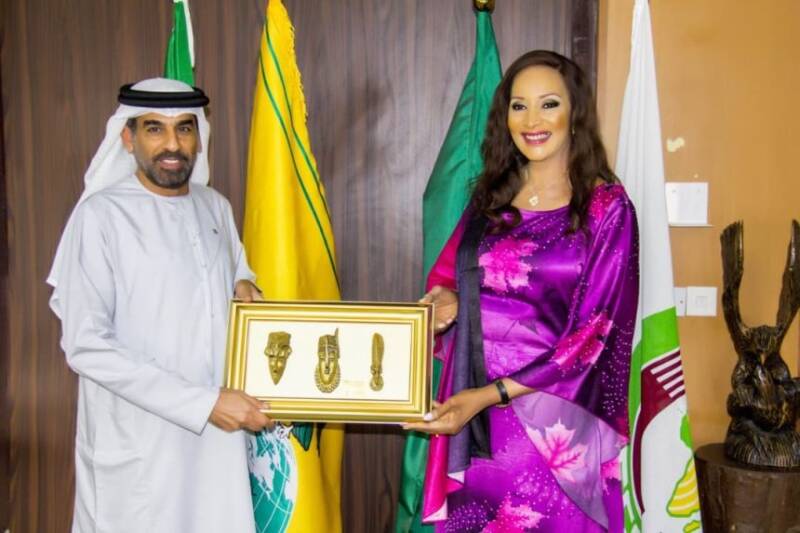
The bank’s move is already yielding concrete results. The UAE Ambassador to Nigeria, Salem Saeed Al-Shamsi, announced during a separate visit to the Minister of Foreign Affairs, Ambassador Bianca Odumegwu-Ojukwu, in Abuja that non-oil trade between the two nations grew from $4.3 billion in 2024 to $5 billion in 2025, and is projected to reach approximately $8 billion by 2027 if current trends are sustained. The ambassador further disclosed that Etihad Airways, the UAE’s national carrier, will commence flight operations to Abuja later this year, while visa restrictions for Nigerians have been significantly eased, with more than 15,000 Nigerians visiting the UAE in the past year. Odumegwu-Ojukwu welcomed the progress, stating that “a lot of the issues raised when I was Minister of State for Foreign Affairs have been resolved in less than a year, especially regarding visas”. The bank’s Lagos office is expected to focus on business development, client engagement, market intelligence, trade finance coordination, and structured financing for Nigerian and regional clients, rather than retail banking. Industry observers note that this move reflects a broader trend of renewed interest by Middle Eastern financial institutions in Africa, driven by expanding trade links, energy partnerships, and investment diversification. The office will position FAB closer to key decision-makers in sectors such as energy, infrastructure, telecommunications, manufacturing, aviation, and technology, where the bank already has strong global expertise. For Nigeria, the entry of a major global bank at a time of ongoing fiscal and monetary reforms is seen as a vote of confidence in the country’s economic trajectory and its ability to attract international capital into infrastructure, with Tricaud himself noting that the coastal highway financing “is just the beginning” and that “there will be much more to come in the near future, particularly in infrastructure; roads, highways and related projects”.
📩 Stone Reporters News | 🌍 stonereportersnews.com
✉️ info@stonereportersnews.com
📘 Facebook: Stone Reporters News
🐦 X (Twitter): @StoneReportNew
📸 Instagram: @stonereportersnews
Add comment
Comments