

Reported by: Ijeoma G | Edited by: Oravbiere Osayomore Promise.
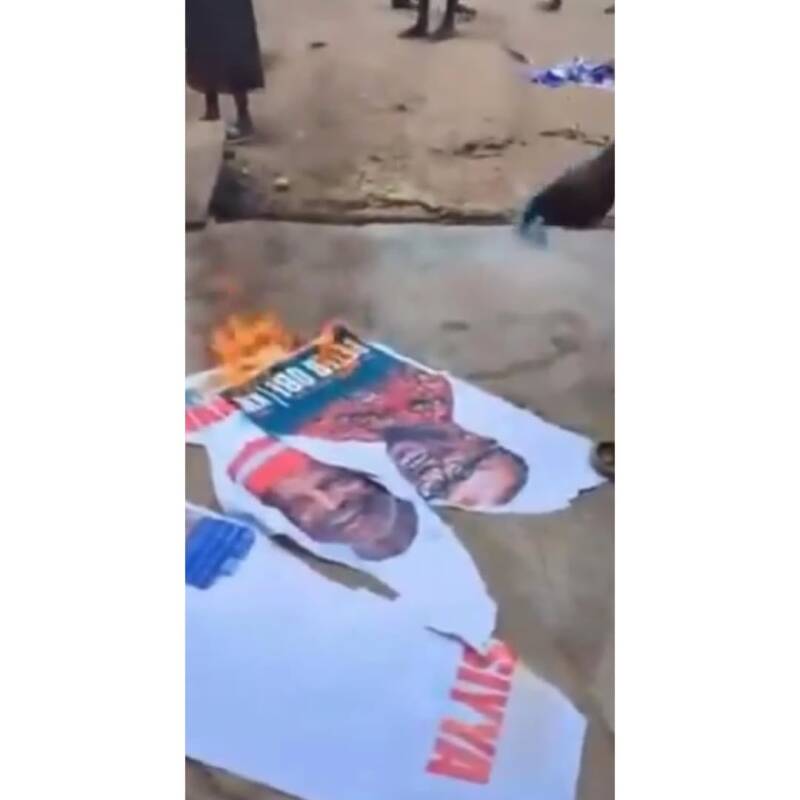
Barely 48 hours after the Nigeria Democratic Congress (NDC) unveiled former Anambra State governor Peter Obi as its presidential candidate and former Kano State governor Rabiu Musa Kwankwaso as his running mate, a violent backlash erupted in the heart of the North‑West, where angry youths in Ungogo Local Government Area of Kano State set campaign posters of the duo ablaze, pulled the local NDC chairman off a moving motorcycle and chased him through the streets, shouting “Bamayi! Bamayi!” – a Hausa expression meaning “We don’t want it” or “We reject it.”
The incident occurred on Monday, 1 June 2026, sending shockwaves through the political landscape just days after the NDC formally affirmed Obi as its flagbearer during a special convention in Abuja on Saturday, 30 May. Shortly after securing the ticket, Obi announced Kwankwaso, a towering political figure in Kano and leader of the influential Kwankwasiyya movement, as his running mate – a move that political analysts had described as a strategic masterstroke to break into the northern electorate.
But the reception in Ungogo, a local government area within Kwankwaso’s own political stronghold, was anything but welcoming. A viral video circulated widely on social media showed a group of youths gathered around campaign posters bearing the images of the two politicians, chanting slogans as they set them on fire. In a separate clip, the NDC chairman for Ungogo LGA, Bilyaminu Bachirawa, was seen being dragged from a moving motorcycle by a hostile crowd that pursued him while screaming. Reports indicated that Bachirawa narrowly escaped being lynched as the situation quickly escalated.
“The youths were heard repeatedly shouting ‘Bamayi! Bamayi!’ – rejecting both the ticket and perhaps the alliance itself,” a source familiar with the unrest told Daily Post. The exact trigger for the demonstration remained unclear as of Tuesday, 2 June 2026, but observers linked the violence to growing disaffection among some Kwankwasiyya loyalists who view the former governor’s decision to accept a vice‑presidential slot as a demotion, particularly in a state where his political machinery has dominated local elections for years. Others pointed to the broader political realignment that brought Obi and Kwankwaso together, which had already unsettled some northern politicians who saw the ticket as a potential threat to President Bola Tinubu’s re‑election campaign.
The attack on the NDC’s own chairman was particularly shocking: Bachirawa was not a rival party official but a ranking member of the party he was supposed to be representing. The footage showed him clinging to the moving motorcycle as his assailants grabbed at his clothing, attempting to pull him off. At one point, he lost his grip and tumbled onto the road, but managed to scramble to safety as bystanders intervened. No arrests had been reported as of Tuesday morning, and the Kano State Police Command had not issued an official statement on the incident.
The Obi‑Kwankwaso ticket emerged after both politicians quit the African Democratic Congress (ADC)‑led opposition coalition in May, citing internal disagreements and legal disputes. The NDC, a younger party with a leaner structure, gambled that the combined popularity of Obi’s “Obidient” movement and Kwankwaso’s Kwankwasiyya network would create a formidable opposition force capable of challenging the ruling APC in 2027. However, the Kano protest suggests that the ticket may face resistance not only from rival parties but also from within the political base it hoped to inherit.
Political analysts noted that while Kwankwaso remains a dominant figure in Kano politics, not all of his followers are comfortable with him playing a supporting role. “Kwankwasiyya followers see their leader as presidential material, not as a vice‑presidential candidate,” a Kano‑based analyst told our reporter. “For them, accepting the number‑two slot is a step down, and some are expressing that discontent in the crudest possible way.”
By Tuesday, 2 June 2026, neither Peter Obi nor Rabiu Kwankwaso had publicly reacted to the incident. The NDC leadership in Abuja had also not issued an official statement, while the Kano State Police Command remained silent on whether any arrests had been made. The burning of campaign materials and the attack on a party chairman have added a volatile new dimension to the 2027 election cycle, underscoring the fierce resistance that even the most strategic political alliances can face at the grassroots level.
As the sun set over Ungogo, the charred remnants of posters bearing the faces of Obi and Kwankwaso lay scattered on the streets – a stark reminder that in Nigerian politics, a ticket is not truly sealed until it has survived the fire of its own constituency.
📩 Stone Reporters News | 🌍 stonereportersnews.com
✉️ info@stonereportersnews.com
📘 Facebook: Stone Reporters News
🐦 X (Twitter): @StoneReportNew
📸 Instagram: @stonereportersnews
Add comment
Comments