

Reported by: Ijeoma G | Edited by: Oravbiere Osayomore Promise.
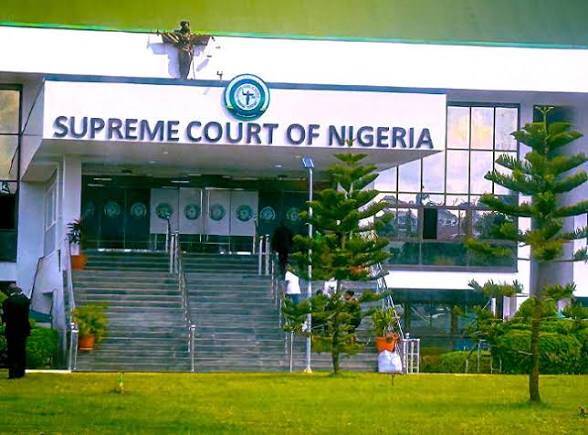
The Supreme Court has set aside an order of the Court of Appeal freezing the assets of Neconde Energy Limited, Nestoil Limited and two other entities over an alleged $1.1 billion indebtedness to FBNQuest Merchant Bank Limited and First Trustees Limited. In a unanimous judgment delivered on Monday, June 1, 2026, a five‑member panel of the apex court held that the appellate court exceeded its constitutional powers by granting an ex parte application that effectively restored a freeze on the companies’ assets and operations.
Justice Stephen Adah, who delivered the lead judgment, criticised the Court of Appeal for assuming jurisdiction over a matter that was not properly before it and for issuing injunctive orders against Neconde and Nestoil when the case was still pending before the Federal High Court in Lagos. The Supreme Court further accused the appellate court of misusing the judicial process, particularly by granting a stay of proceedings in the ongoing trial court case. Describing the situation as a “judicial tragedy,” the apex court warned that the practice of granting far‑reaching ex parte reliefs, which has become prevalent in some trial courts, must not be permitted to extend into appellate proceedings.
The dispute arose from debt‑recovery proceedings initiated by a consortium of lenders, including FBNQuest Merchant Bank and First Trustees, over financing arrangements linked to oil assets and operations managed by the affected companies. In October 2025, the Federal High Court in Lagos granted an ex parte Mareva injunction freezing the companies’ assets, bank accounts and shares across more than 20 financial institutions. However, Neconde and Nestoil challenged the order, arguing that it automatically lapsed after 14 days under the Federal High Court Civil Procedure Rules once an application to discharge it was filed.
In November 2025, Justice Daniel Osiagor of the Federal High Court ruled that the ex parte order had expired by operation of law and was no longer subsisting. Despite that decision, the Court of Appeal later granted an interim “restorative” injunction that returned control of Nestoil’s assets and operations to a receiver‑manager appointed by the banks, and also set aside actions taken by the companies following the Federal High Court’s ruling. The Court of Appeal further issued an order freezing the assets of the oil‑servicing firms pending the hearing of the substantive suit.
In its judgment, the Supreme Court held that the mere filing of a Notice of Appeal does not automatically confer jurisdiction on the appellate court, and that the Court of Appeal had no authority to entertain the ex parte application while the substantive matter was still pending before the trial court. The apex court described the ex parte order as “unwarranted, uncalled‑for, frivolous and vexatious,” and stressed that such orders must be reserved for truly urgent situations where delay would cause irreparable harm.
The Supreme Court’s decision clears the way for the substantive dispute to continue before the Federal High Court, while restoring full control of the companies’ assets and operations to Nestoil and Neconde pending the final determination of the case. The ruling marks a significant victory for the oil and gas firms and reinforces the limits of appellate intervention in matters still pending before a trial court.
📩 Stone Reporters News | 🌍 stonereportersnews.com
✉️ info@stonereportersnews.com
📘 Facebook: Stone Reporters News
🐦 X (Twitter): @StoneReportNew
📸 Instagram: @stonereportersnews
Add comment
Comments