

Reported by: Oahimire Omone Precious | Edited by: Oravbiere Osayomore Promise.
The Independent Corrupt Practices and Other Related Offences Commission and the Nigerian Law School have joined forces in a historic collaboration to develop and embed a comprehensive anti-corruption curriculum into Nigeria's legal education system, marking a significant shift from reactive enforcement to preventive, value-driven legal training. The initiative, which has progressed through a series of high-level workshops in Abuja and Kano, aims to produce a generation of lawyers who are not only intellectually competent but also ethically grounded and committed to the anti-corruption crusade.
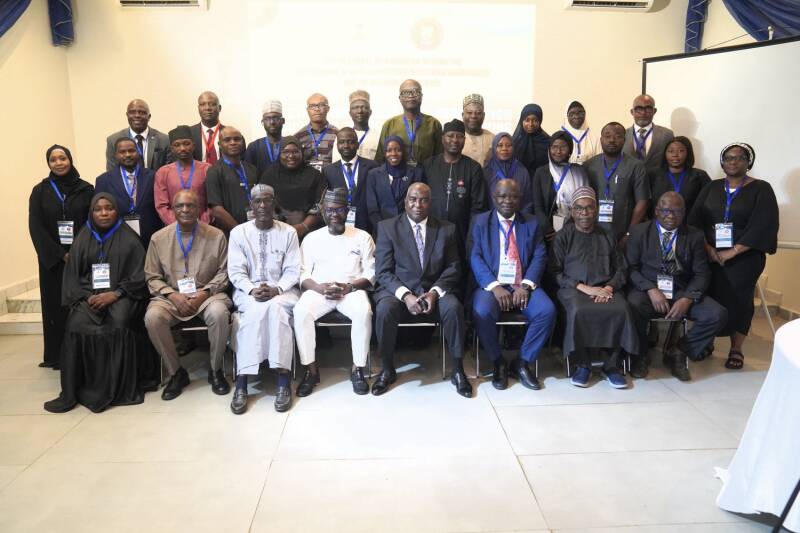
The partnership was formally launched on Tuesday, May 19, 2026, with a landmark workshop held in Abuja for Deans of Faculties of Law from universities across Nigeria. Themed "Institutionalising Anti-Corruption Education in Nigeria's Legal Training," the event brought together legal educators, curriculum experts, and key stakeholders in the justice sector to deliberate on practical ways of building accountability and transparency into legal training at both university and professional levels. The workshop was followed by a follow-up curriculum development session in Kano on June 25, 2026, which built on the outcomes of the Abuja engagement and focused on producing a substantive draft curriculum for institutional review and possible adoption by the Nigerian Law School.
Declaring the Kano workshop open, the former Director-General of the Nigerian Law School, Professor Isa Hayatu Chiroma, SAN, described the engagement as a critical step in the Commission's broader strategy to secure the buy-in of Nigeria's education sector in the fight against corruption. He stressed that future legal practitioners must be equipped from an early stage with an understanding that combating corruption is not only a legal obligation but also a civic and moral responsibility. According to him, the workshop, which builds on an earlier engagement held in Abuja, is expected to produce a curriculum that could eventually be adopted by the Nigerian Law School. He explained that deliberations at the previous Abuja workshop had established two possible pathways for incorporating anti-corruption studies into legal education: the introduction of a stand-alone anti-corruption course or the integration of anti-corruption themes into existing modules within the Nigerian Law School curriculum.
Addressing the gathering in Abuja, the Chairman of the ICPC, Dr. Musa Adamu Aliyu, SAN, declared that the critical issue was no longer whether anti-corruption education was necessary, but how it should be implemented across universities and the Nigerian Law School. Aliyu warned that corruption continues to weaken institutions, erode public confidence and undermine the rule of law, stressing that arrests and prosecutions alone would not be enough to tackle the problem without deliberate efforts to instil ethical values and accountability in future lawyers and public officers. "Combating corruption cannot be limited to investigation and prosecution alone," he said. "It must also involve preventive, educational, and value-driven approaches capable of shaping attitudes, strengthening ethical consciousness, and promoting a culture of integrity, transparency, and accountability".
The ICPC chairman noted that lawyers occupy a sensitive position within the justice system and play a major role in shaping public trust in governance and state institutions. According to him, integrity and accountability must be instilled early in the training of lawyers to produce professionals who are not only intellectually competent but also guided by strong ethical standards. He further clarified that the Commission was not seeking to impose a rigid framework on universities or the Nigerian Law School, but rather intended to encourage collaboration and allow stakeholders in legal education to collectively determine the most effective approach for integrating anti-corruption education into legal training in Nigeria. "Our role as a Commission is to support, facilitate, and provide the necessary institutional backing for whatever framework may ultimately be adopted," Aliyu said.
The workshop discussions focused on the possible inclusion of anti-corruption studies in the LL.B curriculum under the Core Curriculum and Minimum Academic Standards (CCMAS), teaching methods, lecturer training, and stronger collaboration between the Commission and legal education institutions. The Nigerian Law School has continued to integrate ethical content into its modules through Professional Ethics and Skills programmes aimed at instilling integrity and accountability in aspiring lawyers. The ICPC chairman also reiterated that the Commission's mandate under the Corrupt Practices and Other Related Offences Act, 2000, extends beyond investigation and prosecution to prevention and public education, aligning with the objectives of this initiative. "The decisions and recommendations arising from this workshop have the potential to shape generations of legal practitioners and strengthen the integrity and credibility of our justice system," Aliyu said.
The partnership has also drawn support from the highest levels of government. The Honourable Minister of Justice and Attorney General of the Federation, Prince Lateef O. Fagbemi, SAN, in his opening remarks at the Abuja workshop, challenged Deans of Faculties of Law and legal scholars to play a more active role in confronting corruption and restoring ethical values in Nigerian society. The Minister, represented by former Attorney General of the Federation, Mr. Kanu Agabi, SAN, described corruption as one of the major factors responsible for Nigeria's institutional and developmental setbacks, stressing that educators must continue to uphold moral standards despite the persistence of corruption across different sectors of society.
The collaboration between the ICPC and the Nigerian Law School represents a significant milestone in Nigeria's anti-corruption efforts, shifting the focus from enforcement to prevention through education. If successfully implemented, the curriculum is expected to produce lawyers who are intellectually proficient, ethically grounded, and profoundly committed to the anti-corruption crusade, thereby strengthening the integrity and credibility of Nigeria's justice system for generations to come.
📩 Stone Reporters News | 🌍 stonereportersnews.com
✉️ info@stonereportersnews.com | 📘 Facebook: Stone Reporters News | 🐦 X (Twitter): @StoneReportNew | 📸 Instagram: @stonereportersnews
Add comment
Comments