

Reported by: Oahimire Omone Precious | Edited by: Oravbiere Osayomore Promise.
For more than two decades, the Kwajale community in Sumaila Local Government Area of Kano State existed in the shadows of Nigeria's developmental map, enduring a crushing lack of infrastructure that left residents without electricity, passable roads, or even a functioning primary health centre. But a quiet revolution, driven not by politicians but by the collective voice of empowered citizens, has begun to rewrite their story. This is the tale of how a community, long neglected, finally found its voice and its light.
The history of Kwajale is a chronicle of broken promises and abandoned projects. Since 1999, the community has lived without electricity, a deprivation that has stifled economic activity, hampered education, and dimmed the prospects of generations of young people. The previous administration had offered a glimmer of hope when a 200KVA transformer was provided to the community. But for eight long years, that transformer sat idle at the village head's residence, a monument to bureaucratic inertia and systemic neglect. The community's story remained unchanged, and the transformer became a symbol of what could have been—a cruel reminder of a promise never fulfilled.
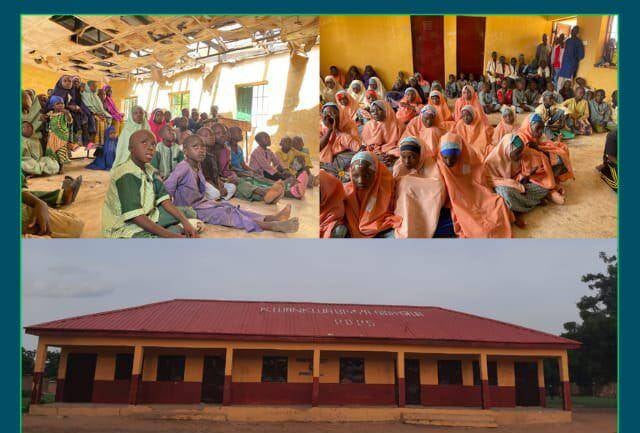
The situation in other sectors was equally dire. The community's Primary Health Centre (PHC) had deteriorated beyond use, forcing residents to receive medical treatment under a neem tree, exposed to the elements and devoid of any semblance of dignity. Children were forced to sit on bare floors in dilapidated buildings, struggling to learn amidst crumbling walls and a lack of basic teaching materials. The community remained cut off from the rest of the state due to un-motorable roads, making it nearly impossible for residents to access markets, schools, or emergency services.
The turning point came with the intervention of Tracka, a civic accountability platform by BudgIT that empowers citizens to collaborate, track, and provide feedback on public projects in their communities. Since its inception in 2014, Tracka has monitored over 17,811 zonal intervention projects across 678 communities in 32 states in Nigeria. In Kwajale, the organisation's approach was simple but transformative: empower the community to speak up and engage with their local representatives.
Through Tracka's intervention, residents of Kwajale were educated about the Nigerian budget and its allocations, and activated to ensure that the government delivered on its promises. They began to demand accountability from their local government and state officials, armed with information and a collective resolve. The results have been nothing short of remarkable. The transformer, which had lain idle for eight years, was finally installed, bringing electricity to the community for the first time in 25 years. The primary health centre was rehabilitated, restoring access to essential healthcare services. Roads that were once impassable are now being constructed, linking Kwajale to neighbouring communities and markets.
The transformation of Kwajale is a powerful testament to the potential of civic engagement and community-driven development. It demonstrates that when citizens are empowered with information and a voice, they can hold their leaders accountable and demand the infrastructure and services they deserve. For the residents of Kwajale, the lights are finally on, and the future is brighter than it has been in a generation. Their story is a beacon of hope for countless other communities across Nigeria that continue to suffer from neglect and abandonment.
📩 Stone Reporters News | 🌍 stonereportersnews.com
✉️ info@stonereportersnews.com | 📘 Facebook: Stone Reporters News | 🐦 X (Twitter): @StoneReportNew | 📸 Instagram: @stonereportersnews
Add comment
Comments