

Reported by: Ijeoma G | Edited by: Oravbiere Osayomore Promise.
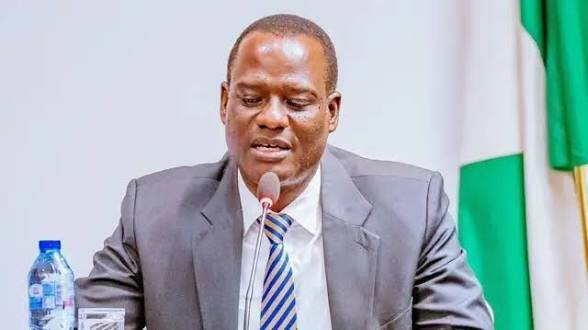
The Minister of Finance and Coordinating Minister of the Economy, Taiwo Oyedele, has declared that Nigeria’s revenue challenge will not be solved by raising tax rates but by dramatically expanding the number of eligible citizens and businesses that actually pay taxes, a clarion call that comes exactly one year after President Bola Tinubu signed the country’s most sweeping tax overhaul in decades. Speaking in Abuja on Thursday, June 25, 2026, while receiving a delegation from the Chartered Institute of Taxation of Nigeria (CITN) to mark the institute’s maiden National Tax Awareness Day, Oyedele said public misunderstanding of taxation remains one of the biggest obstacles to fiscal sustainability. “We are still not getting enough revenue from taxes; it is not about increasing taxes, but making sure that those who are supposed to pay taxes pay. We want to promote fairness in tax administration,” he stated.
The minister’s remarks came amid lingering public anxiety over the tax reform laws signed by President Tinubu on June 26, 2025, a package that includes the Nigeria Tax Act and three other pieces of legislation widely regarded as the country’s most ambitious fiscal reform in generations. Oyedele, who chaired the Presidential Committee on Fiscal Policy and Tax Reforms before his ministerial appointment, stressed that the government’s priority is not to impose higher taxes but to ensure that everyone who is legally required to pay does so, while promoting transparency and accountability. He noted that many Nigerians continue to view taxation merely as a tool for government to take money from citizens rather than as a critical instrument for national development. “If Nigeria gets its tax system right, the level of development will be monumental,” he declared.
The minister commended CITN for introducing the National Tax Awareness Day and for its support of the federal government’s reform agenda, but urged the institute to intensify public enlightenment efforts. He also proposed the creation of annual awards to recognise Nigeria’s most tax-compliant individuals and businesses, as a way of encouraging voluntary compliance. The awareness campaign, which featured a road walk and taxpayer sensitisation at Wuse Market, coincided with the first anniversary of the signing of the landmark tax reform legislation, a moment that officials described as the beginning of a new era in Nigeria’s tax administration.
Earlier, the 17th President of CITN, Innocent Ohagwa, who led the delegation, said the campaign was introduced to close the information gap around the new tax laws and encourage voluntary compliance. “The laws have been signed, implementation has begun, yet many taxpayers and stakeholders are still grappling with what has changed, what remains the same, and how these provisions affect their businesses and personal affairs,” Ohagwa said. He noted that misconceptions about the reforms had created anxiety among taxpayers, with some believing that the new laws introduced taxes on every aspect of economic activity. According to Ohagwa, the reforms contain several reliefs and incentives for individuals and businesses, including rent relief of up to 20 per cent of annual rent paid subject to a maximum of N500,000, zero-rated Value Added Tax (VAT) on essential goods and services such as food, education, healthcare, electricity transmission, and non-oil exports, and higher tax exemption thresholds for compensation for loss of employment or personal injury. Companies with annual turnover not exceeding N100 million and fixed assets of not more than N250 million are exempt from Companies Income Tax, Capital Gains Tax, and the Development Levy. “This means thousands of small businesses can now reinvest in growth, job creation, and innovation,” Ohagwa said.
He further disclosed that targeted incentives had been introduced for agriculture, aquaculture, dairy production, cocoa processing, and animal feed manufacturing, while eligible investors could benefit from tax credits under the Economic Development Incentive. Despite these incentives, Ohagwa reminded taxpayers that compliance remained a legal obligation. “Compliance is not a burden; it is a civic duty. It is our collective contribution to nation-building. And taxation works best when there is trust—taxpayers must fulfil their obligations, while the government must uphold accountability, transparency, and the effective use of public resources,” he said.
The Nigerian Revenue Service (NRS), represented by its Executive Chairman, Dr. Zacch Adedeji, through the Executive Director of Finance and Corporate Services, Mohammed Abubakar, reaffirmed the agency’s commitment to building a tax system anchored on simplicity, fairness, transparency, efficiency, and technology-driven service delivery. Adedeji described the reforms as a fundamental shift in the relationship between government and taxpayers, noting that the NRS had accelerated its modernisation programme through digital transformation, process automation, and enhanced taxpayer services, including the newly launched NRS 360 platform. “Taxpayers are more likely to comply when they understand their obligations, appreciate the value of taxation, and have confidence in the institutions administering our tax laws,” Abubakar said.
The Group Director of the Medium Tax Group, Dr. Gbenga Daniel Adebayo, reaffirmed the agency’s collaboration with CITN, describing the partnership as strategic to deepening tax education and strengthening public confidence in the tax system. The visit formed part of activities marking the 2026 National Tax Awareness Day and took place at the newly commissioned NRS headquarters in Abuja, bringing together senior officials of the revenue service, members of the CITN Governing Council, tax professionals, and other stakeholders.
As Nigeria marks one year of its landmark tax reforms, the message from the Minister of Finance is unambiguous: the country does not need higher taxes—it needs more taxpayers. The challenge now lies in translating that vision into reality, bridging the gap between policy and practice, and building a tax culture where compliance is not seen as a burden but as a shared responsibility for national development. For Oyedele and the thousands of tax professionals watching closely, the next chapter of Nigeria’s fiscal story will be written not in the statutes of the National Assembly, but in the willingness of citizens to embrace their civic duty.
📩 Stone Reporters News | 🌍 stonereportersnews.com
✉️ info@stonereportersnews.com | 📘 Facebook: Stone Reporters News | 🐦 X (Twitter): @StoneReportNew | 📸 Instagram: @stonereportersnews
Add comment
Comments