

Reported by: Ijeoma G | Edited by: John Jeff.
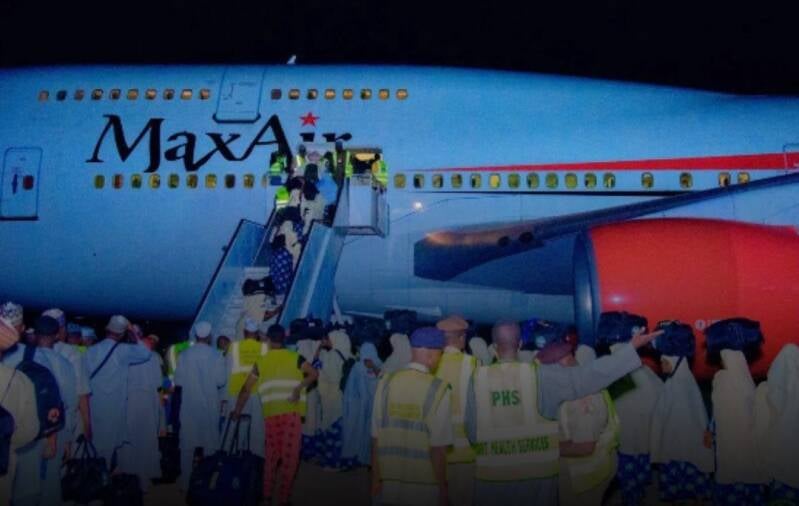
The Federal Government has confirmed the arrest of seven suspected terrorist commanders linked to Boko Haram and Islamic State West Africa Province at Umaru Musa Yar'Adua International Airport, shortly after they returned from the 2026 Hajj pilgrimage in Mecca. The arrests have triggered serious concerns over how individuals already known to security agencies were able to travel for one of Islam’s most important religious obligations.
The development was disclosed on Friday, June 26, 2026, by Nigeria’s Minister of Interior, Olubunmi Tunji-Ojo, shortly after President Bola Ahmed Tinubu signed the National Identity Management Commission (NIMC) Act 2026 into law at the State House in Abuja. The signing ceremony was attended by senior government officials, including Senate President Godswill Akpabio, Deputy Speaker Benjamin Kalu, Attorney-General Lateef Fagbemi, and NIMC Director-General Abisoye Coker-Odusote.
Speaking after the signing, Tunji-Ojo revealed that the suspects were intercepted the previous Thursday, June 19, immediately upon arrival in Katsina and were handed over to the Department of State Services (DSS) for further interrogation and intelligence gathering. He described the arrests as a major breakthrough in Nigeria’s ongoing efforts to strengthen border surveillance and counterterrorism operations.
“I’m happy to tell you that even last week Thursday, seven of the known commanders of Boko Haram and ISWAP, at the point of coming back from Mecca, were arrested in Katsina at the airport and were handed over to the DSS,” Tunji-Ojo said.
According to the minister, the arrests were made possible through the integration of the [National Identity Management Commission (NIMC)](https://nimc.gov.ng/?utm_source=chatgpt.com) database with the [Nigeria Immigration Service (NIS)](https://immigration.gov.ng/?utm_source=chatgpt.com) and global intelligence networks such as INTERPOL. He said the government had inherited fragmented identity systems in which agencies operated independently, making it easier for wanted persons to evade detection.
Tunji-Ojo explained that under the new framework, biometric identity records, passport data and international security watchlists now communicate in real time, allowing immigration officers to instantly flag high-risk travellers. He described the system as a major leap in intelligence-led security enforcement and a critical weapon against terrorism, financial crime and identity fraud.
The newly signed NIMC Act 2026 is expected to deepen these reforms by improving identity verification across government institutions, strengthening national security architecture and accelerating digital governance. The Federal Government says the law will help eliminate loopholes in public databases that criminals and terror suspects have previously exploited.
The revelation has also raised troubling questions about how suspected senior insurgent figures were able to complete the Hajj process, which typically involves extensive documentation, biometric registration and international travel clearance. Analysts say this may point to possible identity manipulation, forged travel records or support networks assisting extremist operatives.
The case comes amid continued military offensives against Boko Haram and ISWAP in northeastern Nigeria, particularly in Borno State, Yobe State, and Adamawa State, where troops under Operation Hadin Kai have intensified assaults on insurgent enclaves. Despite battlefield gains, both groups remain capable of launching deadly attacks, kidnappings and bombings.
Security experts say the incident highlights how modern counterterrorism increasingly depends not only on military force but also on effective data integration, digital intelligence and inter-agency coordination. They argue that terrorist groups are becoming more sophisticated, often blending into civilian populations and exploiting legal travel routes to avoid detection.
Authorities have not yet released the identities of the seven suspects, nor disclosed whether additional arrests are expected. Investigators are now expected to focus on possible collaborators, funding channels and travel facilitators who may have helped the suspects move in and out of Nigeria unnoticed.
The arrests represent one of the most high-profile intelligence-led terror interceptions in recent months and underscore the evolving security challenges facing Nigeria as it seeks to contain insurgency while tightening border control and internal surveillance.
📩 Stone Reporters News | 🌍 stonereportersnews.com
✉️ info@stonereportersnews.com | 📘 Facebook: Stone Reporters News | 🐦 X (Twitter): @StoneReportNew | 📸 Instagram: @stonereportersnews
Add comment
Comments