

Reported by: Oahimire Omone Precious | Edited by: Oravbiere Osayomore Promise.
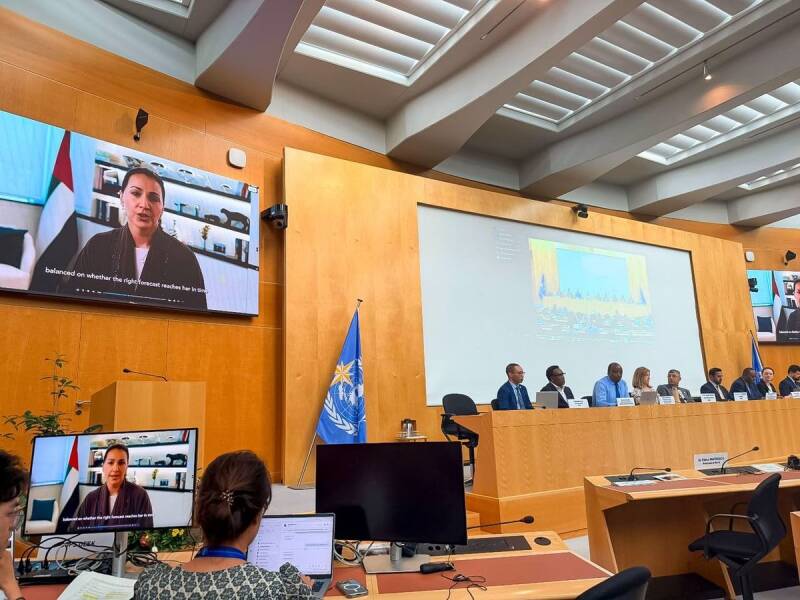
Nigeria has made a strong case for the deployment of Artificial Intelligence in weather forecasting as a critical tool to bolster agricultural productivity and strengthen food security across the continent, with the country actively participating in high-level global discussions on the issue. Professor Charles Anosike, Director-General of the Nigerian Meteorological Agency (NiMet) and Permanent Representative of Nigeria with the World Meteorological Organization (WMO), represented the country at a WMO Executive Council Side Event on "Scaling AI-Powered Weather Services for Farmers" held at the WMO Headquarters in Geneva, Switzerland. The event brought together global leaders, meteorological experts, and development partners to explore how artificial intelligence can enhance weather forecasting, strengthen climate services for agriculture, and improve food security through innovative partnerships.
Speaking during the session, Professor Anosike stressed that effective AI-driven weather forecasting must begin with high-quality observational data, underscoring the urgent need to address critical observation and data gaps across Africa. He described investment in robust observation systems as fundamental to unlocking the full potential of AI in meteorology, noting that without reliable data, even the most sophisticated AI models cannot deliver accurate forecasts. The NiMet Director-General also showcased Nigeria's proactive and structured approach to integrating AI into its meteorological operations, revealing that the agency inaugurated an AI Research Team in January 2026 to drive the identification, evaluation, and operational deployment of AI and machine learning technologies.
Since the inauguration of the AI Research Team, NiMet has made significant strides in building the institutional framework necessary for AI adoption. The agency has developed comprehensive AI Terms of Reference, Standard Operating Procedures, an AI Operational Framework with phased implementation milestones, and documented AI use cases to guide the technology's adoption. As part of these efforts, NiMet is currently evaluating leading AI weather prediction models while developing the MeteoAI platform, a proprietary system designed to enhance weather forecasting, climate prediction, forecast verification, and early warning services. The agency is also assessing the most cost-effective computing infrastructure required for full-scale operational deployment of AI technologies.
Professor Anosike reaffirmed NiMet's commitment to leveraging AI and modern geospatial technologies to strengthen operational meteorology and advance the Early Warnings for All initiative across Africa, ensuring that farmers and vulnerable communities receive more timely, accurate, and actionable weather and climate information. He emphasized that the initiative is aimed at supporting food production, disaster preparedness, and climate resilience across the continent. Nigeria's active participation in the WMO event underscores the country's growing role in international efforts to apply cutting-edge technology for climate resilience and agricultural development. As climate variability continues to pose significant threats to food security, the integration of AI-powered weather services offers a promising pathway to help farmers make informed decisions, reduce climate-related risks, and ultimately strengthen food systems across Africa.
📩 Stone Reporters News | 🌍 stonereportersnews.com
✉️ info@stonereportersnews.com | 📘 Facebook: Stone Reporters News | 🐦 X (Twitter): @StoneReportNew | 📸 Instagram: @stonereportersnews
Add comment
Comments