

Reported by: Oahimire Omone Precious | Edited by: Oravbiere Osayomore Promise.
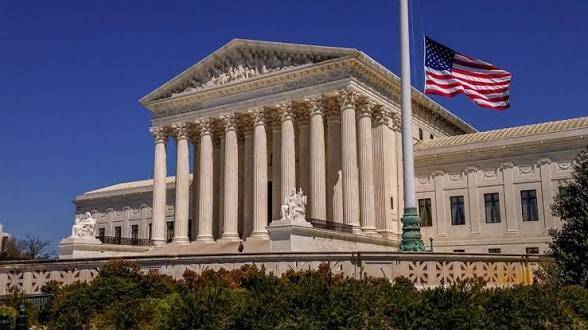
The United States Supreme Court has delivered a landmark ruling striking down President Donald Trump's executive order seeking to end birthright citizenship for children born to parents who are in the country illegally or on temporary visas. In a 6-3 decision delivered on Tuesday, June 30, 2026, the court held that the Citizenship Clause of the 14th Amendment guarantees automatic citizenship to nearly all children born on American soil, regardless of their parents' immigration status.
The ruling, issued on the final day of the court's term, represents a major defeat for Trump's hardline immigration agenda and upholds more than 150 years of legal precedent. The executive order, which Trump signed on his first day back in office in January 2025, had directed federal agencies to deny citizenship to children born to parents who are not American citizens or lawful permanent residents. It was immediately challenged by civil rights groups, including the American Civil Liberties Union (ACLU), which filed a class-action lawsuit on behalf of parents and children whose citizenship was threatened.
The 6-3 ruling saw the court's six-justice conservative majority split, with Chief Justice John Roberts and Justice Amy Coney Barrett joining the court's three liberal justices to form the majority. Justice Elena Kagan authored the majority opinion, which rejected the Trump administration's interpretation of the 14th Amendment's Citizenship Clause. The clause states: "All persons born or naturalized in the United States, and subject to the jurisdiction thereof, are citizens of the United States and of the state wherein they reside."
The administration had argued that the phrase "subject to the jurisdiction thereof" excludes children of undocumented immigrants and those on temporary visas, asserting that such individuals owe their primary allegiance to their home countries rather than the United States. However, the court rejected this argument, holding that the amendment's authors intended to grant citizenship to nearly all persons born on U.S. soil, with only narrow exceptions such as children of foreign diplomats or enemy forces during occupation.
"Whatever the policy merits of the president's order, the Constitution is clear," Justice Kagan wrote in the majority opinion. "The 14th Amendment's Citizenship Clause was designed to enshrine the principle of birthright citizenship, a tradition that predates the amendment itself and has been central to American identity for generations. The president cannot unilaterally rewrite the Constitution through executive order."
Justice Clarence Thomas led the dissent, joined by Justices Samuel Alito and Neil Gorsuch. In a sharply worded dissent, Thomas argued that the majority had misinterpreted the amendment and that the Citizenship Clause was never intended to confer citizenship on the children of undocumented immigrants.
The ruling marks the second major loss for Trump at the Supreme Court this term. In February, the justices struck down most of his global tariffs. The president had made ending birthright citizenship a centerpiece of his immigration crackdown, arguing that the practice encourages illegal immigration and "birth tourism." In a historic move, Trump attended oral arguments in the case on April 1, 2026, becoming the first sitting president to personally appear before the Supreme Court. He left midway through the proceedings, after the lawyer opposing his administration had begun speaking.
During oral arguments, justices appeared deeply skeptical of the administration's position. Chief Justice John Roberts, who ultimately voted with the majority, told a government lawyer: "It's a new world. It's the same Constitution." Justice Ketanji Brown Jackson pressed the administration on the practical implications of the order, asking: "Is this happening in the delivery room?" — questioning how hospitals and government agencies would determine the citizenship status of newborns under the president's directive.
The ACLU, which led the legal challenge, hailed the ruling as a historic victory for civil rights and constitutional justice. "Today's decision affirms what we have always known: birthright citizenship is a fundamental right, enshrined in the Constitution and protected from the whims of any president," said ACLU Executive Director Anthony Romero in a statement. "This ruling ensures that every child born on American soil is guaranteed the full rights and protections of citizenship, regardless of their parents' immigration status."
Immigrant advocacy groups also welcomed the decision, describing it as a repudiation of Trump's anti-immigrant agenda. "This is a victory for the millions of American families who would have been torn apart by this executive order," said Marielena Hincapié, executive director of the National Immigration Law Center. "The Supreme Court has reaffirmed that the Constitution belongs to all of us, not just those in power."
President Trump reacted swiftly to the ruling, taking to his Truth Social platform to express his disappointment. "The Supreme Court has made a terrible decision that will undermine the very fabric of our nation," Trump wrote. "Birthright citizenship is a scam that encourages illegal immigration and allows foreign nationals to exploit our laws. We will continue to fight for the American people and secure our borders."
White House Press Secretary Karoline Leavitt said the administration was reviewing the ruling and considering its options, including the possibility of pursuing a constitutional amendment. "The president remains committed to ending birthright citizenship, and we will explore every legal and legislative avenue to achieve that goal," Leavitt said.
The ruling has significant implications for an estimated 250,000 babies born each year to parents who are in the United States illegally or on temporary visas. Had the executive order been upheld, those children would have been denied citizenship, creating what critics described as a "permanent subclass of people born in the United States."
Legal experts noted that the ruling reaffirms more than 150 years of constitutional precedent, including the landmark 1898 case United States v. Wong Kim Ark, which established that children born in the United States to non-citizen parents are citizens under the 14th Amendment. "Today's decision is a victory for the rule of law and the Constitution," said constitutional law scholar Professor Laurence Tribe. "The president's attempt to rewrite the 14th Amendment through executive fiat was always constitutionally dubious, and the court has rightly struck it down."
The ruling comes just days before the United States celebrates the 250th anniversary of its founding on July 4, a date that carries added significance given the court's affirmation of the constitutional guarantee of citizenship. "What better way to celebrate America's 250th birthday than by reaffirming the principle that all persons born on American soil are citizens?" said Congresswoman Grace Meng, who had previously issued a statement supporting the legal challenge. "This is a victory for the Constitution, for civil rights, and for the American dream."
📩 Stone Reporters News | 🌍 stonereportersnews.com
✉️ info@stonereportersnews.com | 📘 Facebook: Stone Reporters News | 🐦 X (Twitter): @StoneReportNew | 📸 Instagram: @stonereportersnews
Add comment
Comments