

Reported by: Oahimire Omone Precious | Edited by: Oravbiere Osayomore Promise.
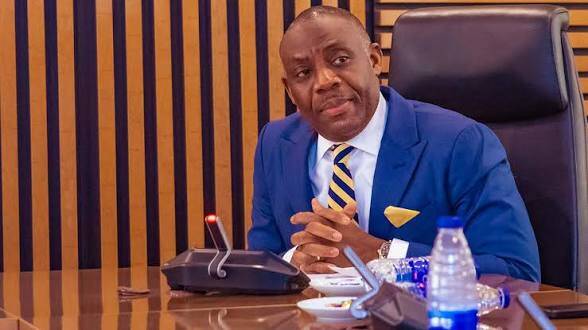
ABUJA, Nigeria — The Federal Government has announced plans to abolish the long-standing policy separating Junior Secondary Schools (JSS) from Senior Secondary Schools (SSS), citing a staggering dropout crisis that has left more than 20 million students unable to transition beyond the junior secondary level. Minister of Education, Dr. Tunji Alausa, made the announcement on Tuesday, June 30, 2026, during the inauguration of the Universal Basic Education Commission (UBEC) Ministerial Implementation and Monitoring Committee in Abuja, declaring that the "disarticulation policy" has failed and must be phased out.
Alausa attributed the decision to alarming data showing that millions of Nigerian children are falling out of the education system before reaching senior secondary school. "We have 20 million dropouts from primary school to JSS. Where are those students?" the minister asked. He further revealed a stark infrastructural imbalance: "We have 80,000 public primary schools and only about 15,000 junior secondary schools. That's a one-to-eight ratio."
According to the minister, this imbalance has resulted in severe overcrowding in JSS facilities while many senior secondary schools remain underutilised, particularly in Kaduna and several northern states. "This disarticulation policy has failed. We will phase it out. We can't be creating positions because we want to create a director level for people while we harm our education system. It's about doing what is best for every Nigerian child," Alausa declared.
The JSS-SSS separation was introduced in 1982 as part of the National Policy on Education's 6-3-3-4 system, which comprised six years of primary education, three years of junior secondary, three years of senior secondary, and four years of tertiary education. Under the new reform, the government will scrap this structure and replace it with a compulsory 12-year uninterrupted basic education model. Alausa explained that the new system would eliminate the transition barriers between junior and senior secondary education, which have contributed to high dropout rates, and provide a more seamless learning experience that strengthens foundational and vocational skills while improving student retention. The reform also seeks to standardise curriculum delivery, enhance education quality, and better align Nigeria's school system with global best practices.
The proposal will be presented at the next meeting of the National Council on Education for approval. Implementation will involve curriculum reforms, teacher training, adjustments to school administration, and collaboration with state governments and other stakeholders.
The minister also raised fresh concerns over Nigeria's deepening learning crisis, revealing that about three out of every four children at the basic education level are unable to read and understand an age-appropriate text by the age of 10. "Learning poverty means that by the age of 10, a child cannot read and understand an age-appropriate text. In Nigeria today, three out of every four children are learning poor. That is simply unacceptable," Alausa said. He stressed the urgent need to transform teaching and learning through digital technology, urging state governments to maximise the use of digital learning platforms such as the Nigeria Learning Passport, which currently has about 2.3 million users, a figure the minister described as still very low.
At the same event, Alausa inaugurated a committee chaired by Prof. Rashid Aderinoye to oversee UBEC-funded Smart Schools, Bilingual Schools, and Alternative Schools across the country. The committee is mandated to ensure the projects are completed, handed over to states, and opened for learning. The minister expressed concern that despite significant investments, many of the schools remain incomplete or have yet to admit students, describing the situation as a waste of public resources. UBEC Executive Secretary, Dr. Aisha Garba, disclosed that 37 Smart Schools had been established nationwide, with 24 already conducting academic activities, while 30 schools had been established in nine states under the UBEC-Islamic Development Bank Bilingual Education Programme, with three boarding schools completed and commissioned.
Nigeria continues to have one of the world's largest populations of out-of-school children, with millions of school-age children, particularly in rural communities and conflict-affected areas, still unable to access formal education. Education experts have repeatedly stressed that tackling the crisis requires not only building new schools but ensuring completed facilities are adequately staffed, fully operational, and accessible to learners. The proposed reform has sparked discussions among education stakeholders, with many expressing optimism that the 12-year continuous basic education model could improve students' transition into senior secondary school and strengthen learning outcomes nationwide. As Alausa put it: "This government will not fail. We are fixing it."
📩 Stone Reporters News | 🌍 stonereportersnews.com
✉️ info@stonereportersnews.com | 📘 Facebook: Stone Reporters News | 🐦 X (Twitter): @StoneReportNew | 📸 Instagram: @stonereportersnews
Add comment
Comments