

Reported by: Ijeoma G | Edited by: Oravbiere Osayomore Promise.
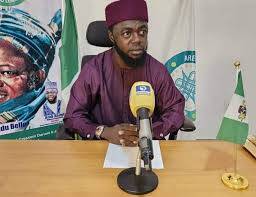
The President of the Arewa Youths, Comrade Danbature Abdul, has urged the Federal Government to make dialogue a central and comprehensive part of its strategy for tackling banditry and insecurity, insisting that military action alone will not end the crisis unless the root causes of the violence are addressed.
Speaking to journalists on Tuesday, June 30, 2026, in Kano, Abdul declared: "I will always call on government to always consider dialogue. They should consider dialogue 100% with the bandits because it will go a long way." He argued that the government must go beyond military action and address the underlying causes of insecurity, saying: "They need to look at the root. They should know and try to check what are the solutions and what are the problems."
Abdul referenced an incident in Benue State where, according to him, a leader of a group was allegedly killed after attending a peace dialogue, warning that such incidents could undermine confidence in future peace efforts. While he did not provide specific details about the incident, his remarks underscored the fragility of trust between communities and the state in conflict zones.
The Arewa youth leader also cautioned against labelling an entire ethnic group as terrorists, insisting that criminal acts should not be used to stigmatise all Fulani people. "Do you know that it's not every Fulani that are terrorists? It's not proper whenever there is a conflict or any illegal activity for someone to tag an entire tribe or ethnic group as terrorists," he said.
He stressed that many Fulanis are law-abiding citizens who are ready to support the government and security agencies. "We still have good Fulanis that are ready to work with the government and help the military with tangible information," Abdul said. He urged the military to collaborate with such individuals, saying their support could help bring an end to terrorism, banditry, kidnappings, and other violent attacks across the country.
Abdul's remarks have once again ignited the debate over the best approach to tackling insecurity in Nigeria's North-West and North-Central regions. While some advocates have argued that dialogue is the only path to sustainable peace, critics have maintained that negotiating with bandits only emboldens them and that the government should not reward criminality with state recognition.
Security expert and Managing Director of SBM Intelligence, Dr. Confidence MacHarry, has previously warned that while dialogue can offer a temporary reprieve, it often fails to address the structural drivers of conflict, such as poverty, inequality, and weak governance. He urged the government to combine military action with social interventions and economic opportunities to wean communities off criminality.
In a sharp contrast to Abdul's call for dialogue, Kaduna State Governor Uba Sani recently declared that bandits have "no right to live" and must be eliminated. Speaking during an interview on Channels Television's Politics Today, the governor said: "When you call them terrorists, it means they are people who have killed innocent citizens. Certainly, they have no right to live, they must be eliminated." Sani's comments reflect the growing frustration among northern governors, who have borne the brunt of bandit attacks.
However, Abdul maintained that dialogue remains a viable option, noting that the government has previously engaged in peace talks with insurgents and other armed groups. He urged the government to identify and engage moderate elements within the bandit networks while continuing military pressure on irreconcilable elements.
Senator Ali Ndume, representing Borno South, has also advocated for dialogue as part of the solution to the insurgency in the North-East. In previous interviews, he argued that the Boko Haram insurgency is driven by poverty, illiteracy, and injustice, and that addressing these grievances would weaken the appeal of extremist groups. He has consistently called on the government to pursue a comprehensive approach to security, combining military action with diplomatic engagement, economic development, and justice.
As Nigeria continues to grapple with its worst security crisis in a generation, Abdul's call for dialogue has highlighted the deep divisions among policymakers over how to effectively tackle the menace of banditry and terrorism. The Arewa Youth President's appeal for dialogue comes as communities across the North-West and North-Central continue to bear the brunt of bandit attacks, with thousands killed and millions displaced.
The government has maintained a dual-track approach of military offensives and amnesty programmes, but critics have accused the administration of lacking a coherent strategy. While the military has intensified its operations against bandit enclaves, the government has also offered amnesty to thousands of repentant insurgents in the North-East, a policy that has drawn both praise and criticism.
As Abdul put it, "The root causes of insecurity must be addressed if lasting peace is to be achieved. Dialogue is not a sign of weakness; it is a sign of strength and commitment to finding a lasting solution to the crisis."
📩 Stone Reporters News | 🌍 stonereportersnews.com
✉️ info@stonereportersnews.com | 📘 Facebook: Stone Reporters News | 🐦 X (Twitter): @StoneReportNew | 📸 Instagram: @stonereportersnews
Add comment
Comments