

Reported by: Ijeoma G | Edited by: Oravbiere Osayomore Promise.
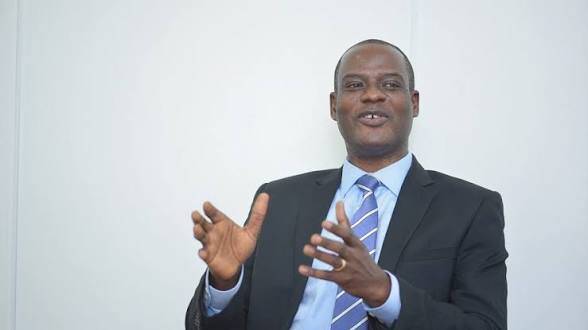
The Federal Government has firmly dismissed allegations that it spent more than N8 trillion outside the 2026 budget, describing the reports as inaccurate and a deliberate misrepresentation of the International Monetary Fund's 2026 Article IV Consultation Report. In a statement issued on Sunday, 5 July 2026, the Minister of Finance and Coordinating Minister of the Economy, Taiwo Oyedele, rejected suggestions that the government operates a "shadow budget" or spends public funds outside the constitutional and statutory framework. The rebuttal comes after the IMF's Resident Representative in Nigeria, Christian Ebeke, disclosed that public spending equivalent to about two per cent of Nigeria's Gross Domestic Product—amounting to approximately N8.83 trillion—was omitted from recent official budgets, distorting the country's actual fiscal deficit and borrowing needs.
Oyedele, in his detailed response, emphasised that under Sections 80 to 83 and 162 of the 1999 Constitution, public funds can only be withdrawn and spent in accordance with the Constitution and laws enacted by the National Assembly. He clarified that all Federal Government spending is undertaken through duly enacted Appropriation Acts, Supplementary Appropriation Acts, and other statutory authorities approved by the National Assembly. The minister further explained that multi-year capital projects implemented across different budget cycles and approved capital rollovers are recognised components of public financial management and should not be misconstrued as spending outside the budget. "It is inaccurate to suggest that trillions of naira have been secretly spent outside legislative approval. Such allegations should have identified the specific projects purportedly executed without appropriation or legal authority and present credible evidence in support of the claim," Oyedele stated.
The finance minister also provided a comprehensive explanation of Nigeria's public finance framework, listing statutory transfers, debt service obligations, first-line charges, and intervention mechanisms established by Acts of the National Assembly as legitimate components of government expenditure. He specifically mentioned statutory allocations to development commissions, revenue collection costs retained by designated agencies, separately approved capital budgets for some agencies and the Federal Capital Territory, security and infrastructure interventions, disaster response programmes, and debt servicing obligations among expenditures authorised by law. "These expenditures are neither secret nor illegal. They are established by law, disclosed in various fiscal reports, and subject to applicable oversight, audit and accountability mechanisms," he stated. Oyedele further rejected suggestions that the reported amount represented an increase in Nigeria's fiscal deficit, arguing that a fiscal deficit is determined by the relationship between total government revenues and total government expenditures, regardless of how capital projects are funded.
The controversy was ignited earlier when IMF Resident Representative Christian Ebeke, speaking at a meeting with business executives in Lagos, disclosed that Nigeria's nominal GDP in 2025 stood at N441.5 trillion, with government expenditure accounting for approximately 11.73 per cent of this GDP. Ebeke explained that the unreported spending, largely tied to major government projects executed outside the budget framework, has made it more difficult to accurately assess the country's fiscal position and the scale of public investment. "So far, we think that there are about two per cent of GDP of expenditure that were not reported that should be reported and should be recorded, so that this statistical discrepancy will disappear," Ebeke said. The IMF official noted that incomplete fiscal reporting complicates coordination between fiscal and monetary authorities, as policymakers may be working without a complete picture of the government's financing obligations. He added that Nigerian authorities had begun addressing the gap by revising budget legislation to accommodate previously unrecorded expenditure, though updated budget implementation reports would be required to fully reflect the changes. Ebeke emphasised that greater fiscal transparency is critical to strengthening public financial management, warning that off-budget spending raises concerns over procurement practices, accountability and oversight.
The IMF's findings have triggered a wave of condemnation from opposition figures, with former Vice President Atiku Abubakar and National Democratic Party presidential candidate Peter Obi both accusing the Tinubu administration of entrenched corruption. Atiku, in a statement issued on Saturday, 4 July 2026, described the development as "the most consequential act of fiscal impunity in Nigeria's recent democratic history" and called on the Economic and Financial Crimes Commission and the Independent Corrupt Practices and Other Related Offences Commission to open formal investigations. "At the current valuation of Nigeria's economy at approximately N441.5 trillion, this figure translates to a staggering N8.8 trillion in public funds spent entirely outside the statutory framework of Nigeria's official budget documents, unaccounted for, unaudited, and hidden from the Nigerian people," Atiku stated. He alleged that the Tinubu administration is awarding multi-trillion naira contracts and commissioning infrastructure projects entirely beyond the reach of the Auditor-General, procurement laws, and the National Assembly.
Peter Obi, in a statement on Sunday, 5 July 2026, claimed that the N8.83 trillion in expenditure undertaken in 2025 was not reflected in the budget and therefore not under legislative oversight or administrative scrutiny. He argued that the amount represents about two per cent of Nigeria's GDP and over 35 per cent of the country's N23.96 trillion capital expenditure budget for 2025. Obi described the administration as "grossly corrupt, incompetent and insensitive" and reiterated his earlier call for President Tinubu to resign. The opposition leaders have linked the controversy to the recent scandal surrounding the Presidential Foreign Intervention Promotion Council, a body the Presidency later claimed never existed, despite receiving an allocation of over N1.3 billion in the 2026 budget. As the debate intensifies, the Federal Government's denial has set the stage for a protracted battle over fiscal transparency, with the National Assembly, anti-corruption agencies, and civil society organisations now under pressure to investigate the claims and determine whether Nigeria's public finances have indeed been managed outside the constitutional framework.
📩 Stone Reporters News | 🌍 stonereportersnews.com
✉️ info@stonereportersnews.com | 📘 Facebook: Stone Reporters News | 🐦 X (Twitter): @StoneReportNew | 📸 Instagram: @stonereportersnews
Add comment
Comments