

Reported by: Ijeoma G | Edited by: Oravbiere Osayomore Promise.
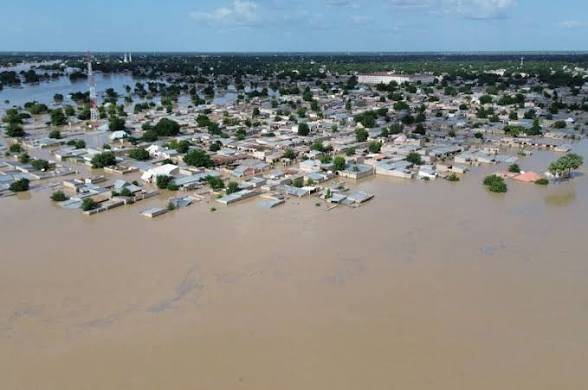
The Nigeria Hydrological Services Agency (NiHSA) has issued a chilling warning that the devastating floods currently ravaging parts of the country could persist until September, with conditions expected to deteriorate significantly in August if urgent preventive measures are not implemented. The agency's Director-General, Umar Mohammed, speaking through Emmanuel Tuna, head of NiHSA's Geographic Information System and Remote Sensing Department, disclosed that the recent flooding in Lagos and other states was not a surprise, as the agency had accurately forecast the situation and issued early warnings that were largely disregarded. "This is something we foresaw, we saw it coming," Mohammed said. "As we speak now, with the flooding happening, if nothing is done, this is just the start of the rainy season, sometime around July-September (12 weeks), and it could be worse than what is even happening right now. And we're expecting it to be worse around August-September, particularly August-September."
The agency's warning comes on the heels of torrential rainfall that submerged roads, homes, and critical infrastructure across several states, with Lagos bearing the brunt of the devastation. Last week's downpour, which lasted over 12 hours in some areas, brought commercial activities and vehicular movement to a halt, leaving motorists and commuters stranded across the metropolis. Areas heavily affected included the Lagos-Oshodi Expressway, Abeokuta Expressway, Lekki-Epe Expressway, Victoria Island, Agege, Ikeja, Oworonsoki, Gbagada, Funsho Williams Avenue, and Iwaya in Yaba. The floods displaced residents, disrupted transportation, and caused power outages after floodwaters inundated a transmission substation. Viral videos showed residents and motorists stuck in floodwaters, sending SOS messages to the state government for intervention.
Beyond the immediate destruction caused by floodwaters, Mohammed raised alarm over the potential contamination of drinking water sources, warning that prolonged flooding could pollute boreholes and other water supplies across affected states. The agency had collected baseline data on borehole water quality before the onset of the floods and plans to conduct post-flood assessments to determine the extent and sources of contamination. "We were concerned about the drinking water because we expected it to last longer, the flood to last over a long period," Mohammed explained. "So, we started analysing the quality of the water, and we did, we have our reports. We wanted to observe the quality of the water before the flood because we know that after flooding, or even during flood, we are expecting challenges of drinking water in the states". He added that the agency is working to identify specific contamination sources and has already put together a team to go to Lagos to prepare a post-flood report.
Lagos State, Nigeria's commercial nerve centre, faces a unique and heightened risk due to its exposure to three different types of flooding simultaneously. Mohammed explained that Lagos is vulnerable to urban flooding caused by blocked drainage channels and poor infrastructure, riverine flooding from the Ogun River and other waterways, and coastal or tidal flooding due to its proximity to the Atlantic Ocean. He warned that the convergence of these flood types could be catastrophic. "Lagos is a coastal state, and so it has lots of factors that can influence flooding within the state, peculiar to Lagos. Lagos is a very large urban city, and then it also has a very large river that cuts through the city, and then it is just by the ocean. So, with this, all the three major forms of flooding, particularly in Nigeria, can happen in Lagos". Mohammed further revealed that some areas of Lagos are at or below sea level, making them particularly susceptible to inundation. "Some sections, particularly in Ikoyi, that I have been to, where we use some of our devices and our GPS to check the altitude of the ground, we got to see that some areas in Lagos are point zero, meaning equal level with the sea. Some places are even below the level of the sea," he disclosed.
The NiHSA Director-General did not mince words in criticising state governments for what he described as a "serious challenge with cooperation." He accused state authorities of failing to act on the agency's annual flood outlook and repeated early warnings, leaving communities dangerously exposed. "We have a challenge of cooperation from states, a serious challenge with cooperation from states. Most times we get disregarded. Our warnings are not taken with seriousness," Mohammed lamented. He warned that flooding is expected to occur intermittently over the coming months, with conditions only beginning to improve around October when rains are projected to recede. "We are expecting this flood to be on and off, and to span from July to September on and off. Around October, we are expecting these rains to be receding… the only time we can be safe, I will be honest, is possibly around November," he stated.
The warning aligns with projections in NiHSA's 2026 Annual Flood Outlook, which identified Lagos as one of ten priority urban flood hotspots for the year, with urban drainage failure, blocked waterways, and coastal surge listed as the primary risk drivers. The outlook had previously warned that 14,118 communities across 266 Local Government Areas in 33 states and the Federal Capital Territory fall within high flood risk zones ahead of the 2026 rainy season. As the nation braces for what could be one of the worst flood seasons in recent memory, the onus is now on federal and state governments to heed NiHSA's warnings, clear drainage channels, enforce building regulations in flood-prone areas, and implement emergency response plans to protect lives and property. The coming weeks will be critical in determining whether Nigeria can avert a full-blown humanitarian disaster as the rains intensify and floodwaters continue to rise.
📩 Stone Reporters News | 🌍 stonereportersnews.com
✉️ info@stonereportersnews.com | 📘 Facebook: Stone Reporters News | 🐦 X (Twitter): @StoneReportNew | 📸 Instagram: @stonereportersnews
Add comment
Comments