

Reported by: Ijeoma G | Edited by: Oravbiere Osayomore Promise.
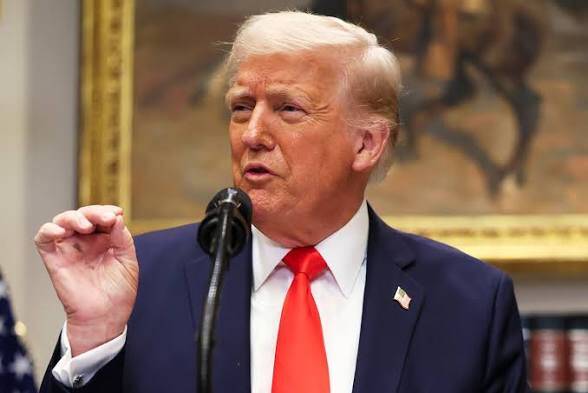
President Donald Trump has issued presidential pardons to 11 individuals, including nine people convicted of violating the Clean Air Act by tampering with or disabling emissions control systems on diesel trucks, in a sweeping act of clemency that has drawn sharp criticism from environmental advocates and former regulators. The pardons, announced on Friday, 3 July 2026, come just months after the Trump administration rolled back key environmental regulations, including repealing the scientific finding that greenhouse gas emissions endanger public health and eliminating federal tailpipe emissions standards for cars and trucks.
In a post on his Truth Social platform announcing some of the pardons, Trump framed the recipients as victims of political persecution by the previous administration. "It is my Great Honor to have just signed Pardons for six people who were persecuted by the Biden Administration, and were in, or being sent to, prison, for 'fixing their car,'" the president wrote. "I AM SETTING THEM ALL FREE, RIGHT NOW!". A White House official subsequently provided a full list of the 11 pardon recipients, which included nine individuals who had been charged with infractions related to the Clean Air Act.
The Clean Air Act pardons benefited people who had sold or installed devices for diesel trucks that defeated emissions controls, making the vehicles far more polluting. Eight of those pardoned were diesel mechanics or car tuners who were prosecuted for selling and installing so-called "defeat devices" into trucks — software and hardware that reprogram vehicles to bypass federally required emissions controls and suppress diagnostic warnings. Among those granted clemency were Joshua Davis, Matt Geouge, Jonathan Achtemeier, Tim Clancy, Ryan and Wade Lalone, Barry Pierce, Aaron Rudolf, and Mackenzie "Mac" Spurlock.
The Justice Department had previously announced in January 2026 that it would stop prosecuting Clean Air Act violations as criminal offenses, describing such cases as an example of the "overcriminalization of federal environmental law," while continuing to pursue civil enforcement. Trump went a step further on Monday, 29 June 2026, issuing a directive to the Environmental Protection Agency that could pave the way for people to modify emissions controls on their own vehicles without fear of civil penalty. The memo also addressed aftermarket auto parts and would supersede the ability of the California Air Resources Board to evaluate parts that affect vehicle emissions.
The pardons have ignited fierce debate over the administration's environmental policies. Critics argue that the clemency grants reward individuals who profited from polluting activities and undermine the Clean Air Act, a bedrock environmental law first enacted in 1963. Margo Oge, a former director of the Office of Transportation and Air Quality at the US Environmental Protection Agency, condemned the move. "These pardons don't just forgive a paperwork violation – they reward people who ran businesses stripping pollution controls off diesel trucks for profit," Oge said.
Supporters of the pardons, however, have framed them as a necessary correction to overzealous enforcement that unfairly targeted small business owners and mechanics. Senator Dan Sullivan, a Republican from Alaska, celebrated the pardon of Mackenzie Spurlock, a mechanic who modified emissions controls on vehicles to prevent them from shutting down in Alaska's harsh, subzero conditions. "Four years ago, about 30 armed EPA agents conducted a military-style tactical raid of Matanuska Diesel, owned by Mac Spurlock — a devoted husband and father, small business owner, and veteran of the Alaska Air National Guard," Sullivan said in a statement.
The emissions systems that most of the pardon recipients were accused of disabling are intended to make tailpipe emissions cleaner. However, the systems put more strain on engines, and malfunctions can lead to engine shutdowns, particularly in cold weather. Brad Bylsma, a state equipment fleet manager for the Alaska Department of Transportation and Public Facilities, said that Diesel Exhaust Fluid (DEF) systems account for a "significant portion of our maintenance issues and costs" with state-owned diesel vehicles. Frederic Sifuentes, president of an Alaska-based transportation service, put it more bluntly: "The percentage of breakdowns we have here in Alaska with the DEF systems is roughly 85 percent of the time".
Some of those pardoned had been involved in large-scale operations. Matthew Geouge, for instance, ran two companies that sold illegal tuning devices. Just from the sale of those devices alone, his firms grossed more than $10 million, according to his December 2021 plea agreement. Jonathan Achtemeier pleaded guilty to tampering "with the monitoring devices on hundreds of vehicles nationwide so those trucks would not detect that their owners removed pollution control hardware systems". Ryan and Wade Lalone were each sentenced to one year of probation as part of a scheme to disable emissions controls on semi-trucks.
Beyond the environmental violations, Trump also pardoned Adam Kidan, a former business partner of disgraced lobbyist Jack Abramoff, who had pleaded guilty in 2005 to fraud and conspiracy related to the purchase of a fleet of gambling boats. Kidan served about two and a half years in prison. Since leaving prison, he has worked at a staffing agency, founded a staffing business, and now serves as president of Empire Workforce Solutions. In March 2026, Kidan was among the hosts of a fundraiser at Trump's Mar-a-Lago resort for a Long Island Republican congressional candidate.
The pardons are the latest in a series of clemency grants during Trump's second term that have favored political allies, donors, and those seen as politically aligned. The White House, in releasing the list of those pardoned, described Trump as having "relieved consumers from these regulatory burdens". The move also aligns with the administration's broader deregulatory agenda, which has included rolling back emissions standards and challenging the legal basis for climate regulation. As the 2026 midterm elections approach, the pardons are likely to become a flashpoint in the ongoing debate over the balance between environmental protection and economic freedom. For the nine individuals whose convictions have been erased, however, the pardons represent a full restoration of their rights and reputations — a clemency they and their supporters have long sought.
📩 Stone Reporters News | 🌍 stonereportersnews.com
✉️ info@stonereportersnews.com | 📘 Facebook: Stone Reporters News | 🐦 X (Twitter): @StoneReportNew | 📸 Instagram: @stonereportersnews
Add comment
Comments