

Reported by: Oahimire Omone Precious | Edited by: Oravbiere Osayomore Promise.
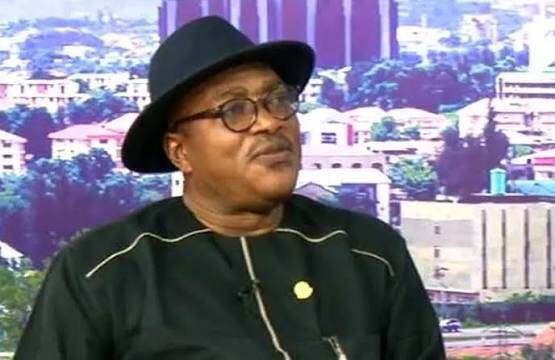
As Nigeria inches closer to a historic shift in its security architecture with the passage of the State Police Bill by the National Assembly, a former Director of the Department of State Services (DSS), Mike Ejiofor, has injected a note of caution into the national conversation, warning that not all 36 states possess the financial, manpower, and institutional capacity to immediately establish and sustain their own police formations. Ejiofor, who has been a long-standing advocate of state policing, stressed that while the creation of state police would significantly strengthen internal security and improve community policing, a one-size-fits-all approach would be counterproductive, urging policymakers to adopt a phased implementation strategy that considers the unique realities of each state. His comments come amid a renewed national debate over police reform, as Nigeria continues to grapple with banditry, kidnapping, terrorism, and other forms of violent crime across several regions.
Speaking in recent interviews on Channels Television and Eagle 102.5 FM, Ejiofor noted that the current police structure is too centralised for effective control, lacking the capacity to deal with the country's multifaceted security challenges. "There's no confidence in the Nigerian police, for instance, as I'm talking now. It's too centralised for effective control," he said, adding that the state police would complement the federal police by providing critical local intelligence. However, Ejiofor cautioned that the success of the initiative would depend largely on each state's ability to recruit, equip, and maintain a functional police force. He noted that states with stronger economies and better administrative structures are likely to implement the policy more quickly, while others may require additional federal support before launching their own police commands.
Despite these concerns, Ejiofor stressed that the establishment of state police is long overdue, pointing out that President Bola Tinubu, the National Assembly, and state governors have all publicly expressed support for the idea. "The President has bought into it. The National Assembly has bought into it. In fact, the House of Representatives has passed it, meaning the Senate. All the governors have bought into it. So what's beholding us?" he asked. The former DSS director questioned why critical security reforms appear to move slowly while other government matters receive speedy legislative attention. "When they want to take a loan, within 48 hours or even two hours, it is passed," he said. He insisted that if state police is established, "more than half of our problems will be solved".
Ejiofor proposed a practical pathway to state policing that leverages existing community-based security structures. He observed that virtually all states already operate informal security outfits in the form of vigilante groups and task forces. "There is no state now without a form of state police in the name of task force or vigilante. So just formalize it, get new recruitment, get leadership and see that this gets into operation," he said. He suggested that these groups could be converted with formal training by the Nigerian Police, creating clear distinctions from the duties of the federal police and the state police. However, he acknowledged that this process will take time and must be carefully managed to prevent political abuse.
The former DSS director also addressed widespread concerns that state governors might weaponise state police for political purposes, warning that such risks could be managed through clearly defined guidelines and institutional safeguards. "The misgivings people have about the state police is that it will be abused by the governors. There must be a yardstick and areas of establishment that check all this," he said. He recommended a transparent recruitment process that begins at the community level, involving traditional rulers and local unions to recommend non-partisan individuals without criminal backgrounds. He further advised that the governors' control should be limited and that the duties of state police should mainly focus on intelligence gathering and simple offences, while serious crimes such as terrorism, insurgency, and sabotage remain under federal jurisdiction.
Ejiofor's cautionary note comes as the Senate and House of Representatives have passed the State Police Bill, which now awaits ratification by at least 24 state Houses of Assembly. The proposed legislation seeks to establish State Police Services alongside the existing Nigeria Police Force to strengthen internal security, improve responses to local security threats, and reduce the burden on the federal police. However, concerns over funding, potential operational corruption, and the terrifying prospect of state governors weaponising the new forces as personal tools of political terror have dominated the national debate. The Senate has defended the bill, insisting that it contains comprehensive constitutional safeguards to prevent possible abuse.
As Nigeria stands at the threshold of a major security reform, Ejiofor's warning that not all states are ready for state police serves as a crucial reminder that the success of the initiative will depend on careful planning, adequate funding, and institutional safeguards. He urged policymakers to consider the unique realities of each state and to ensure that officers receive adequate training, modern equipment, and continuous professional development to prevent abuse, improve accountability, and guarantee effective service delivery. For Ejiofor, the establishment of state police is not a question of if, but when and how. "I believe very strongly that the establishment is long overdue," he concluded. As the debate continues, his voice adds a pragmatic dimension to what has become one of the most consequential policy conversations in Nigeria's recent history.
📩 Stone Reporters News | 🌍 stonereportersnews.com
✉️ info@stonereportersnews.com | 📘 Facebook: Stone Reporters News | 🐦 X (Twitter): @StoneReportNew | 📸 Instagram: @stonereportersnews
Add comment
Comments