

Reported by: Oahimire Omone Precious | Edited by: Oravbiere Osayomore Promise.
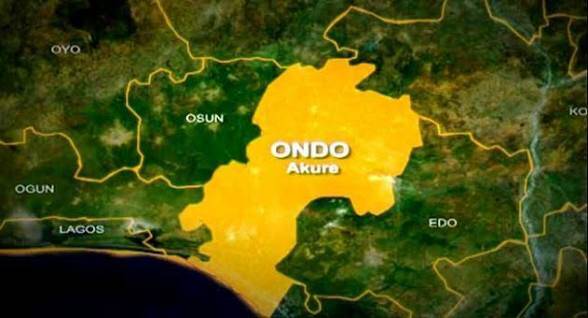
Residents and indigenes of Ido-Ani in Ose Local Government Area of Ondo State have made a passionate appeal to the management of First Bank of Nigeria Plc to reopen its branch in the community, nearly seven years after it was shut down following a tragic armed robbery attack that claimed multiple lives. The closure of the branch, which had served as the only commercial bank in the region for decades, has left thousands of residents and businesses without access to conventional banking services, forcing them to travel long distances to carry out financial transactions or rely on Point-of-Sale operators for services previously provided by the bank.
The financial institution's branch in Ido-Ani was attacked by armed robbers on April 8, 2019, in a violent incident that claimed the lives of at least six people, including a police inspector, a school vice-principal, and several bank customers who were using the Automated Teller Machine at the time of the attack. According to multiple accounts, the attackers reportedly carted away an undisclosed sum of money from the ATM. One of the robbers was later arrested by the police in collaboration with soldiers, but the damage had already been done. The bank subsequently shut down operations in the community as part of a branch rationalisation exercise, citing security concerns and operational challenges.
Speaking on behalf of concerned indigenes and residents, Steve Otaloro, a former Chairman of Irekari Local Council Development Area and a chieftain of the All Progressives Congress in Ondo State, urged the bank's management to reconsider its decision. In a statement titled "Asabia's Legacy Deserves Better: Why FirstBank Should Return to Idoani," Otaloro argued that restoring banking operations to the historic town would not only revive economic activities but also honour one of Nigeria's foremost banking icons, the late Chief Samuel Oyewole Asabia, the first indigenous Managing Director of First Bank.
Otaloro recalled that Asabia, an indigene of Idoani, became the first Nigerian Managing Director of First Bank in 1975 and played a pivotal role in expanding banking services to rural communities through the Federal Government's Rural Banking Programme introduced during the military administration of former Head of State, General Olusegun Obasanjo. According to him, Idoani was among the communities selected to benefit from the initiative, leading to the establishment of the First Bank branch in the 1980s during Asabia's tenure. "While there is no public evidence that the branch was established solely because it was Asabia's hometown, its establishment during his tenure remains historically significant and symbolises the philosophy of taking banking services to the grassroots," Otaloro said.
Unlike many rural branches that began operations in rented buildings, First Bank invested heavily in Idoani by constructing a purpose-built banking hall as well as an official residence for the branch manager, demonstrating the bank's long-term commitment to the community. For several decades, the branch served as the major financial hub for communities including Idogun, Imeri, Owani, Afo, Ikun, Oba and other neighbouring settlements. It also catered to the banking needs of key institutions such as the Federal Government College, Idoani, the Nigerian Navy Secondary School, Imeri, as well as farmers, traders, artisans, transport operators, cooperative societies, public servants and other business owners across the area.
According to Otaloro, the closure has forced residents and business owners to travel long distances to carry out banking transactions, while many now rely on Point-of-Sale operators for services previously provided by the bank. The economic impact has been devastating, with commercial activities crippled and socio-economic development slowed across the region. "If FirstBank considers Samuel Asabia worthy of a Professorial Chair at one of Nigeria's foremost universities, it should also consider him worthy of maintaining a FirstBank presence in the very town where he was born, nurtured and ultimately laid to rest," Otaloro said.
The community leader urged the current management of First Bank to revisit the decision taken by previous administrations, stressing that history would judge the present leadership not only by the decisions it inherited but also by whether it had the courage to reverse them. "The present management may not have ordered the closure of the Ido-Ani branch, but history will remember whether it had the vision to restore it. There is still time for First Bank to return to the historic town of Ido-Ani, where its first indigenous Managing Director, Chief Samuel Oyewole Asabia, began his remarkable journey and now rests," Otaloro said.
While acknowledging the security concerns that followed the robbery incident, Otaloro argued that the attack should not have marked the end of First Bank's presence in the community. He maintained that reopening the branch would not only honour the memory of a distinguished banker but also restore essential financial services to thousands of residents across Irekari LCDA and neighbouring communities, while reaffirming First Bank's commitment to financial inclusion and grassroots development. As the appeal gains momentum, residents of Ido-Ani and surrounding communities continue to hope that the bank's management will heed their call and return to a community that has been left financially stranded for nearly seven years.
📩 Stone Reporters News | 🌍 stonereportersnews.com
✉️ info@stonereportersnews.com | 📘 Facebook: Stone Reporters News | 🐦 X (Twitter): @StoneReportNew | 📸 Instagram: @stonereportersnews
Add comment
Comments