

Reported by: Ijeoma G | Edited by: Oravbiere Osayomore Promise.
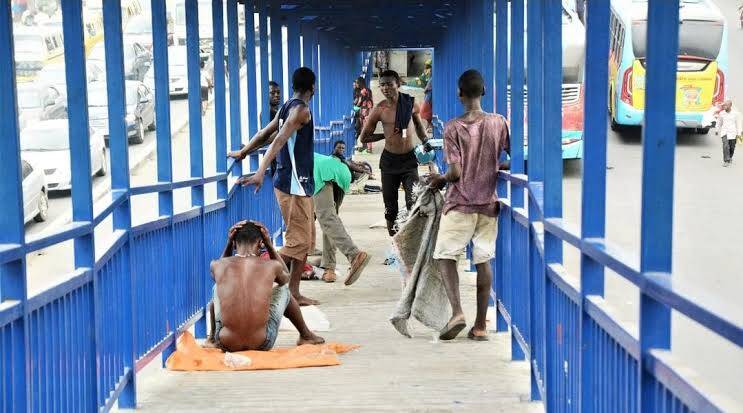
The Ogun State Government has launched a decisive enforcement operation to remove beggars and illegal traders from the pedestrian bridges at Ibafo and Mowe along the busy Lagos-Ibadan Expressway, in a renewed effort to restore order, improve pedestrian safety, and reclaim public infrastructure that had been overrun by commercial activities. The operation, which commenced on Monday, 6 July 2026, saw officials of the state environmental marshals chase away illegal traders and beggars from the bridges while warning them against returning, marking the government's latest intervention in a long-standing challenge that has forced many commuters to risk crossing the busy expressway.
During a visit to the bridge on Monday, officials of the state environmental marshals were seen chasing illegal traders and beggars from the bridge while warning them against returning, according to a report by PUNCH. One of the environmental marshals, who identified himself as the commander of the enforcement team but declined to disclose his name, citing a lack of authority to speak for the agency, said the operation was carried out on the directive of the state Ministry of Environment. According to him, the officers were deployed to ensure that no one trades or begs on the bridges. "I don't have the right to grant interviews. You can only get that from the ministry in Abeokuta. But the ministry said nobody must sell here. They sent us here to chase away the beggars and those selling on the bridge. We are also carrying out the same operation at the Mowe bridge. We will be coming here every day. Some officers have been assigned to monitor this place daily to ensure that nobody begs or sells on the bridge," he said.
The enforcement exercise comes months after PUNCH Metro reported how traders had taken over the pedestrian bridges, forcing many commuters to either squeeze through crowded walkways or risk crossing the busy expressway. The two pedestrian bridges at Ibafo and Mowe had become notorious for the activities of illegal traders who displayed jewellery, underwear, fruits, and other essential items, attracting many commuters who patronised them because of the convenience. However, the traders' occupation of the walkways left little room for pedestrian movement, forcing many to navigate through narrow spaces or abandon the bridges altogether and cross the highway, exposing themselves to the risk of fatal accidents.
A resident of Ibafo, identified as Aremu, while speaking to PUNCH, said the bridge had become noticeably free following the enforcement exercise. She explained that before the operation, traders occupied a large portion of the bridge daily, making movement difficult for pedestrians. "It is only today that people have been allowed to use the bridge freely because the environmental marshals cleared the traders. Before now, many people used to stay on the bridge and sell different things," she said. While acknowledging that trading on the bridge obstructed movement, she said the country's economic situation had forced many people to seek alternative means of earning a living. "I cannot completely discourage them because many of them have families to feed. There are not enough affordable places for them to sell, so they come here where people can easily see and patronise them," she added.
PUNCH observed that the two pedestrian bridges were largely free of roadside traders, allowing pedestrians to move without obstruction, unlike previous visits when the walkways were crowded with makeshift stalls and displayed goods. The development represents a significant improvement in the pedestrian experience along the Lagos-Ibadan Expressway, a major artery connecting Lagos to the South-West and beyond. The bridges, which are critical infrastructure for pedestrian safety, had been rendered almost unusable by the illegal commercial activities that had taken root on them.
The crackdown on pedestrian bridges is part of a broader effort by the Ogun State Government to enforce order and improve safety across public spaces. In March 2026, the government imposed a ban on street trading around the Sango Tollgate and demolished shanties and temporary structures along the Ogun–Lagos border to curb frequent accidents in the area. The government had also previously issued a warning to traders to stay off walkways and desist from blocking drainage in marketplaces and environs. The Senior Special Assistant to the Governor on Environment had earlier warned that traders who return to the Sango Tollgate or under the bridge would face legal consequences.
The government's enforcement drive has, however, drawn mixed reactions from residents and traders. While many commuters have welcomed the clearance of the bridges, some residents have expressed concern about the economic hardship facing the traders who have been displaced. The country's economic situation has forced many people to seek alternative means of earning a living, and for some, street trading on pedestrian bridges had become their only source of income. The government has not yet announced any alternative arrangements for the displaced traders, raising questions about the sustainability of the enforcement exercise and the social impact on those who have been displaced.
The Ogun State Government's commitment to restoring order and improving pedestrian safety is commendable, but the challenge of balancing enforcement with the need to provide sustainable livelihoods for vulnerable residents remains a critical issue. As the environmental marshals continue their daily monitoring of the bridges to ensure that no one begs or sells on them, the government will need to consider complementary measures to address the underlying economic factors that drive street trading and begging. The enforcement exercise at Ibafo and Mowe represents a significant step towards reclaiming public infrastructure for its intended purpose, but the long-term success of the initiative will depend on the government's ability to provide alternative economic opportunities for those who have been displaced. For now, commuters can once again use the pedestrian bridges freely, but the question of what happens to the traders who have been displaced remains unanswered.o
📩 Stone Reporters News | 🌍 stonereportersnews.com
✉️ info@stonereportersnews.com | 📘 Facebook: Stone Reporters News | 🐦 X (Twitter): @StoneReportNew | 📸 Instagram: @stonereportersnews
Add comment
Comments