

Reported by: Ijeoma G | Edited by: Oravbiere Osayomore Promise.
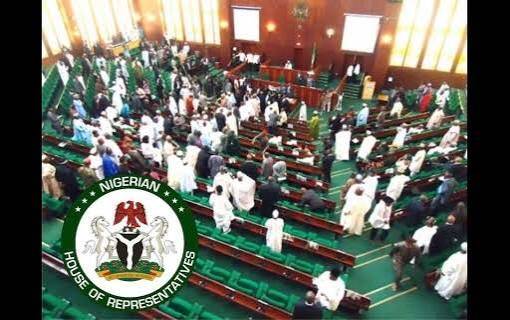
The House of Representatives descended into an unprecedented rowdy session on Wednesday, 8 July 2026, as lawmakers clashed violently over a motion seeking to summon President Bola Ahmed Tinubu to the chamber to explain the alleged non-funding of constituency projects and the persistent delays in the implementation of the 2025 Appropriation Act. The chaotic scene, which saw lawmakers shouting across the chamber and exchanging heated arguments, was triggered by a proposal that threatened to halt legislative activities for a full week unless the President appeared before the House.
The motion, moved by Honourable Alex Mascot Ikwechegh, a Labour Party member representing Aba North/Aba South Federal Constituency in Abia State, called on the President to appear before the House to address the persistent delays in funding constituency projects across the country. Ikwechegh drew attention to what he described as the poor implementation of the 2025 budget and inadequate releases to Ministries, Departments and Agencies (MDAs) despite appropriations approved by the National Assembly. He cited revelations made by ministers and heads of MDAs during the ongoing 2026 budget defence sessions, which showed that several agencies had received little or no capital releases throughout the 2025 fiscal year, leading to stalled projects and pushing indigenous contractors to the brink of insolvency.
In a dramatic escalation, another lawmaker proposed an amendment that the House should suspend plenary for one week until the matter was fully resolved — a suggestion that immediately deepened the divisions on the floor. The proposals sparked a heated and at times disorderly debate, with members shouting over one another and trading arguments across the chamber.
Honourable Yusuf Gagdi of the All Progressives Congress (APC) from Plateau State led the opposition to the motion, arguing that there was no constitutional basis for summoning the President. He maintained that the implementation and funding of constituency projects fell squarely within the responsibilities of the relevant ministries, departments and agencies, not the President himself. Gagdi rejected the proposal to suspend legislative activities for one week, describing it as unnecessary and unproductive. He called for the motion to be divided so that lawmakers could vote separately on the controversial prayer to invite the President and on the other resolutions, a request that further inflamed tensions in the chamber.
The disagreement was not limited to the issue of summoning the President. In a separate but related development, Honourable Benedict Etanabene, representing Okpe/Sapele/Uvwie Federal Constituency in Delta State, raised a point of privilege over a circular issued on 29 June 2026 by the Accountant-General of the Federation, Shamseldeen Ogunjimi, which instructed all federal MDAs to immediately halt the processing of payments for constituency and Zonal Intervention Projects (ZIPs) unless they had been formally vetted by the Federal Ministry of Special Duties and Intergovernmental Affairs. Etanabene argued that the directive could significantly slow down the implementation of projects already captured in the 2025 budget and frustrate lawmakers' efforts to deliver constituency projects to their constituents. He warned that the circular amounted to an additional bureaucratic hurdle not contemplated in the Appropriation Act and could further delay the execution of the budget. He therefore urged the House to invite President Tinubu to explain the slow pace of budget implementation and the rationale behind the directive, insisting that the executive owed Nigerians and the National Assembly an explanation.
The atmosphere in the chamber reached a boiling point when Ikwechegh went beyond the original prayers of his motion and proposed that President Tinubu be invited to appear before the House to explain the delays in budget implementation, continued funding challenges, and the impact on critical infrastructure and security projects. Before he could conclude, Speaker Tajudeen Abbas interrupted him, reminding him that the proposal was not part of the motion before the House and directed him to restrict his submissions to the approved prayers.
The Speaker's intervention sparked sharp reactions across the chamber. While some lawmakers supported the suggestion to invite the President, others opposed it, arguing that under the Constitution, ministers and heads of government agencies — not the President — are responsible for accounting for budget implementation. The disagreement deepened when Honourable Godwin Oga Amobi proposed an amendment seeking the postponement of the House's planned Open Week to allow lawmakers to focus on resolving the budget implementation crisis. Another lawmaker, Honourable Sani Lawan, seconded the amendment. As tensions escalated, Speaker Abbas repeatedly called for order, eventually ruling against the request to split the question for separate votes, insisting that the House would proceed in line with its rules and the motion as presented.
In a dramatic conclusion to the heated session, Speaker Abbas ruled the proposal to invite the President out of order, noting that it did not form part of the original motion moved by Ikwechegh. The ruling effectively killed the bid to summon the President, leaving the lawmakers to proceed with the remaining prayers of the motion, which urged the Federal Ministry of Finance, the Budget Office of the Federation, and the Office of the Accountant-General of the Federation to ensure the speedy implementation of the 2025 budget and the release of funds for constituency projects.
The rowdy session highlights the deepening frustration among lawmakers over the slow pace of budget implementation and the growing tension between the legislature and the executive over fiscal governance. With the 2025 budget still facing significant implementation challenges and the 2027 elections looming, the confrontation between the two arms of government is unlikely to subside anytime soon. For now, the House has taken a formal position against summoning the President, but the underlying grievances over constituency project funding and budget implementation remain unresolved, setting the stage for further confrontations in the months ahead.
📩 Stone Reporters News | 🌍 stonereportersnews.com
✉️ info@stonereportersnews.com | 📘 Facebook: Stone Reporters News | 🐦 X (Twitter): @StoneReportNew | 📸 Instagram: @stonereportersnews
Add comment
Comments