

Reported by: Ijeoma G | Edited by: Oravbiere Osayomore Promise.
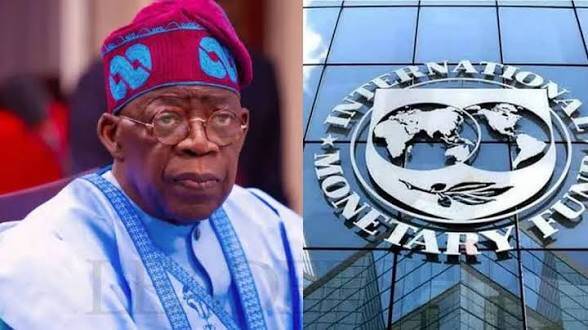
The International Monetary Fund (IMF) has retained Nigeria's economic growth forecast at 4.1 percent for 2026 and 4.3 percent for 2027, but warned that rising prices of essential commodities are expected to further aggravate poverty and food insecurity across the country, despite recent improvements in macroeconomic stability.
In its July 2026 World Economic Outlook (WEO) Update released on Wednesday, 8 July 2026, the IMF said Nigeria's gross domestic product (GDP) would expand by 4.1 percent this year, unchanged from its April forecast, before improving to 4.3 percent in 2027. The Fund attributed the outlook to improved macroeconomic stability and favourable terms-of-trade effects. However, it cautioned that "higher prices for essentials are expected to further aggravate poverty and food insecurity," warning that households across the country remain highly vulnerable to rising living costs.
The IMF projected that growth across Sub-Saharan Africa would remain broadly stable at 4.3 percent in 2026, though performance would vary widely among countries depending on policy choices, reform implementation, and exposure to external shocks. The Fund noted that "oil-importing, non-resource-intensive economies are more adversely affected by higher energy and food prices, whereas some larger economies continue to benefit from earlier stabilisation and reform efforts". Nigeria, it said, is supported by improved macroeconomic stability and favourable terms of trade, "though higher prices for essentials are expected to further aggravate poverty and food insecurity".
Globally, the IMF lowered its growth forecast for 2026 to 3.0 percent from the 3.1 percent projected in April, and raised the 2027 forecast to 3.4 percent. The Fund attributed the modest slowdown to the effects of the war in the Middle East, which are being partly offset by accelerated demand-driven momentum in the global technology cycle driven by advances in artificial intelligence (AI). Global headline inflation is expected to increase from 4.1 percent in 2025 to 4.7 percent in 2026 before declining to 3.9 percent in 2027, with the disinflation trend that had been in place since early 2024 now stalled.
The IMF warned that higher energy costs will continue to feed into food prices. Crude oil prices are projected to rise by 32 percent in 2026 compared with 2025 levels, natural gas prices by 22 percent, fertiliser prices by 26 percent, and food prices by 8 percent due to higher energy, transport, and fertiliser costs. The Fund cautioned that food insecurity could worsen materially if disruptions in fertiliser and energy markets intensify or linger, particularly in low-income countries where smallholder farmers cannot outbid competitors from wealthier nations. Energy prices currently remain about 25 percent higher than before the conflict began on February 28 and are expected to stay elevated.
The IMF identified renewed geopolitical tensions in the Middle East as the biggest downside risk to the global economy, warning that further escalation could extend commodity price volatility, threaten supply chains, raise prices, and weigh on financial conditions. The Fund's baseline forecast assumes that the Strait of Hormuz, a critical chokepoint through which approximately a fifth of the world's oil passes, will begin reopening in mid-July and return to pre-war conditions by March 2027.
The Fund advised governments to avoid broad-based fuel subsidies, tax cuts, and price controls, arguing that such measures are expensive and often poorly targeted. Instead, it recommended temporary and targeted support for vulnerable households while maintaining policies aimed at restoring price stability. According to the IMF, a re-escalation of geopolitical tensions would hurt growth and compound inflationary pressures, though a smoother-than-expected reopening of the Strait of Hormuz and lower commodity prices could lead to stronger growth and lower inflation.
📩 Stone Reporters News | 🌍 stonereportersnews.com
✉️ info@stonereportersnews.com | 📘 Facebook: Stone Reporters News | 🐦 X (Twitter): @StoneReportNew | 📸 Instagram: @stonereportersnews
Add comment
Comments