

Reported by: Ijeoma G | Edited by: Oravbiere Osayomore Promise.
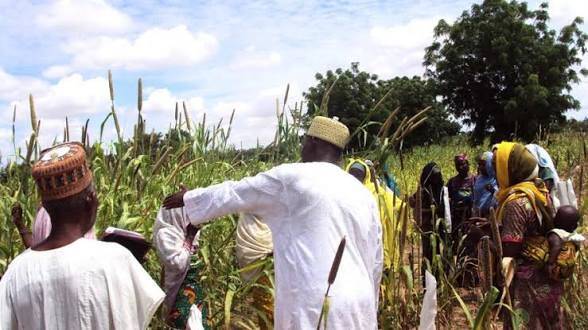
In Sokoto's Sabon Birni Local Government Area, the rainy season no longer signals the start of planting. Instead, it has become a period of enforced payments, as residents say they are compelled to raise funds to meet levies imposed by armed groups before they are allowed to access their farmlands. In June 2026, armed bandit groups imposed fresh multi-million-naira extortion levies on at least 26 rural communities in the Sabon Birni area, issuing a three-day ultimatum warning farmers not to visit their farmlands until their demands were fully met. The message was explicit: no agricultural activities would be permitted until the designated villages paid the forced annual levies. Each community is reportedly being asked to pay between N4 million and N6 million, with households contributing between N1,500 and N2,000. Residents say the money meant for fertiliser, improved seeds and hired labour is now being diverted to bandits, directly reducing rural citizens' purchasing power and exacerbating local poverty.
Armed groups operating in parts of Kano and Katsina states have reportedly formed a parallel system of governance within key forest reserves in the region, demanding up to N50,000 per acre from sugarcane growers before harvest. The bandits have entrenched themselves in the Rugu Forest of Faskari Local Government Area of Katsina State and Falgore Forest of Doguwa Local Government Area of Kano State, where they collect illegal farm taxes and issue threats against non-compliant farmers. Farmers who refuse to pay face intimidation, destruction of their crops, and the risk of violent attacks, forcing many to abandon their farmlands entirely. The forests sit at the heart of the Kano–Katsina food belt, a major agricultural corridor supplying sugarcane and maize to large markets such as Dawanau Market in Kano. Experts warn that continued disruption of farming activities in the area could trigger food shortages and price increases across Northern Nigeria.
In June 2026, bandits reportedly asked residents of Kwandawa community in Malumfashi Local Government Area of Katsina State to pay a N20 million levy or vacate their village and farmlands. The levy was imposed following the killing of one of the bandits' members. In Zamfara State, villagers have reported that bandits are now charging them "harvest fees" before they can touch their own crops, with communities being forced to pay between N5 million and N20 million just to access their farmlands. Villagers in Tsafe Local Government Area said bandits are demanding payments in cash or agricultural produce before allowing farmers to access or harvest their fields.
The violence has escalated drastically since the onset of this year's rainy season. On July 4, 2026, armed bandits killed at least nine farmers and kidnapped several others during an attack on farmland outside Kakangi village in Kaduna State. In Niger State's Pandogari district, bandits encircled farmlands on June 15, killing Dauda Galadima and abducting five farmers, including a father and his son. After the family paid a five-million-naira ransom, the bandits released the father but kept the son for more money. A day earlier, bandits killed two farmers and kidnapped four women and a man. Upon hearing the news of his abduction, the man's mother reportedly slumped and was later pronounced dead at the hospital.
A resident of the Pandogari district, Khalid Umar, told Premium Times that roughly half of the region's farms have been abandoned. At least nine people have been killed and approximately 20 others abducted in the district since the rainy season began. Among those killed was Abubakar Idris, a staff nurse at the Kagara General Hospital, who was murdered on his farm.
The Chairman of the All Farmers Association of Nigeria (AFAN), Kano State chapter, Abdullahi Ali Mai Biredi, told DAILY POST that persistent attacks on farmers are contributing to food shortages in northern Nigeria. He warned that preventing small-scale farmers from accessing their farmlands would reduce food production and worsen food insecurity. "Now, if these farmers cannot go to their farms because of insecurity, there will be a shortage of food, and food scarcity causes problems," he said. "Shortages of food also cause insecurity".
The AFAN president, Alhaji Farouk Mudi, called on the federal government to urgently halt the illegal "farming tax" imposed on farmers, warning that the development could worsen food insecurity and unemployment across the country. He said bandits now operate as de facto authorities in rural areas, issuing deadlines and sending emissaries to collect the money. "The gradual replacement of democratic authority by criminal elements is weakening public trust in both state and federal governments. By collecting taxes, bandits are entrenching criminal authority and normalising parallel governance structures in rural areas," he added.
A new report by SBM Intelligence warns that bandits and insurgents are no longer content with ransom payments and sporadic raids. Instead, they are embedding themselves into local economies—taxing farmers, controlling markets and levying traders—raising the risk of lost state revenue and higher consumer prices for Nigerians. In Shiroro, Niger State, the killing of more than 60 people was not merely retaliatory but designed to reshape control of farmlands. With farmers fleeing, "this displacement… will likely lead to a total abandonment of sorghum and yam cultivation… as farmers choose survival over tillage". In Sabon Birni, Sokoto State, traders are operating under what amounts to an informal taxation regime, with bandits seizing control of trade corridors linking Nigeria to the Niger Republic.
The World Food Programme has revealed that over 17 million people across northern Nigeria are now facing acute food insecurity, with conflict driving hunger in some northern states to levels not seen in almost a decade. The United Nations has also warned that the total number of food insecure people in north-eastern Nigeria has expanded to 6.2 million, yet the WFP is only able to feed 740,000 of them.
As the rainy season peaks, the window for planting is rapidly closing. Farmers like Khalid Umar in Niger State are devising localised security measures, assigning individuals to climb the tallest trees to act as sentries. Yet even these makeshift early-warning systems are not enough. Without a decisive shift in security strategy to protect the agricultural periphery, these communities face not only the immediate threat of violence but a catastrophic food crisis.
The question now is not whether Nigeria will face a food shortage, but how severe it will be—and how many more lives will be lost before the government acts to dismantle the bandit taxation system that has turned farming into a death sentence.
📩 Stone Reporters News | 🌍 stonereportersnews.com
✉️ info@stonereportersnews.com | 📘 Facebook: Stone Reporters News | 🐦 X (Twitter): @StoneReportNew | 📸 Instagram: @stonereportersnews
Add comment
Comments