

Reported by: Oahimire Omone Precious | Edited by: Oravbiere Osayomore Promise.
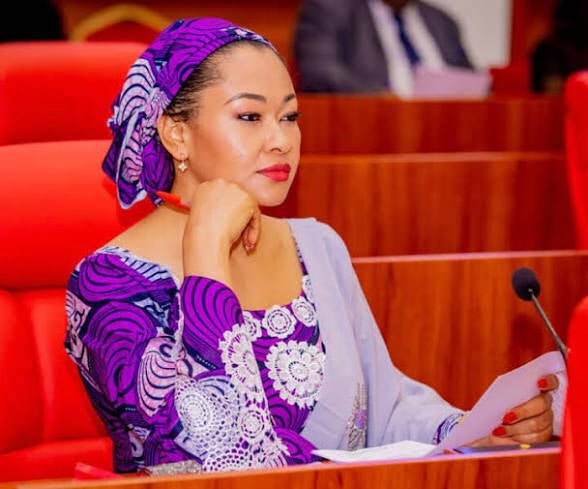
Senator Natasha Akpoti-Uduaghan, representing Kogi Central, has issued a strong caution against the potential weaponisation of Nigeria's proposed state police, urging the National Assembly to embed robust constitutional safeguards and independent oversight mechanisms into any legislation establishing the new policing structure. Speaking on Thursday, 9 July 2026, at the "Building a National Consensus for State Police and National Security" conference organised by ARISE News and THISDAY Newspaper in Abuja, the senator declared that state police must never become an instrument of political oppression or executive intimidation.
While expressing support for the decentralisation of Nigeria's policing system, Akpoti-Uduaghan stressed that the design must rule out abuse at the state level. "State police should never become an instrument of political oppression or executive intimidation," she said. "We must build a policing system that serves the people, protects democracy and remains accountable to the rule of law".
The senator's greatest concern, she reiterated, is the possibility that governors or other political actors could misuse state police for partisan purposes if adequate legal safeguards are not established. "My first concern is the abuse of this state police by both state and national political actors," she said. She questioned how ordinary Nigerians would seek justice if senior officers abused their authority, urging lawmakers to ensure that complaints against state police commanders are independently investigated rather than routed through politically influenced structures.
"Who do you report to? How do you trust that your petitions will be addressed? If the police commander is in default of compliance, who do ordinary citizens report to? And how do you trust that a national police council would not be a boys' club of some sort, or a political club of some sort, that will turn a blind eye to genuine complaints of Nigerians?" she asked.
Akpoti-Uduaghan also stressed the importance of sustainable funding, warning that inadequate financial support could undermine the effectiveness of state police. "Funding is one of the most important aspects the Federal Government must address. Without adequate and sustainable financing, state police will struggle to deliver on their constitutional responsibilities," she said. She identified personnel welfare, training, intelligence gathering and the provision of modern equipment as key areas that any funding framework should adequately address.
She cautioned that states generate vastly different levels of revenue, making it unrealistic to expect every state to finance policing at the same level without federal intervention. "We do know that the economic opportunities of states in Nigeria vary. We have some big states, like Lagos. You can't compare the revenue generated by Lagos with states like Kogi and Zamfara," she said.
The senator commended President Bola Tinubu and the Inspector-General of Police for what she described as their prompt response to security challenges. "I commend Mr President and the Inspector-General of Police for their prompt and decisive actions on security issues. That kind of responsiveness builds public confidence," she said.
She also urged security agencies to deploy technology more aggressively against criminal groups, citing an incident in which bandits allegedly distributed large sums of money through a live TikTok giveaway without being tracked. "I have spoken loudly about the need to deploy smart technologies to curtail the excesses of insecurity in our country," she said.
Drawing on her personal experience, Akpoti-Uduaghan recounted how a fully equipped police station she had facilitated for her constituency remained idle despite repeated notifications to the previous Inspector-General of Police, only becoming operational after the appointment of the current police chief. "There was no response. In less than two weeks, the police station was made operational," she said. She said the contrasting responses from two different police leaderships underscored the importance of competent leadership within security institutions.
Akpoti-Uduaghan's warning comes as the National Assembly moves forward with the landmark State Police Bill. On 24 June 2026, the Senate passed the Constitution of the Federal Republic of Nigeria (Alteration) (State Police) Bill, 2026, with 84 of 109 senators voting in support. The bill seeks to establish a dual policing structure, allowing states to create and maintain police services while the Nigeria Police Force retains responsibility for national security matters. It also includes provisions barring state police authorities from targeting individuals or groups for criticising governments.
The legislation, which has been transmitted to the 36 state Houses of Assembly for ratification, is expected to create a Federal Police Service and a State Police Service for states that choose to participate. President Tinubu has also inaugurated a working group led by Chief of Staff Femi Gbajabiamila to oversee the implementation of state police nationwide.
Akpoti-Uduaghan stressed that no legal framework alone could guarantee effective policing unless those implementing it were patriotic and genuinely committed to the rule of law. Her warning serves as a crucial reminder that while decentralised policing is a necessary reform, its success will ultimately depend on the strength of its safeguards and the integrity of those entrusted with its implementation. As she put it: "We must build a policing system that serves the people, protects democracy and remains accountable to the rule of law".
📩 Stone Reporters News | 🌍 stonereportersnews.com
✉️ info@stonereportersnews.com | 📘 Facebook: Stone Reporters News | 🐦 X (Twitter): @StoneReportNew | 📸 Instagram: @stonereportersnews
Add comment
Comments