

Reported by: Oahimire Omone Precious | Edited by: Oravbiere Osayomore Promise.
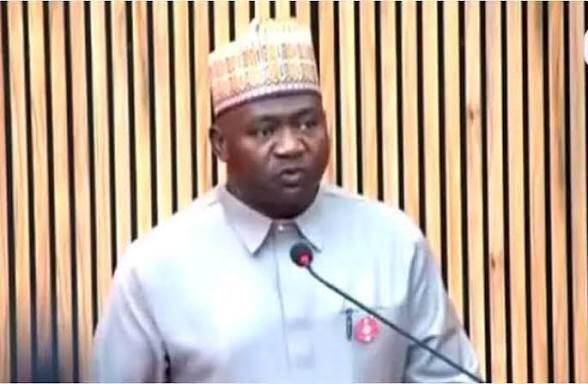
Minister of Defence, General Christopher Musa (retd.), has declared that Nigeria cannot defeat terrorism through military force alone, warning that without a comprehensive national database, security forces are effectively operating blind and unable to properly identify criminals hiding within communities. Speaking at an ARISE News Town Hall on State Police on Thursday, 9 July 2026, the minister stressed that lasting peace requires a whole-of-society approach that combines military action, community engagement, stronger governance, and robust national identification systems.
The minister lamented that the absence of a unified database is one of the most critical obstacles to effective policing and crime prevention, noting that security agencies are forced to operate without a reliable system to verify identities, track suspects, or monitor criminal movements. He questioned whether Nigeria even possesses a functional national database, arguing that without one, security forces cannot effectively distinguish between criminals and civilians or prevent offenders from moving freely across state lines. He insisted that building a reliable database would make it more difficult for criminals to operate anonymously and would significantly improve the ability of law enforcement agencies to investigate crimes and apprehend offenders. He pointed to other countries where biometric and identity systems are used to quickly arrest offenders, stating that it is not magic but simply the result of having a proper database. He also called for a nationwide census covering Nigerians both at home and abroad, saying accurate population data would support security planning and enforcement efforts.
Musa defended the military’s rules of engagement, explaining that troops operate under clearly defined standards and are only authorised to use lethal force when their lives, the lives of fellow soldiers, or the lives of civilians and property are under immediate threat. He stressed that soldiers receive extensive training before deployment to ensure they can distinguish between bandits, terrorists, and civilians. He acknowledged the complexity of asymmetric warfare, noting that it is far more difficult than conventional warfare because terrorists often hide among the civilian population. He described the fight against insurgency as an asymmetric conflict where the enemy could be a person who appears to be a citizen, a brother, or an uncle, making it extremely difficult for security forces to identify legitimate targets. He drew comparisons with other countries, noting that Turkey has battled the PKK for more than 40 years, showing that such conflicts often take decades to resolve.
The defence minister stressed that military operations account for only a fraction of the solution, estimating that the kinetic aspect is about 25 to 30 per cent, while the non-kinetic approach, including dialogue, understanding, and working with communities, is the larger part. He declared that no country can shoot itself to peace, and that lasting security can only be achieved by combining security operations with dialogue, community engagement, and other non-military measures. He argued that terrorists often operate within communities, making public cooperation essential. If communities are on the side of the terrorists, it makes it difficult for security forces to win, but if communities are with the security forces, it becomes much easier.
Musa also called for stronger collaboration between traditional rulers, religious leaders, local governments, and residents, saying they all have vital roles to play in tackling insecurity. He urged policymakers to focus on the root causes of insecurity rather than concentrating solely on responding to violence after it occurs. He questioned whether citizens feel properly led and why some communities might not support the armed forces or the government. He said that for the country to succeed, local governments, communities, traditional rulers, and religious leaders must all contribute to security efforts wherever they operate. He stressed that better governance and improved oversight of financial transactions would also help authorities detect suspicious activities linked to criminal enterprises.
The minister’s remarks underscore the growing frustration within the security establishment over the lack of a centralised identity system, which has allowed criminals to exploit gaps in data collection and evade detection. His call for a unified database reflects a broader recognition that technology-driven solutions and stronger data management are essential to complementing ongoing military operations and restoring lasting peace across the country. As Nigeria continues to grapple with terrorism, banditry, and kidnapping, Musa’s message serves as a stark reminder that the fight against insecurity cannot be won by bullets alone, but requires a fundamental shift in how the state identifies, tracks, and engages with its citizens.
📩 Stone Reporters News | 🌍 stonereportersnews.com
✉️ info@stonereportersnews.com | 📘 Facebook: Stone Reporters News | 🐦 X (Twitter): @StoneReportNew | 📸 Instagram: @stonereportersnews
Add comment
Comments