

Reported by: Oahimire Omone Precious | Edited by: Oravbiere Osayomore Promise.
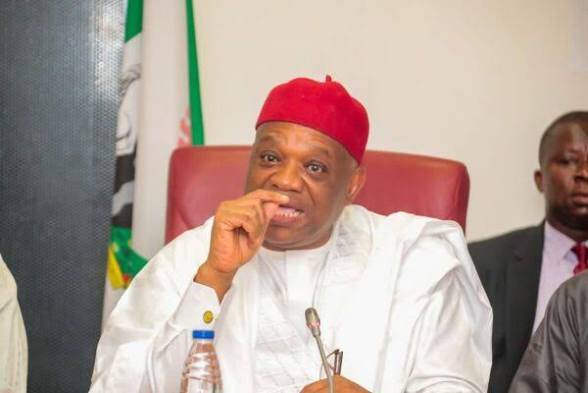
Senator Orji Uzor Kalu, representing Abia North Senatorial District, has dismissed claims that President Bola Tinubu's push for the establishment of state police is driven by political considerations ahead of the 2027 general election, insisting that the President's primary motivation is the safety and security of Nigerians. Kalu made the clarification during an interview on Arise News on Sunday, 12 July 2026, amid growing concerns that the proposed constitutional amendment could be weaponised for political advantage in the upcoming electoral cycle.
Addressing what he described as a widespread misconception, Kalu said Tinubu had consistently explained that his interest in state police was rooted in addressing the country's worsening security challenges. He stated that President Tinubu is not making this law because of the 2027 election, but because he is anxious about the safety of Nigerian people. The former Abia State Governor explained that the proposed legislation is part of a broader security reform agenda aimed at tackling banditry, kidnapping, and other violent crimes that have devastated communities across the country.
Kalu outlined the two-step legislative process required to establish state police, noting that the first and most critical step is for state Houses of Assembly to approve constitutional amendments removing the provision that recognises only one police force in the country. If the State Houses of Assembly amend those sections today, it gives the opportunity to go to the second stage, which is bringing an Act to amend the Police Act. According to Kalu, once the constitutional amendment is completed, the National Assembly will move to amend the Police Act to provide the legal framework for the operation of state police, including provisions defining the powers of governors, modes of appointment, operational procedures, and other governance structures.
The senator also addressed concerns over the potential misuse of state police by governors, stressing that the proposed legislation would include clear safeguards to prevent political abuse. He noted that once the constitutional amendment secures the required approval from the states, the National Assembly will amend the Police Act, 2020, to provide the legal framework for state police, including their powers, command structure, funding, relationship with the Federal Police Service, governors' roles, and safeguards against political abuse. Kalu's remarks align with similar assurances from other lawmakers, including Deputy Senate President Barau Jibrin, who recently described Tinubu's state police proposal as a masterstroke that will strengthen Nigeria's security architecture while incorporating safeguards to prevent political or ethnic abuse.
The push for state police has gained significant momentum amid worsening insecurity across the country. Section 214(1) of the 1999 Constitution currently provides for only one police force, the Nigeria Police Force, meaning the creation of state police requires a constitutional amendment approved by two-thirds of the National Assembly and ratified by at least 24 state Houses of Assembly. As part of the ongoing constitutional review, the Senate and House of Representatives have passed the state police amendment bill and transmitted it to the 36 state Houses of Assembly for concurrence. President Tinubu and the National Economic Council, comprising the 36 state governors and chaired by Vice President Kashim Shettima, have endorsed the establishment of state police, while the President has also inaugurated a Presidential Working Group on the National Policing Bill to develop the legal framework for implementation. Governors across the 36 states have agreed to ensure the State Police Bill is passed simultaneously by their respective Houses of Assembly once it is transmitted by the National Assembly, a coordinated approach intended to accelerate the establishment of state police across the country.
Kalu's intervention comes amid growing scepticism from opposition figures and civil society groups, who have questioned whether state police could be used to suppress dissent and intimidate political opponents in the run-up to the 2027 elections. By insisting that Tinubu's motivation is rooted in security rather than politics, Kalu has sought to reassure Nigerians that the proposed reform is a genuine effort to address the country's deep-seated security challenges rather than a political manoeuvre. As the constitutional amendment process continues and the National Assembly prepares to amend the Police Act, the debate over state police is likely to intensify, with proponents arguing that it will bring policing closer to communities and critics warning of the risks of political abuse.
📩 Stone Reporters News | 🌍 stonereportersnews.com
✉️ info@stonereportersnews.com | 📘 Facebook: Stone Reporters News | 🐦 X (Twitter): @StoneReportNew | 📸 Instagram: @stonereportersnews
Add comment
Comments