

Reported by: Ijeoma G | Edited by: Oravbiere Osayomore Promise.
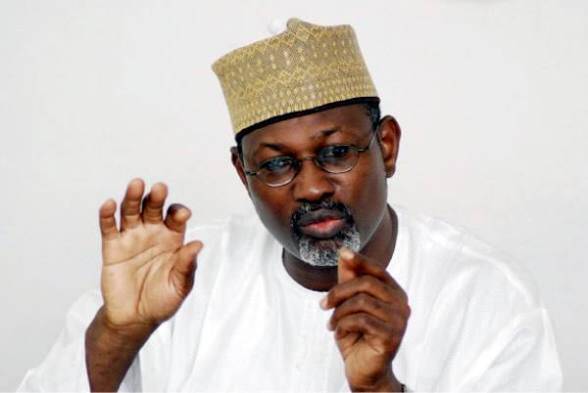
A former Chairman of the Independent National Electoral Commission (INEC), Professor Attahiru Jega, has issued a stark warning that several provisions of the 2026 Electoral Act could seriously undermine the credibility of the 2027 general elections if left unamended. Speaking in Abuja while delivering a paper titled "Some Reflections on the 2026 Electoral Act and Nigeria's Electoral Democracy," Jega acknowledged the Act's overall objectives but cautioned that it contains "issues of serious concern" and "grey provisions" that require immediate legislative review.
Jega expressed deep concern over Section 60(3) of the Act, which deals with the electronic transmission of election results. While he praised the Act for mandating electronic transmission, he warned that the provision allowing the manual result sheet, Form EC8A, to become the primary collation document whenever electronic transmission fails could be a recipe for fraud. Given what we know about the Nigerian environment and the desperation of the "do-or-die" politicians, there shouldn't be such a vague provision, which would be used to truncate electronic transmission, in favour of manual transmission of results, which is easier to fraudulently manipulate and exploit, Jega said. He also questioned the Act's reliance on the INEC Result Viewing Portal (IReV) for final result determination in cases of transmission failure. There is an undue emphasis on reliance on data on the IReV portal for final determination of results in case of transmission failure. If this is so, there is a misunderstanding of the fact that IReV transmitted data is for public 'viewing' purposes only. The data to be relied upon in result declaration should be the backend result compilation database, which ideally is more secure, not publicly accessible, and less susceptible to fraudulent intrusion, he added.
Jega also criticised Section 83(5), which bars courts from entertaining suits relating to the internal affairs of political parties. He described the provision as an "overly broad" and "sweeping generalisation" that should be moderated, arguing that the judiciary must retain the authority to intervene where constitutional rights or the rule of law are at stake. How could courts be denied the power to entertain 'internal affairs' of a political party that contradict constitutional provisions, such as those bordering on fundamental rights and the rule of law? he questioned. Perhaps most controversially, Jega faulted Section 138(1), which removes qualification as a ground for post-election challenges. Citing Section 131 of the 1999 Constitution, which prescribes a minimum educational qualification for candidates seeking elective office, Jega argued that the removal of this ground was constitutionally questionable and could encourage fraud. Besides, it is a very good provision in the previous acts, which has been put to good use, and there does not seem to be any rational justification for removing it; unless, of course, if some certificate fraudsters and qualification racketeers would like to have an unrestricted field day, he said.
Beyond the 2027 elections, Jega advocated for far-reaching electoral reforms, including removing the President's power to appoint the INEC Chairman and national commissioners, and unbundling INEC so it can focus on conducting elections while separate agencies handle the prosecution of electoral offenders, constituency delimitation, and political party regulation. He also called for stricter legal requirements for political parties seeking to field candidates and a reduction in campaign spending limits to curb the monetisation of politics. Jega urged the National Assembly to amend the Electoral Act in line with African Union and ECOWAS protocols, which require changes to electoral laws to be completed at least six months before a general election. However, with the 2027 presidential and National Assembly elections scheduled for January 16, 2027, the window for meaningful amendments is rapidly closing. As the former INEC chairman put it, electoral reforms should emerge from broad national consultations and be guided by the objective of strengthening Nigeria's democracy, not by the interests of those who seek to exploit the system for personal gain.
📩 Stone Reporters News | 🌍 stonereportersnews.com
✉️ info@stonereportersnews.com | 📘 Facebook: Stone Reporters News | 🐦 X (Twitter): @StoneReportNew | 📸 Instagram: @stonereportersnews
Add comment
Comments