

Reported by: Puis Althea | Edited by: Oravbiere Osayomore Promise.
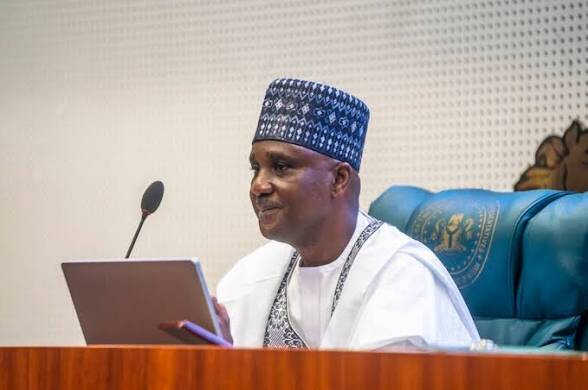
The 10th House of Representatives has recorded the highest number of bills introduced in any single Assembly since Nigeria's return to democratic rule in 1999, with a total of 2,747 bills sponsored over the past three years, the Speaker of the House, Rt. Hon. Tajudeen Abbas, declared on Tuesday. Unveiling the chamber's third-year legislative scorecard during the opening of the 2026 National Assembly Open Week in Abuja, Speaker Abbas disclosed that out of the 2,747 bills introduced between June 2023 and June 15, 2026, a total of 363 were successfully passed by the House. Of these, 72 have already received presidential assent from President Bola Ahmed Tinubu and have become law, a figure that the Speaker described as the highest single tally of presidential assent by any President since Nigeria's independence in 1960.
The Speaker's address, delivered before a packed chamber of lawmakers, dignitaries, and citizens, was emphatic in its defence of the House's legislative productivity. "The citizens of this nation submitted 2,747 bills to this House. Of these, we passed 363, and 72 have already received presidential assent and become law," Abbas declared. "These are not lines upon a page; they are measurable and lasting change. These figures represent the highest for any Assembly since 1999". He further noted that the landmark statutes passed by the House include the Student Loan Act, which has enabled over 1.6 million Nigerians to access interest-free loans through the Nigerian Education Loan Fund with more than ₦303 billion disbursed, as well as reforms in revenue generation and the creation of development commissions across various regions of the federation. The Speaker's remarks were delivered as part of the House's broader commitment to transparency and public engagement during the Open Week, an annual initiative designed to bridge the gap between citizens and the legislative process.
A detailed breakdown of the legislative scorecard, presented by the Chairman of the House Committee on Rules and Business, Hon. Francis Ejiroghene Waive, revealed the progressive trajectory of the House's work across three sessions. During the first legislative session, the House introduced 1,351 bills, comprising 12 executive bills, 1,336 private members' bills, and three Senate concurrence bills, with 89 bills successfully passed. The second session saw the introduction of 912 bills, including 14 executive bills, 868 private member bills, and 30 Senate bills, resulting in 148 passed. The third session, which concluded in June 2026, recorded 484 new bills, consisting of 31 executive bills, 391 private member bills, and 62 Senate bills, with 126 bills passed. Of the 2,747 bills introduced, 1,782 are currently awaiting second reading, 323 have been referred to standing committees, 185 are awaiting further consideration, 89 have been consolidated with similar legislative proposals, and five were negatived.
The 72 bills that have received presidential assent represent a significant milestone for President Tinubu's administration. According to the Speaker's scorecard, this figure surpasses the number of bills assented to by any previous president since 1960, underscoring the executive's willingness to work with the legislature in advancing the nation's legal and policy framework. Among the notable laws enacted during the 10th Assembly are the 2026 Appropriation Act, the Electoral Act 2026, the constitutional amendment bill on state police, the Minimum Wage Act, and the Student Loan Act. The House also processed several landmark executive bills, including annual appropriation bills, tax reform measures, and amendments to key economic and governance laws. The high number of private members' bills, which accounted for the overwhelming majority of legislation introduced, reflects growing legislative activism among lawmakers and a shift towards a more member-driven legislative agenda.
The unveiling of the scorecard came against the backdrop of the 2026 National Assembly Open Week, a three-day event themed "Three Years of the 10th Assembly: Advancing Transparency, Inclusion, and Reform". The event, which also featured the presentation of the House's performance review, drew an impressive roster of high-level attendees, including the President of the Senate, Senator Godswill Akpabio, who formally declared the Open Week open. In his address, Speaker Abbas urged Nigerians to draw closer to the workings of their parliament, to read bills before passing judgment, and to submit memoranda when called upon. "A democracy is made strong not by those who applaud it from a distance, but by those who step forward and take part. Open Week is the hand this House extends. I ask you to take it," he said. The Speaker also welcomed constructive criticism, describing it as critical to good law-making, while urging citizens to study bills thoroughly before criticising them.
Beyond the raw numbers, the House also highlighted its oversight and public engagement activities. According to the scorecard, 220 motions were presented between June 2025 and June 2026, with 192 referred to standing committees and 28 assigned to ad hoc committees. Of these, 121 were admitted as matters of urgent public importance. The House also considered and adopted 48 public petitions during the third legislative session, underscoring its constitutional oversight responsibilities and efforts to provide citizens with avenues for seeking legislative intervention. The Public Accounts Committee was also commended for recovering over $61.5 billion in unremitted oil revenues and more than ₦520 billion in outstanding Value Added Tax obligations as of the end of 2025.
The Speaker, however, urged lawmakers to lift their gaze beyond the records and towards the purpose that animates them. "The ultimate aim of this House was never to pass the greatest number of laws. It was to help build a Nigeria in which a child in the remotest village may expect the same protection of the law, the same access to learning, and the same measure of dignity as a child born to privilege in our cities," Abbas noted. He added that every reform supported, every budget refined, and every oversight duty discharged is a single brick laid toward that enduring edifice. While acknowledging that the House has not yet arrived, the Speaker stated that lawmakers stand closer than they did three years ago, with the foundation deeper and the will of the House firmer. As the 10th Assembly prepares for its fourth and final legislative session, the question remains whether this record-breaking productivity will translate into tangible improvements in the lives of ordinary Nigerians, a challenge that the Speaker himself acknowledged as the true measure of legislative success.
📩 Stone Reporters News | 🌍 stonereportersnews.com
✉️ info@stonereportersnews.com | 📘 Facebook: Stone Reporters News | 🐦 X (Twitter): @StoneReportNew | 📸 Instagram: @stonereportersnews
Add comment
Comments