

Reported by: Ijeoma G | Edited by: Oravbiere Osayomore Promise.
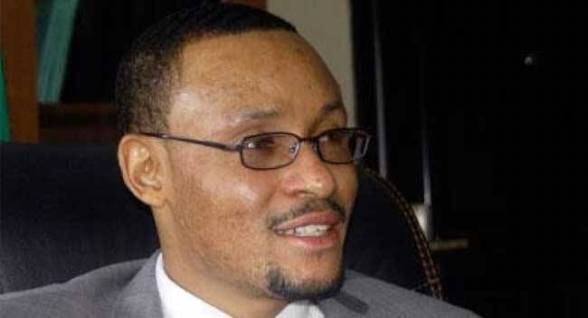
A Federal Capital Territory High Court sitting in Maitama, Abuja, has granted bail to the former Chairman of the Code of Conduct Tribunal, Danladi Umar, in the sum of N100 million with one surety in like sum, rejecting objections raised by the Economic and Financial Crimes Commission. Justice Peter Kekemeke, who had on July 9, 2026, ordered Umar's remand at the Kuje Correctional Centre pending the hearing of his bail application, ruled on Wednesday that the prosecution failed to produce strong reasons why bail should not be granted to the defendant. The court's decision came six days after the EFCC arraigned Umar on a four-count charge bordering on alleged abuse of office and conferring undue advantage on himself while serving as chairman of the CCT and chairman of its tender board.
Justice Kekemeke, in his ruling, ordered that the surety must be an owner of a property located within the Federal Capital Territory, Abuja, and must possess a valid Certificate of Occupancy. The judge also directed that the surety must depose to an affidavit of means. Additionally, the court ordered Umar to surrender his international passport and not travel out of the country without the court's permission. The case was subsequently adjourned to October 29, 2026, for the commencement of trial. Umar is to remain at the Kuje Correctional Centre pending the fulfilment of his bail conditions.
During the bail hearing, Umar's lawyer, Edward Sunday, urged the court to admit his client on liberal terms, arguing that the defendant had cooperated with the EFCC during their year-long investigation and consistently honoured invitations extended to him by the anti-graft agency. Sunday also informed the court that Umar did not jump bail after the EFCC granted him administrative bail. However, the prosecution counsel, Christopher Mshelia, opposed the bail application, citing the gravity of the offence, the punishment upon conviction, and the nature of the evidence. Mshelia told the court that the witnesses worked under the defendant, and there was a likelihood of interference. The judge then asked the EFCC counsel, "During the investigation, did he run? Did he abscond?" Mshelia replied, "No." Explaining further, he said that during the investigation, there was no certainty that the investigation would lead to a charge, and the circumstances differed.
Justice Kekemeke, after considering the arguments, noted that a defendant is innocent until proven guilty. He stated that unless the prosecution proves that the defendant would interfere with the evidence, commit another crime, intimidate witnesses, or conceal or destroy evidence, then a defendant has the right to bail. Since the prosecution did not produce strong reasons why bail should not be granted, the judge granted Umar bail. The judge also set aside the prosecution's claim that the defendant could commit another offence or evade trial, holding that the charges contained bailable offences.
The EFCC had on July 9, 2026, arraigned Umar before Justice Kekemeke on a four-count charge. The anti-graft agency alleged that the defendant abused his official position by conferring an undue advantage on himself while he served as head of the tribunal. According to the charge, Umar allegedly received kickbacks totalling about N15.5 million from contractors. The prosecution told the court that the defendant, in 2021, used his wife's bank account to collect the sum of N5.5 million from a contractor engaged to paint the headquarters of the CCT in Abuja. It was further alleged that on January 25, 2024, he also used his wife's account to collect another N6 million from a contractor that handled the digitisation of the tribunal's records. Furthermore, the defendant was accused of directing a contractor to pay N2.43 million for his daughter's tuition fee at Baze University, Abuja. He was said to have committed offences punishable under Section 19 of the Corrupt Practices and Other Related Offences Act, 2000. Upon his arraignment, Umar pleaded not guilty to all allegations. At the resumed proceedings on Wednesday, his legal team prayed the court to release him on bail pending the conclusion of the trial.
It will be recalled that the defendant, while in office as CCT Chairman, on January 23, 2019, issued a controversial ex parte order that led to the removal of a serving Chief Justice of Nigeria, Justice Walter Onnoghen. Following the ex parte order, the late President Muhammadu Buhari, on January 25, swore in the next most senior jurist of the Supreme Court, Justice Tanko Muhammad, as Acting CJN. Although Onnoghen later voluntarily resigned his position, the incident remains a significant part of Umar's controversial legacy as head of the tribunal.
The granting of bail to Umar marks a significant development in the high-profile corruption case against the former tribunal chairman. The court's decision to grant bail, despite the EFCC's opposition, underscores the principle that a defendant is entitled to bail unless the prosecution can demonstrate compelling reasons for denial. As the case proceeds to trial on October 29, the prosecution is expected to present its evidence, while the defence will have the opportunity to challenge the allegations. The outcome of the trial will be closely watched by legal observers and the public, given the prominence of the defendant and the nature of the charges against him. For now, Umar remains in custody at the Kuje Correctional Centre until he meets the bail conditions set by the court.
📩 Stone Reporters News | 🌍 stonereportersnews.com
✉️ info@stonereportersnews.com | 📘 Facebook: Stone Reporters News | 🐦 X (Twitter): @StoneReportNew | 📸 Instagram: @stonereportersnews
Add comment
Comments