

Reported by: Oahimire Omone Precious | Edited by: Oravbiere Osayomore Promise.
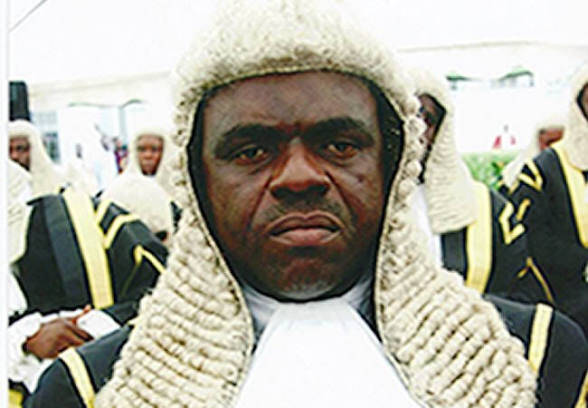
The Chief Judge of the Federal High Court, Justice John Terhemba Tsoho, has issued the Federal High Court (Pre-Election) Practice Directions (Amendment), 2026, significantly revising the court’s procedural framework for handling pre-election disputes ahead of the 2027 general elections. The amendment, announced in a statement on Wednesday, July 15, 2026, by the Director of Information of the Federal High Court, Dr. Catherine Oby Christopher, modifies the initial Practice Directions which came into effect on June 26, 2026. The new rules, which take effect from July 14, 2026, are designed to enhance the speedy, efficient, and fair determination of pre-election matters in line with constitutional and statutory timelines.
The amended Practice Directions were issued pursuant to Sections 254 and 285(9), (10) and (14) of the Constitution of the Federal Republic of Nigeria, 1999 (as amended), as well as Sections 29(5) and 88(2) of the Electoral Act, 2026. The court stated that the amendments are intended to strengthen the expeditious resolution of pre-election matters and to ensure that all parties involved minimize the time spent on interlocutory matters. The new rules introduce several key changes that expand the court's administrative and technological powers while imposing stricter timelines and procedural requirements on litigants and their counsel.
One of the most significant changes in the amended rules is the express authorisation for the Chief Judge to assign judges to hear pre-election matters in any judicial division of the court and to transfer such cases from one division to another where necessary—powers that were not contained in the previous Practice Directions. The amended rules state: "The Chief Judge shall have power to assign Judges to sit in any Judicial Division for the hearing and determination of pre-election matters and/or to transfer pre-election matters from one Judicial Division to the other". Additionally, judges handling pre-election cases are now expressly empowered to conduct proceedings using technology, including virtual hearings, a provision that significantly broadens the court's capacity to manage cases efficiently.
The amended Practice Directions also introduce strict filing deadlines and procedural requirements. Registries of the Federal High Court in all judicial divisions will remain open on Saturdays, Sundays, and public holidays between 10 a.m. and 2 p.m. exclusively for the filing of pre-election matters, reflecting the time-sensitive nature of election litigation. Under the new rules, all pre-election cases are to be commenced by originating summons. However, where allegations of fraud, forgery, or other highly contentious facts are made, parties are required to file written witness depositions in addition to affidavits, with witnesses liable to cross-examination.
The amendments prescribe clear timelines for filing court processes. Respondents are required to enter an appearance within seven days of being served with the originating summons and file their counter-affidavits and written addresses within 10 days. Applicants may file replies within three days, where necessary. Page limits have also been imposed on written addresses and replies to encourage concise submissions: written addresses supporting originating summons are limited to 15 pages, while those supporting preliminary objections must not exceed 10 pages.
In a move to discourage procedural delays, the Practice Directions prohibit the service of court processes on the day fixed for hearing. The rules also encourage the use of electronic mail and other electronic means to notify counsel of urgent court events, provided such notifications are given at least 48 hours before the scheduled court date. To further curb delays, the amendments limit adjournments to no more than two for any party and provide that no application for an adjournment shall be entertained on a day fixed for hearing. Parties who change counsel during proceedings are also limited to two adjournments. Where counsel is unable to attend proceedings due to ill health or other unavoidable circumstances, another counsel familiar with the case is expected to appear or, where practicable and with the consent of the parties, seek a virtual hearing.
The amended rules also require that litigants challenging the conduct or outcome of party primaries must join all necessary parties to the suit to enable the court to effectively determine the dispute. On interlocutory applications, the amendments provide that preliminary objections and other jurisdictional issues shall, in line with Section 285(8) of the Constitution, be heard together with the substantive suit at the stage of final judgment. However, the rules now empower courts to award costs against parties or counsel found to have filed interlocutory applications merely to delay proceedings. Additionally, courts are required to fix hearing dates within seven days after parties have completed the exchange of processes and to accord priority to pre-election matters until judgment is delivered.
The amendments also retain the possibility of amicable settlement, encouraging parties to explore settlement before proceeding to hearing to minimize delays and adjournments. The statement from the court urged lawyers to familiarize themselves with the new rules to enhance the speedy adjudication of political cases that may arise from the 2027 general elections. The Federal High Court had introduced the original Pre-Election Practice Directions on June 26 to accelerate the hearing of election-related disputes in line with constitutional timelines. With the amended rules now in effect, the court has positioned itself to handle the anticipated surge in pre-election litigation with greater efficiency, transparency, and technological integration, while imposing stricter discipline on parties and counsel to prevent procedural abuse.
📩 Stone Reporters News | 🌍 stonereportersnews.com
✉️ info@stonereportersnews.com | 📘 Facebook: Stone Reporters News | 🐦 X (Twitter): @StoneReportNew | 📸 Instagram: @stonereportersnews
Add comment
Comments