

Reported by: Puis Althea | Edited by: Oravbiere Osayomore Promise.
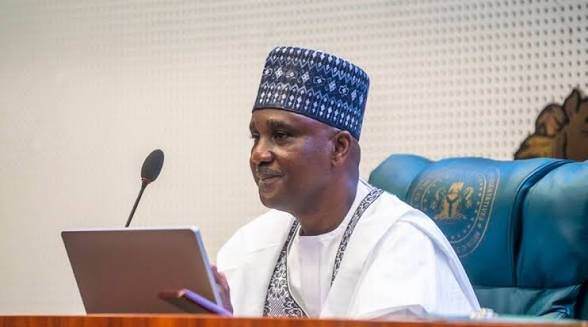
The Speaker of the House of Representatives, Tajudeen Abbas, has called for the swift implementation of the proposed state police reforms, assuring Nigerians that adequate constitutional safeguards have been embedded in the legislation to prevent governors and political actors from using state police as private security outfits. Speaking on Wednesday at the National Security Roundtable held as part of the 2026 National Assembly Open Week in Abuja, Abbas acknowledged public concerns that state police could be abused but insisted that the proposed bill was deliberately structured to prevent such occurrences.
The Speaker's call for implementation comes as the House of Representatives resolved to withdraw its earlier State Police Bill and adopt the Executive Bill transmitted by President Bola Tinubu, marking a major shift in the ongoing constitutional amendment process. Abbas described the Executive Bill as "more robust and more comprehensive" than the version previously passed by the Green Chamber, noting that it was produced by a committee inaugurated by President Tinubu and chaired by the Chief of Staff to the President and former Speaker, Femi Gbajabiamila. The House subsequently passed the Executive Bill for second reading following a voice vote conducted by the Speaker.
Addressing fears that state police could become instruments of political oppression, Abbas outlined several constitutional safeguards included in the proposed amendment. He explained that governors would not have exclusive powers to appoint or remove state Commissioners of Police; appointments would be made based on the recommendation of the National Police Council and subject to confirmation by the State House of Assembly, while removal would require the support of two-thirds of lawmakers and must be based on proven misconduct. The Speaker also noted that the proposed legislation empowers the Federal Police to intervene where a state police service becomes compromised, but only under clearly defined constitutional conditions and for a limited period, with notice to the Governor and the National Assembly within forty-eight hours. He stressed that the proposal would not allow the Federal Government to dissolve a state police service or suspend elected state institutions.
The Speaker emphasised that the state police framework would be implemented in phases, with no state police service beginning operations until the State House of Assembly enacts enabling legislation and the state meets operational standards set by the National Assembly. Under the proposal, the Federal Police Service would retain responsibility for terrorism, border security, federal offences and policing of the Federal Capital Territory, while state police would focus on maintaining law and order within their jurisdictions. State police services would be supervised by independent State Police Service Commissions, receive direct funding and operate under strict restrictions against the use of police powers for political, ethnic or religious purposes.
President Tinubu had formally transmitted the Constitution of the Federal Republic of Nigeria (Alteration) (State Police) Bill, 2026, to the House in a letter dated June 15, urging lawmakers to accord it expedited consideration as part of his administration's efforts to restructure the country's security architecture. Tinubu described the proposed legislation as "a critical component" of his administration's strategy to reorganise Nigeria's security architecture to better protect citizens. The President expressed confidence that the House would give the proposal expeditious consideration in the interest of national security and public safety.
The House had earlier passed its own State Police Constitution Alteration Bill on June 11, 2026, and constituted a 12-member Conference Committee on July 9 to harmonise the decisions of both chambers. However, following the emergence of the Executive Bill, lawmakers rescinded the earlier resolution on the House bill. The decision to withdraw the House version effectively halted plans to harmonise the House and Senate versions of the earlier proposal. Abbas pledged that the bill would undergo full legislative scrutiny, including a public hearing and open scrutiny, assuring Nigerians that "nothing here is concealed".
The Speaker argued that Nigeria's centralised policing system was no longer sufficient to address emerging security challenges such as banditry, kidnapping, farmer-herder clashes and attacks on schools. Citing examples from countries including Germany, Canada, India and the United States, he said successful federal policing systems depend on national standards, intelligence sharing and strong accountability mechanisms. He noted that for the first time in Nigeria's history, a sitting President had made state police a central part of national reform.
The House of Representatives has since passed the Executive Bill for second reading, and a conference committee is expected to be reconstituted to reconcile any differences between the House and Senate versions. Once the bill is passed by both chambers, it will require ratification by two-thirds of the 36 State Houses of Assembly before it can be signed into law by the President. The Speaker's call for implementation reflects the growing urgency to reform Nigeria's policing architecture, particularly in the wake of recent mass abductions and escalating insecurity across the country. As the legislative process continues, Nigerians await the final outcome of what could be one of the most significant constitutional reforms since the return to democratic rule in 1999.
📩 Stone Reporters News | 🌍 stonereportersnews.com
✉️ info@stonereportersnews.com | 📘 Facebook: Stone Reporters News | 🐦 X (Twitter): @StoneReportNew | 📸 Instagram: @stonereportersnews
Add comment
Comments