

Reported by: Oahimire Omone Precious | Edited by: Oravbiere Osayomore Promise.
The Nigerian Senate has, for the second time in one week, rejected a motion seeking an independent legislative investigation into the explosive controversy surrounding the purported Presidential Foreign Investment Promotion Council and its self-acclaimed Director-General, Adeniyi Adeyemi. The upper chamber's decision on Wednesday, July 15, 2026, comes as the self-styled agency chief faces an eight-count criminal charge before the Federal High Court and as President Bola Tinubu has directed the Independent Corrupt Practices and Other Related Offences Commission to conduct a separate probe. Senator Suleiman Kawu, representing Kano South Senatorial District, raised the matter under "Matters of Urgent Public Importance," marking his second attempt to compel the Senate to exercise its constitutional oversight powers over the unfolding scandal that has gripped the nation.
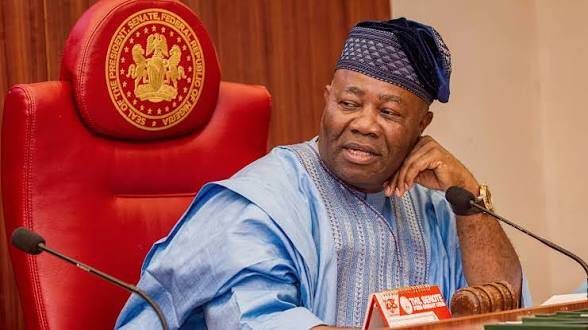
Ruling on the request, Senate President Godswill Akpabio firmly rejected the motion, arguing that any parliamentary intervention at this stage would constitute an improper interference with ongoing judicial proceedings and duplicate the executive's investigation. "In my view, the issue has been overtaken by events as the culprit has been charged to court. It is now sub judice to attempt to go into it again. Mr President has already directed an investigation. If we go into it now, we will probably be jumping the gun," Akpabio declared. The Senate President's ruling effectively shut down the request, despite Senator Kawu's insistence that the National Assembly retains an independent constitutional duty to carry out its oversight functions regardless of executive action.
The Senate's decision comes against the backdrop of heightened public scrutiny following the arrest of Adeniyi Adeyemi by the Nigeria Police Force on Tuesday. Adeyemi was apprehended in Osun State after a Federal High Court judge, Justice Mohammed Umar, issued a bench warrant for his arrest when he failed to appear for his scheduled arraignment on an eight-count charge bordering on conspiracy, forgery, and impersonation. The charges, filed by police prosecutor Wisdom Madaki, allege that Adeyemi forged a presidential appointment letter purportedly signed by President Tinubu and Chief of Staff Femi Gbajabiamila, forged official State House letterheads, falsely presented himself as Director-General of the Presidential Foreign Investment Promotion Council, and used the forged documents to seek official recognition, diplomatic support, and to open multiple bank accounts.
The scandal has taken on a life of its own, with Adeyemi making explosive allegations that have directly implicated the Chief of Staff to the President. Adeyemi has claimed that he paid a N400 million bribe to Gbajabiamila to secure his appointment and that the presidential aide demanded a 48 per cent share of the agency's proposed N27.4 billion take-off grant. The Presidency has forcefully denied these allegations, with presidential spokesman Bayo Onanuga describing Adeyemi as "a con artist who appears to have built a web of false claims to deceive unsuspecting government officials and the public into playing by his scam book". The 2026 Appropriation Act reportedly contains a N1.3 billion allocation for the PFIPC, covering both capital and recurrent expenditure, a provision that the Presidency has insisted the government never authorised.
The Senate's refusal to investigate has drawn sharp criticism from opposition figures, most notably former Vice President Atiku Abubakar, who has called for an independent probe into what he describes as a systemic failure of governance. In a statement issued on Wednesday, Atiku argued that the controversy extends far beyond the alleged activities of one individual. "The scandal is not merely that one man allegedly impersonated public authority. The greater scandal is that the Tinubu administration allegedly opened the doors of the Nigerian state to him, allowed him to acquire the appearance and privileges of official legitimacy and permitted him to interact with institutions and diplomatic interests in the name of the Federal Government," Atiku stated. The former vice president also raised fresh questions over a N6.44 billion allocation in the 2026 budget for a "Special Presidential Support Group for the 2026 World Cup Qualifiers," noting that Nigeria had already been eliminated from the tournament before the budget was presented.
While the Senate has declined to act, the House of Representatives has demonstrated a different approach, having passed a resolution to investigate the PFIPC's N1.3 billion budgetary allocation. The lower chamber has invited the Minister of Budget and National Planning to provide testimony on the matter. The divergence between the two chambers has further complicated the political landscape, with the Senate arguing that the ICPC probe and the court case are sufficient to address the matter.
Senate spokesperson Yemi Adaramodu has previously defended the National Assembly's role in the agency's budgetary allocation, insisting that the N1.3 billion was neither recommended nor inserted by lawmakers. However, critics have pointed out that the Senate's refusal to investigate raises fundamental questions about accountability and transparency in Nigeria's budget process. Senator Kawu, in his motion, had specifically questioned the integrity of the appropriation process, asking, "Who came to the National Assembly to defend the agency?" The Senate's decision to defer to the executive and judiciary has done little to answer that question.
As the controversy deepens, Adeyemi remains in police custody, awaiting his next court appearance on September 30. The ICPC has 30 days to complete its investigation, as directed by President Tinubu. The case has become a litmus test for the Tinubu administration's commitment to transparency and the independence of Nigeria's anti-corruption institutions. While the Senate has closed its doors to a legislative inquiry, the public continues to demand answers to the most pressing question: how did a man with allegedly forged documents gain access to the highest levels of government and secure budgetary allocations without detection? For now, the Senate's rejection of the probe ensures that the full truth may remain elusive, even as the nation watches and waits.
📩 Stone Reporters News | 🌍 stonereportersnews.com
✉️ info@stonereportersnews.com | 📘 Facebook: Stone Reporters News | 🐦 X (Twitter): @StoneReportNew | 📸 Instagram: @stonereportersnews
Add comment
Comments