

Reported by: Ijeoma G | Edited by: Oravbiere Osayomore Promise.
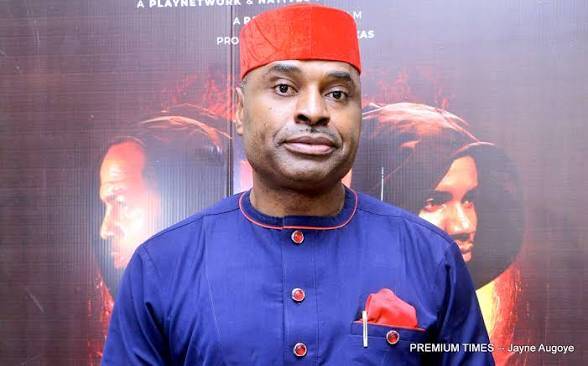
A chieftain of the African Democratic Congress has declared that the departure of Peter Obi from the party left the South-East region disadvantaged and thrown into confusion during the negotiations that produced former Minister of Transportation Rotimi Amaechi as the party's vice presidential candidate for the 2027 general elections. Kenneth Okonkwo, who serves as the spokesperson for the ADC presidential candidate, Atiku Abubakar, made the revelation on Thursday during an interview on Channels Television's Morning Brief, while responding to questions about why Amaechi has yet to publicly acknowledge his vice presidential candidacy on his social media pages.
Okonkwo explained that before the ADC presidential primary, a politician representing the South-East had shown interest in the race but exited the process before its conclusion, a development he said left the region without a strong representative in the negotiations over the party's presidential ticket. "The person that represented the South-East in that calculation left unceremoniously before the conclusion of the process, that left the South-East disadvantaged and confused, and then immediately Peter Obi exited, it was as if that position that would have been given to the South-East was vacant," Okonkwo said. He maintained that Obi's exit created a vacancy that could not easily be filled because the Electoral Act bars parties from picking running mates who were not party members at least 21 days before the primary, ruling out names such as Senator Enyinnaya Abaribe and former Minister of Finance Dr Ngozi Okonjo-Iweala.
According to the ADC spokesman, the party considered several prominent names from the South-East before settling for Amaechi, but the legal requirement that a running mate must have been a registered party member at least 21 days before the primary effectively eliminated many qualified candidates. "Some beautiful names were dropped off. You talked about Abaribe, you talked about Ngozi Okonjo, you talked about some nice names, but those names, they were no longer members of ADC," Okonkwo said. He explained that the restriction narrowed the party's options and influenced Atiku's decision to go with the person closest to the South-East, which in this case was Amaechi, who is himself Igbo by ethnicity.
Okonkwo also clarified his earlier remarks, which were widely interpreted as opposition to Amaechi's selection, insisting that he never mentioned the former Rivers State governor by name or rejected him on personal grounds. He said his concern was strictly about geopolitical balancing, given that the South-East has not produced a president or vice president since Nigeria returned to democratic rule in 1999. "I never opposed Amaechi. I never mentioned his name. My concern was that the South-East has not produced a president or vice president since 1999, and I wanted that imbalance to be addressed," Okonkwo said. He added that he became satisfied with the choice after party leaders explained the circumstances that led to Amaechi's emergence and assured him that consultations and internal negotiations were ongoing to address any lingering reservations within the party.
The ADC chieftain concluded on a note of optimism, declaring that the party had now united behind its candidates. "We are now one big and happy family. ADC is going to form the next government of Nigeria, and Atiku will be the next president of the Federal Republic of Nigeria by the grace of God," Okonkwo said. The controversy over Amaechi's selection has highlighted the complex dynamics within Nigeria's opposition coalition, as parties scramble to present a united front ahead of the 2027 elections while navigating the legal and political constraints imposed by the Electoral Act. The ADC's presidential ticket, which pairs a former vice president from the North-East with a former governor from the South-South, represents a deliberate effort to build a broad coalition capable of challenging the ruling All Progressives Congress, but the party continues to face questions about its ability to secure the support of the South-East, a region that has long sought to produce a president.
The emergence of Rotimi Amaechi as the ADC vice presidential candidate marks a significant realignment in Nigeria's opposition politics, bringing together two former political rivals who were once on opposite sides of the 2023 presidential election. Amaechi, who was the All Progressives Congress presidential aspirant in 2023, has now joined forces with Atiku Abubakar, the Peoples Democratic Party candidate in the same election, in a coalition that seeks to unseat President Bola Tinubu in 2027. However, the party still faces the challenge of reconciling the interests of its diverse factions and ensuring that the South-East, which has been a key battleground in recent elections, is fully integrated into its campaign strategy. The ADC's ability to navigate these challenges will be critical to its chances of success in the 2027 general elections.
📩 Stone Reporters News | 🌍 stonereportersnews.com
✉️ info@stonereportersnews.com | 📘 Facebook: Stone Reporters News | 🐦 X (Twitter): @StoneReportNew | 📸 Instagram: @stonereportersnews
Add comment
Comments