

Reported by: Oahimire Omone Precious | Edited by: Oravbiere Osayomore Promise.
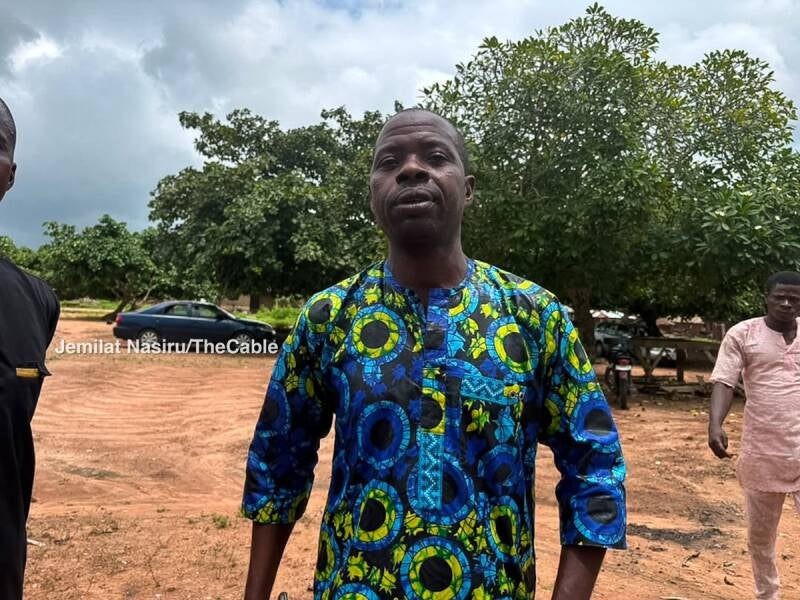
For 56 agonising days, farmer Taiwo Aliyu could not eat. His two children, Shuaib and Wasilat, had been snatched from their school along with 37 other pupils and seven teachers when gunmen stormed First Baptist Nursery and Primary School in Yawota, Oriire Local Government Area of Oyo State, on May 15, 2026. The food would not go down his throat. He could not celebrate Eid al-Adha. All he could digest was water. That changed on July 10 when the federal government announced that all abductees had been rescued following a coordinated military, police and intelligence-driven operation. "Now that my children are back, I will wear the Sallah clothes and celebrate," Aliyu told TheCable. "I slept so much yesterday. I had the best sleep of my life".
But the joy of reunion has not erased the trauma. Two teachers, Michael Oyedokun and Esiyan Adegboye, were killed during the attack. Oyedokun was beheaded on the second day of captivity. One rescued pupil, 15-year-old Bello Hassan, recalled the horror: "When they were to kill our teacher, Mr Michael, they took him to a corner to kill him... we heard his shout". The children were beaten, blindfolded, chained and forced to obey every instruction without question. The youngest victim was just two years old. Now, despite their physical freedom, the psychological scars remain deep.
Clinical psychologist Sabina Ebadan has warned that the effects of kidnapping extend far beyond physical injuries. She explained that victims often endure fear, uncertainty, threats and prolonged stress, causing the brain to remain in survival mode even after rescue. Many may develop post-traumatic stress disorder, characterised by flashbacks, nightmares, fear of returning to school, hypervigilance and avoidance of discussions about the incident. The Nigerian Psychological Association has urged the government to immediately provide professional mental health care, warning that freedom alone does not erase the trauma of weeks spent in the hands of abductors. "Every child deserves not only to survive but also to heal," the association stated.
For parents in Oriire, the question of whether to send their children back to school is fraught with fear. Aliyu, who used to ferry eight pupils to school on his motorcycle each morning, said his decision depends entirely on whether the government provides improved security. "If the government helps us, we will bring them back," he said. "But if not, I will take them straight to Lagos". His dilemma reflects the mood across the farming community. Most parents do not want to abandon their homes, but they want assurances that sending their children to school will not become another gamble with their lives. One relative, Fausat Akindele, said the incident had permanently changed parents' perception of safety. "We thank God that our children are back, but the fear is still there," she told AllAfrica.
The schools themselves bear the scars of the attack. When Sunday Oyekola, headteacher of First Baptist Nursery and Primary School, unlocked the classrooms for the first time since the abduction, he found them covered in cobwebs. The Oyo State Universal Basic Education Board had shut schools across Oriire and nearby local government areas as fear spread. Hundreds of children who were never kidnapped also stopped going to school. Now, some academic activities have resumed. A teacher at Community High School told The PUNCH that while attendance has improved since the rescue, fear still lingers because of the absence of visible security around the school. "Somehow, the fear is still there," the teacher said. "When we talk about the situation, some of them will still be in panic".
Lawmakers and experts have echoed the need for psychological rehabilitation. Senator Natasha Akpoti-Uduaghan has called on the federal and state governments to provide trauma counselling for the victims, noting that survivors of kidnapping often bear invisible emotional scars that require professional intervention. The Senate has also approved a N50 million donation to the families of the two teachers and three security personnel who lost their lives during the abduction and rescue operation. President Bola Tinubu has directed that emergency agencies work with the Oyo State Government to provide all necessary medical and relief support to the children and teachers. But for many families, the government's response so far has not been enough to restore confidence.
Governor Seyi Makinde has acknowledged the parents' fears. "It is understandable if parents do not want to send their children back to those schools," the Commissioner for Information, Dotun Oyelade, said. "The emotional trauma which they have undergone will ordinarily not allow them to freely release their children to further their education because of the nightmare". However, concrete security measures have yet to materialise. The teacher who spoke to The PUNCH said the presence of security operatives around the school would help restore confidence. "Our concern is basically on what governments are doing to boost the security of the whole place," he said. "Presently, because of the fact that you cannot see army, police around us in the school environment, the fear is still there".
Despite the trauma, some children are determined to return. Bello Hassan, the 15-year-old survivor, told reporters: "I'm not afraid to return to school". But for many others, the path back to normalcy remains uncertain. The abduction has not changed Aliyu's belief in education, but it has transformed his demand for protection. "We want this school to progress, to develop," he said. Yet the question that now haunts Oriire is whether progress and development can ever feel safe again.
📩 Stone Reporters News | 🌍 stonereportersnews.com
✉️ info@stonereportersnews.com | 📘 Facebook: Stone Reporters News | 🐦 X (Twitter): @StoneReportNew | 📸 Instagram: @stonereportersnews
Add comment
Comments