

Reported by: Puis Althea | Edited by: Oravbiere Osayomore Promise.
Two years after the Supreme Court of Nigeria delivered a landmark judgment granting full financial autonomy to the 774 local government areas, state governments continue to defy the ruling, retaining control over a staggering N10.48 trillion in federal allocations meant for the third tier of government. Despite the apex court’s directive that funds be paid directly to democratically elected councils, the implementation of the judgment remains stalled, with most states still operating joint accounts that leave local governments without independent access to their finances. The findings, based on an analysis of Federation Account Allocation Committee reports, data from the National Bureau of Statistics, and the Office of the Accountant-General of the Federation, reveal a persistent and systemic defiance of judicial authority that has starved grassroots communities of much-needed development resources.
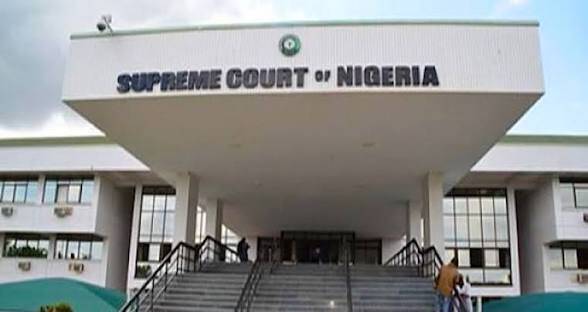
The Supreme Court, in its unanimous judgment delivered on July 11, 2024, in the case of the Attorney-General of the Federation v. Attorney-General of Abia State and 35 others (suit number SC/CV/343/2024), ordered the Federal Government to pay allocations standing to the credit of the 774 local government areas directly to their accounts. The apex court also barred state governments from retaining or spending funds allocated to councils and declared the administration of local governments by unelected caretaker committees unconstitutional. The ruling was hailed as a watershed moment for grassroots governance, promising to end decades of state-level interference that had reduced local councils to mere appendages of state governments. Yet, nearly two years later, the promise of financial autonomy remains largely unfulfilled, with little evidence of nationwide compliance or visible transformation in service delivery at the grassroots.
An analysis of FAAC data collated by The PUNCH shows that local government councils received a total of N10.479 trillion between the July 2024 and June 2026 FAAC meetings, covering allocations from revenue earned between June 2024 and May 2026. Between July 2024 and June 2025, councils received N4.496 trillion. The amount increased to N5.984 trillion between July 2025 and June 2026, representing an additional N1.488 trillion and a year-on-year increase of 33.10 per cent. The average monthly allocation to councils rose from N374.65 billion in the first 12-month period to N498.67 billion in the second, an increase of N124.02 billion. Despite these substantial inflows, the funds have largely remained under the control of state governments, with councils unable to exercise practical financial independence. In the first quarter of 2026 alone, state governments received N1.46 trillion meant for local government councils, findings by The PUNCH showed.
The continuing controversy is rooted in the State Joint Local Government Account, a mechanism created under Section 162 of the 1999 Constitution. Under this arrangement, funds due to local governments were historically transferred through joint accounts controlled at the state level. For years, governors have used this structure to withhold, divert, or control council funds, often leaving local governments with little more than a fraction of their statutory allocations. The Supreme Court’s ruling explicitly declared that state governments have no constitutional authority to receive, retain, or control funds belonging to democratically elected local government councils. However, the Federal Government has yet to enforce the ruling effectively, and the old order remains largely intact.
The National Union of Local Government Employees has confirmed that direct payments from the Federal Government to local councils have not commenced. According to NULGE President, Aliyu Kankara, the Federal Government had yet to begin direct payments, and most states continue to operate joint accounts, leaving councils without direct access to their funds. Only Jigawa State has implemented full autonomy, with councils in Kaduna, Kano, Benue, Plateau, Sokoto and Abia remaining under state control. The defiance has drawn sharp criticism from civil society organisations, labour unions, and governance experts, who argue that the failure to implement the judgment has undermined judicial authority, crippled grassroots development, and perpetuated a cycle of poverty and neglect in rural communities.
The financial implications of the continued state control are profound. Local government councils, which are the closest tier of government to the people, have been unable to address critical community needs, including primary healthcare, basic education, rural infrastructure, and water supply. The lack of financial independence has also fueled corruption, as funds meant for development are often diverted or mismanaged at the state level. Governance experts have warned that the continued defiance of the Supreme Court ruling threatens the integrity of Nigeria’s federal system and erodes public confidence in the judiciary and the rule of law. The timing of the defiance, two years after the ruling, signals weak implementation mechanisms and a lack of political will to enforce the judgment.
The Federal Government’s failure to enforce the ruling has also drawn attention from the National Assembly, with lawmakers expressing support for measures to compel compliance. Senator Sunday Karimi, Chairman of the Senate Committee on Judiciary, Human Rights, and Legal Matters, has indicated that the National Assembly will enact laws to support President Bola Tinubu in recovering trillions of naira in local government funds allegedly stolen by state governors. The proposed legislation would be retroactively effective, providing a legal framework to hold governors accountable for the diversion of council funds. However, critics have argued that legislative action alone may not be sufficient to overcome the entrenched interests of state governors, who have benefited enormously from their control over local government allocations.
The defiance of the Supreme Court ruling has also highlighted the growing tension between the judiciary and the executive at the state level, with some governors openly flouting court orders without consequence. The Osun State Government, for example, has been at the centre of a legal battle over local government funds, with the Supreme Court striking out a suit filed by the state on the grounds that the Attorney General lacked the locus standi to sue on behalf of the councils. Despite the ruling, the state government has continued to exert control over council finances, prompting protests from local government workers and civil society groups. Similarly, in Ogun State, the NULGE chapter gave Governor Dapo Abiodun a 14-day ultimatum to restore local government functionality or face an indefinite strike, citing the state’s failure to implement the Supreme Court judgment.
The implications of the continued defiance extend beyond financial autonomy. The inability of local governments to function independently has also had a chilling effect on democratic governance at the grassroots level. Many local government areas are still administered by unelected caretaker committees, a practice that the Supreme Court declared unconstitutional. The use of caretaker committees, which are appointed by state governors, has undermined democratic accountability and deprived citizens of the right to elect their local representatives. This has further entrenched the dominance of state governors over local government affairs and perpetuated a system of patronage and political control.
As the 2027 general elections approach, the battle for local government autonomy is likely to intensify, with civil society organisations, labour unions, and opposition parties demanding full implementation of the Supreme Court ruling. The Federal Government has come under increasing pressure to take decisive action to enforce the judgment, including the possibility of withholding federal allocations to states that fail to comply. However, such measures would require significant political will and could trigger a constitutional crisis, given the entrenched interests of state governors. The outcome of this battle will have far-reaching implications for Nigeria’s federal system, the rule of law, and the future of grassroots governance. For now, the N10.48 trillion in local government funds remains under state control, and the promise of financial autonomy remains a distant dream for the 774 local government areas.
📩 Stone Reporters News | 🌍 stonereportersnews.com
✉️ info@stonereportersnews.com | 📘 Facebook: Stone Reporters News | 🐦 X (Twitter): @StoneReportNew | 📸 Instagram: @stonereportersnews
Add comment
Comments