

Reported by: Puis Althea | Edited by: Oravbiere Osayomore Promise.
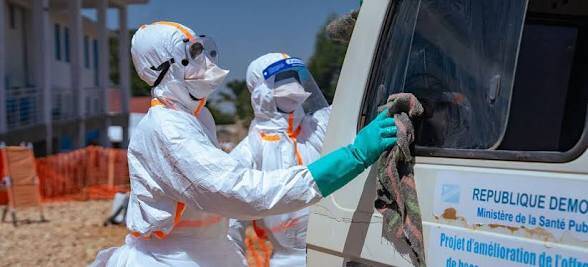
As the Democratic Republic of the Congo discharged its last Ebola patient, marking a turning point in the nation's 17th and one of its most devastating outbreaks, the recovery of one life stands in stark contrast to the economic havoc the virus has wreaked across the region. Hon. Dan Kimosho captured the bittersweet moment, noting on social media that while the last patient had been sent home, the virus had "really disorganised many things" and "caused trade havoc". The discharge, confirmed by health officials, comes as the World Health Organization warns that the outbreak, which has claimed nearly 800 lives, is spreading faster than any previous Ebola epidemic in history.
Declared on May 15, 2026, after several deaths were reported in the mineral-rich northeastern province of Ituri, the current outbreak is caused by the rare Bundibugyo species of Ebola virus—a strain for which there is no approved vaccine or treatment. In just two months, the number of confirmed cases has surged past 2,000, with the death toll climbing to 796 as of July 16. The WHO has described this as the third-largest Ebola outbreak in the country's recorded history. The virus has now spread to five provinces—Ituri, North Kivu, South Kivu, Tshopo, and Haut-Uele—significantly increasing the risk of cross-border transmission into neighbouring South Sudan.
The speed of transmission has alarmed global health officials. WHO Director-General Tedros Adhanom Ghebreyesus noted that the outbreak has expanded faster in the past month than any previous one. He pointed out that the massive 2018-2020 Ebola outbreak took more than ten months to reach 2,000 confirmed cases. The current outbreak has achieved that grim milestone in just two months. A significant challenge is that more than 80 per cent of new cases are being detected outside known contact lists, indicating that transmission chains are still being missed. Furthermore, about two-thirds of deaths are occurring in communities among people who never received care in a health facility.
"The true scale of the epidemic could be at least two to four times larger than the official case count," warned Chikwe Ihekweazu, executive director of the WHO's health emergencies programme. The crude case-fatality rate has increased to 37 per cent from 32 per cent a week earlier, reflecting persistent delays in diagnosis and access to care. Isolation facilities in North Kivu are operating at more than 120 per cent capacity, while safe-burial activities have been disrupted because burial teams have not been paid. More than 240 people have fled Ebola treatment or isolation facilities during the outbreak, including 100 in the past month.
While the discharge of the last patient offers a glimmer of hope, the broader socioeconomic impact of the outbreak is only beginning to unfold. A United Nations Development Programme assessment warns that the Ebola crisis is sparking a far-reaching socioeconomic disaster that could push nearly one million more people into poverty. The analysis projects that the economic damage extends well beyond those infected, disproportionately harming the most vulnerable populations. Even under a baseline scenario where the virus is successfully contained in the DRC and Uganda, the country is projected to see real GDP losses exceeding $1 billion and the loss of 55,000 jobs. Trade disruptions, border restrictions, transport delays, and declining consumer confidence could reduce continental GDP by $2.37 billion.
The outbreak has particularly devastated informal cross-border trade, which women dominate, robbing them of their livelihoods. Women also constitute the majority of frontline health workers and primary caregivers at home, placing them at heightened risk of direct virus exposure. The diversion of healthcare resources toward the Ebola response could also trigger a secondary crisis, with disrupted medical services projected to result in up to 2,520 excess infant deaths in the DRC from non-Ebola causes.
As Hon. Dan Kimosho observed, the virus may have been contained in the hospital, but its impact on trade and daily life continues to ripple across the region. The discharge of the last Ebola patient is a victory for public health, but the economic recovery has only just begun. The outbreak has laid bare the fragility of systems that rely on cross-border trade, exposed the vulnerabilities of women who sustain informal economies, and demonstrated how a health emergency can cascade into a full-blown development crisis. While the world celebrates the end of a health emergency, the people of the DRC are left to grapple with the deeper, longer-lasting damage the virus has wrought on their livelihoods and communities.
📩 Stone Reporters News | 🌍 stonereportersnews.com
✉️ info@stonereportersnews.com | 📘 Facebook: Stone Reporters News | 🐦 X (Twitter): @StoneReportNew | 📸 Instagram: @stonereportersnews
Add comment
Comments