

Reported by: Ijeoma G | Edited by: Oravbiere Osayomore Promise.
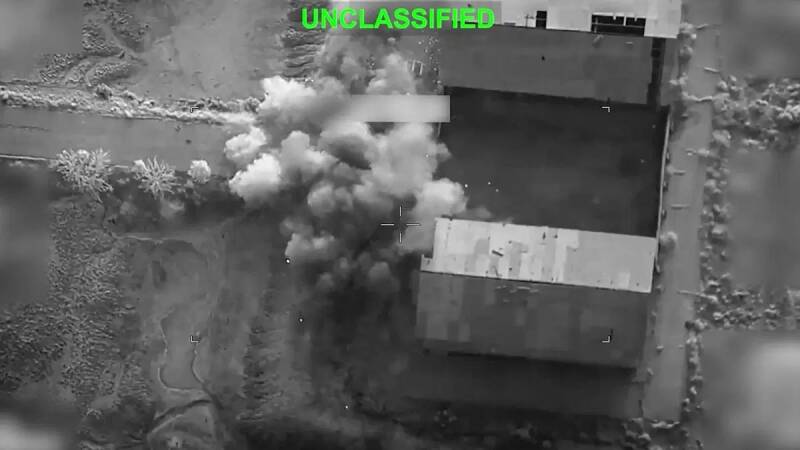
The United States has expanded its aerial campaign against Iran, striking civilian transport infrastructure including bridges, a railway station, and an airport in the country’s south in a major escalation of the conflict over the strategic Strait of Hormuz. The US Central Command said its forces, acting on orders from President Donald Trump, carried out a new wave of strikes on Thursday evening, marking the sixth consecutive night of American attacks. The operation, which concluded at dawn on Friday, July 17, 2026, targeted dozens of Iranian military objectives using fighter jets, aerial drones and warships.
According to Iranian state media, the strikes hit the Iranshahr airport in the southeast, the Bandar Abbas Railway Junction Station in the southern port city, and two bridges in Hormozgan province. The official IRNA news agency reported that airstrikes on the two bridges in Hormozgan province killed three people and wounded nine, while the Mehr news agency said two Iranians were injured in the attack on the railway station. Other media reports put the death toll in Hormozgan at seven. State television IRIB also reported three explosions around Iranshahr airport, with at least one US projectile striking the facility. Explosions were also reported in the western city of Bushehr, home to Iran’s only civilian nuclear plant, which Iranian media described as a "continuation of the American enemy aggression".
The strikes marked a shift from purely military targets to civilian infrastructure that is vital to Iran's economy and logistics. President Trump had previously warned that Washington would target infrastructure to pressure Tehran into easing its control over the Strait of Hormuz. In an interview with Fox News on July 14, he threatened to expand attacks to power plants and bridges if Tehran refused to negotiate. However, the White House has maintained that Trump remains "open to diplomacy". White House Press Secretary Karoline Leavitt said Trump would not "sit by and allow these active acts of terrorism to take place in the strait without ensuring Iran pays consequences," but added that he was "always open to diplomacy".
The renewed fighting has shattered a month-old truce that had been mediated by Pakistan last month, which briefly reopened the strait. Iran has since reimposed its blockade of the waterway, through which about a fifth of the world's oil and natural gas passes, while the US has reinstated its naval blockade of Iranian ports. On Thursday, US forces boarded a ship, the M/T Wen Yao, in the Gulf of Oman to ensure compliance with the renewed blockade. A day earlier, US aircraft fired on and disabled an oil tanker that tried to breach the blockade. The escalating conflict has pushed up global energy prices, with Brent crude briefly climbing above $86 a barrel.
Iran has responded with missile and drone attacks on US military bases in neighbouring countries, including an expanded air base in Jordan, as well as on US allies in the Gulf. Iran’s Revolutionary Guards said they struck a US airbase in Jordan in retaliation for what they described as an American attack near a children’s cancer hospital in Ahvaz. Qatar warned the public to take shelter as Iranian missiles targeted the country, while Kuwait said its air defences were again combatting missile and drone attacks, and Bahrain sounded air raid sirens. A senior Iranian military spokesman called for the US to withdraw from the region, saying, "we will never back down over the Strait of Hormuz".
The strikes in Iran’s southern coastal cities and islands caused extensive damage, with explosions reported in Ahvaz, Qeshm, Bushehr, Dashti, Bostan, Sirik, and Bandar-e Lengeh. In Bandar-e-Khamir, three bridges were struck, while in Bandar Abbas, the Tapeh Allah Akbar neighbourhood was hit. Iranian state television reported that road and railway infrastructure in Hormozgan province was targeted, killing at least seven people. The strikes also caused damage to Iranshahr airport and led to power outages, while air strikes on Kish Island resulted in temporary power outages in some areas. According to CENTCOM, the US strikes targeted coastal surveillance and air defence systems, military logistics infrastructure, and maritime capabilities.
The conflict, which began on February 28 with coordinated US and Israeli military operations against Iran, has already claimed thousands of lives and displaced millions across the region. The Iranian health ministry said 38 people had been killed in US attacks since the ceasefire fell apart. Iran has signalled it could prod its Houthi allies in Yemen to close another key strait, Bab al-Mandeb, if Washington attacks its infrastructure. Meanwhile, Pakistan's foreign office said Islamabad would continue to encourage all sides to end violence and resume technical-level talks. However, Iran’s top negotiator has warned that a deal "only has meaning when its clauses are valid and being implemented". With neither side signalling imminent negotiations, fears of further escalation in one of the world's most strategically important regions continue to mount.
📩 Stone Reporters News | 🌍 stonereportersnews.com
✉️ info@stonereportersnews.com | 📘 Facebook: Stone Reporters News | 🐦 X (Twitter): @StoneReportNew | 📸 Instagram: @stonereportersnews
Add comment
Comments