

Reported by: Ijeoma G | Edited by: Oravbiere Osayomore Promise.
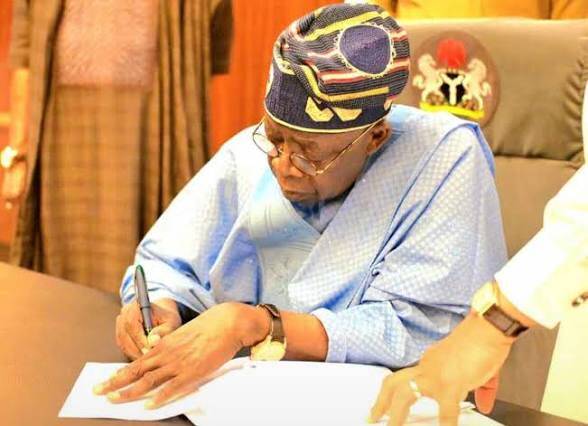
President Bola Tinubu has signed the Presidential Executive Order on Virtual Assets Coordination, 2026, establishing a unified regulatory framework to harmonise the oversight of virtual assets across Nigeria's financial, revenue and capital markets. The order, signed on Friday, July 17, 2026, takes immediate effect and is designed to protect citizens from fraud, safeguard the integrity of the financial system, and enable responsible innovation in the digital economy, according to a statement issued by the Special Adviser to the President on Information and Strategy, Bayo Onanuga.
The Executive Order, signed pursuant to Section 5 of the 1999 Constitution (as amended), responds to a regulatory environment that has become increasingly fragmented as virtual assets blur the traditional boundaries between currencies, money, commodities and securities. With relevant agencies operating in silos, overlapping in some areas and leaving gaps in others, the country has been exposed to risks including money laundering, terrorism financing, cybersecurity and data privacy threats, fraud, and revenue losses. Too often, unregistered and fraudulent operators have exploited these gaps to prey on unsuspecting Nigerians, costing families their savings, the presidency said.
To achieve a coordinated approach, the order establishes a Virtual Asset Council chaired by the Central Bank of Nigeria, with the Nigeria Revenue Service and the Securities and Exchange Commission serving as vice-chairpersons. Other members include the Nigerian Financial Intelligence Unit and the Office of the National Security Adviser. The Council will provide policy direction, promote synergy among participating agencies, and work with the Attorney-General of the Federation to develop a harmonised legal and institutional framework aligned with Nigeria's national security, economic and social objectives.
The order also creates a Virtual Asset Office, the Council's operational body, with its secretariat domiciled at the CBN. The Office will coordinate day-to-day information sharing, applications and reporting among agencies, supported by an integrated supervisory technology platform that provides shared visibility while preserving each agency's ownership and control of its data. Significantly, the order does not create a new regulator or transfer powers between agencies. Each institution retains its full statutory mandate and independence, and the framework coordinates their work rather than replacing it.
To provide certainty for operators and protection for the public, registration will follow the nature of the activity and the asset involved. Activities like securities will be registered by the SEC, while payment, settlement, custody and related services involving non-security virtual assets will be registered by the CBN, with the Council resolving any case in which responsibility cannot be readily determined. This closes the gaps through which unregistered operators have previously escaped oversight.
As part of the coordinated approach, the CBN is proceeding with a regulatory sandbox for virtual assets, providing a controlled environment in which eligible operators can test and operate virtual asset products, services and blockchain-based solutions under close supervision. This will enable participating agencies to assess implications for monetary sovereignty, financial stability, market integrity, consumer protection, financial inclusion and revenue administration before products reach the wider market. The CBN will announce further details of the sandbox.
In the same spirit, the Nigeria Revenue Service will release a tax policy for the virtual assets sector, operationalising Nigeria's tax laws as they apply to virtual assets, providing greater certainty for taxpayers and service providers, strengthening voluntary compliance, and ensuring that the sector contributes fairly to national revenue as it grows. The Federal Government is also finalising a comprehensive Virtual Assets White Paper, which will set out the country's longer-term policy direction and implementation priorities, serving as a roadmap for stakeholders. The Council has been directed to develop a Harmonised Implementation Framework within 30 days to guide the swift execution of the Executive Order.
The Executive Order represents the most significant regulatory intervention in Nigeria's virtual assets sector to date, signalling the government's determination to establish a coherent oversight mechanism that balances innovation with consumer protection and financial stability. By coordinating the efforts of existing agencies rather than creating a new regulator, the framework seeks to eliminate regulatory arbitrage and ensure that all virtual asset operators are subject to appropriate oversight, while also providing the legal and regulatory certainty needed to attract investment and foster growth in the digital economy. The order's emphasis on inter-agency collaboration and technology-driven supervision reflects a modern approach to financial regulation, positioning Nigeria to benefit from the opportunities presented by blockchain and virtual asset technologies while mitigating their associated risks.
📩 Stone Reporters News | 🌍 stonereportersnews.com
✉️ info@stonereportersnews.com | 📘 Facebook: Stone Reporters News | 🐦 X (Twitter): @StoneReportNew | 📸 Instagram: @stonereportersnews
Add comment
Comments