

Reported by: Oahimire Omone Precious | Edited by: Oravbiere Osayomore Promise.
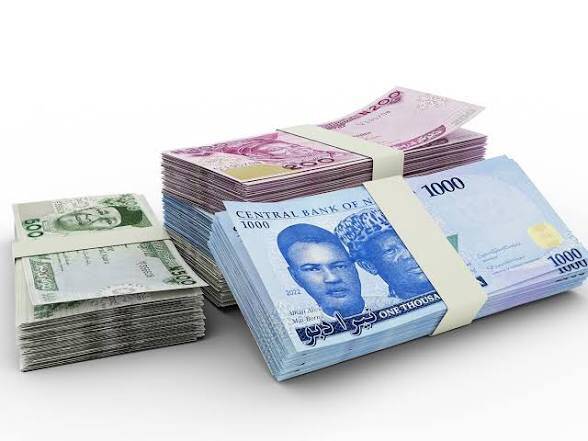
The Nigerian naira recorded a broad-based depreciation against the United States dollar on Monday, July 27, 2026, with the currency weakening to N1,407 per dollar in the parallel market from N1,400 recorded at the close of trading the previous Friday. The decline in the unofficial market was accompanied by a corresponding loss in the official Nigerian Foreign Exchange Market (NFEM), where the naira fell to N1,364 per dollar from N1,361 on Friday, according to data published by the Central Bank of Nigeria.
The depreciation widened the gap between the official and parallel market exchange rates to N43 per dollar, up from N39 at the end of the previous week, reflecting growing pressure on the local currency despite recent gains supported by improved dollar liquidity and stronger external reserves. The widening spread suggests that demand for foreign exchange in the unofficial market continues to outpace supply, even as the Central Bank maintains its intervention efforts in the official window.
Activity in the official foreign exchange market slowed sharply, with interbank turnover at the NFEM plunging by 55.5 percent to $39.6 million on Monday, down from $89.03 million recorded on Friday. The significant drop in transaction volumes points to reduced dollar liquidity in the interbank segment, which may have contributed to the naira's weakened position across both markets. The decline in turnover comes despite Nigeria's external reserves climbing to a 17-year high of $52.03 billion as of July 22, 2026, representing a 35.6 percent increase from the $38.37 billion recorded in the corresponding period of 2025.
The naira's performance on Monday marks a reversal from the relative stability observed in recent weeks. On Thursday, July 23, 2026, the currency had appreciated marginally in the official market, supported by improved dollar liquidity and stronger external reserves, with the dollar closing at N1,367.76, a 0.14 percent gain from the previous day. However, even as the official rate strengthened, the parallel market had already shown signs of weakness, depreciating by N7 to close at N1,407 per dollar on that same Thursday, a 0.5 percent decline from N1,400 recorded on Wednesday.
Analysts at Coronation Merchant Bank have noted that the naira demonstrated greater resilience than expected during the first half of 2026, despite heightened global uncertainty. The bank had projected the exchange rate to average N1,382 per dollar during the first half and end the year at N1,456, but the currency instead averaged about N1,365, supported by improved foreign exchange liquidity, stronger external reserves, recovering oil production and sustained foreign capital inflows. The analysts attributed the stronger-than-expected performance to robust foreign portfolio inflows into the fixed-income market, particularly Open Market Operations securities, driven by elevated domestic interest rates and attractive real yields, alongside sustained CBN interventions.
However, Monday's depreciation suggests that the naira's resilience may be facing new headwinds. The sharp drop in interbank turnover and the widening gap between official and parallel market rates indicate that demand pressures are building, potentially testing the Central Bank's ability to maintain stability in the coming weeks. The CBN has consistently intervened in the foreign exchange market to support the naira, but the decline in transaction volumes may signal reduced dollar availability, which could put further downward pressure on the currency if sustained.
The parallel market, also commonly referred to as the black market, remains a critical barometer of genuine dollar demand in the Nigerian economy, as it reflects the rate at which individuals and businesses unable to access official channels source foreign exchange. The depreciation to N1,407 per dollar suggests that demand for dollars in the unofficial market remains strong, driven by importers, businesses and individuals seeking to hedge against inflation and currency risk. The widening spread between the official and parallel rates also creates arbitrage opportunities, which can further strain the naira as speculators exploit the differential.
Looking ahead, market participants will be watching closely for signals from the Central Bank regarding its next policy moves. The bank has maintained a tight monetary policy stance, with elevated interest rates aimed at attracting foreign portfolio inflows and supporting the naira. However, the sustainability of this approach depends on continued foreign investor interest and the government's ability to boost oil production and non-oil exports to generate sufficient foreign exchange earnings. While Nigeria's external reserves remain at historically high levels, the sharp decline in interbank turnover on Monday serves as a reminder that liquidity conditions can change rapidly, and that the naira's stability cannot be taken for granted.
For businesses and individuals who rely on foreign exchange for imports, travel, school fees and other transactions, the depreciation to N1,407 per dollar translates into higher costs and increased pressure on household budgets. The naira's movement against the dollar remains one of the most closely watched indicators of Nigeria's economic health, and Monday's decline will likely fuel further debate about the effectiveness of the Central Bank's exchange rate management policies. As the week progresses, all eyes will be on the NFEM and parallel markets to see whether the naira can recover its losses or whether further depreciation lies ahead.
📩 Stone Reporters News | 🌍 stonereportersnews.com
✉️ info@stonereportersnews.com | 📘 Facebook: Stone Reporters News | 🐦 X (Twitter): @StoneReportNew | 📸 Instagram: @stonereportersnews
Add comment
Comments