

Reported by: Oahimire Omone Precious | Edited by: Oravbiere Osayomore Promise.
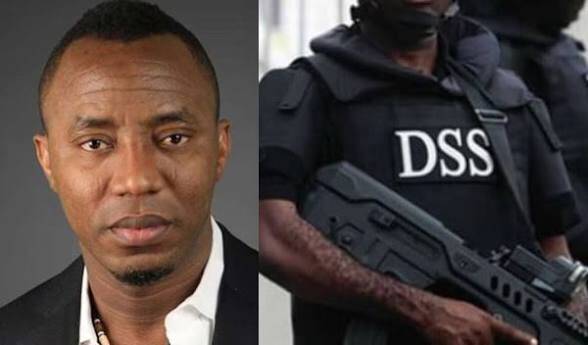
The ongoing criminal defamation trial of Omoyele Sowore, presidential candidate of the African Action Congress (AAC), took a dramatic turn on Tuesday, July 28, 2026, as his legal team withdrew the subpoena compelling the Director-General of the Department of State Services (DSS), Dr. Oluwatosin Ajayi, to appear as a defence witness before the Federal High Court in Abuja. The surprise decision came after the Attorney-General of the Federation and Minister of Justice, Prince Lateef Fagbemi, SAN, personally appeared in court to lead the prosecution, arguing that the subpoena was unnecessary and intended only to delay the proceedings.
The trial, which has drawn significant public attention and ignited fierce debate over free speech and political dissent in Nigeria, stems from charges filed by the DSS against Sowore over social media posts in which he referred to President Bola Tinubu as "a criminal." Sowore is facing charges bordering on criminal defamation, cyberstalking, and incitement under the Cybercrimes (Prohibition, Prevention, Etc.) (Amendment) Act, 2024. He has consistently pleaded not guilty to all charges and has maintained that the prosecution is politically motivated and an attack on freedom of expression.
Tuesday's proceedings before Justice Mohammed Umar were marked by the unprecedented appearance of the AGF, who led a formidable legal team that included the Director of Public Prosecutions of the Federation, Rotimi Oyedepo, SAN, and Akinlolu Kehinde, SAN. Fagbemi's presence underscored the high stakes of the case, which has become one of the most closely watched political trials in Nigeria in recent years. The AGF vigorously opposed the defence's application to compel the DSS Director-General to testify, arguing that the document Ajayi was expected to give evidence upon was not authored by him but by a subordinate who had already testified in the matter.
Fagbemi drew the court's attention to the fact that a letter written to Sowore demanding the removal of the social media posts had already been tendered and admitted as an exhibit twice by the same court, making a third tendering unnecessary. The AGF further noted that the DSS had demonstrated its willingness to cooperate with the defence by making one of its officials, Uwem Davies, available to testify during previous proceedings. He maintained that compelling the DSS Director-General to personally appear in court would not add value to the case and would only serve to delay the conclusion of the trial.
The defence team, led by Adeyinka Olumide-Fusika, SAN, had earlier secured the subpoena against Ajayi following dramatic testimony from Davies, a Principal Officer of the DSS, who repeatedly distanced himself from key documents relied upon by the prosecution. During cross-examination on July 22, 2026, Davies testified that a letter purportedly sent to Meta Platforms, the owner of Facebook, concerning Sowore's social media posts was not authored or signed by him. The witness insisted that the signature on the document was not his, raising fresh questions about the authenticity of the correspondence. Davies also told the court that he did not fully understand the contents of a separate letter addressed to Sowore and had merely acted on instructions from the DSS Director-General. When questioned about whether the DSS Director-General himself was a supporter of President Tinubu, Davies declined to answer, maintaining that he had only acted on instructions.
Following the witness's repeated inability to answer critical questions, Olumide-Fusika informed the court that the defence had no option but to subpoena DSS Director-General Tosin Ajayi to personally explain the decisions that led to the prosecution. Justice Umar granted the application on July 22, 2026, ordering Ajayi to appear in court. However, at Tuesday's resumed hearing, the defence made a surprising reversal, conceding that the evidence in respect of which they had subpoenaed the DSS boss could be obtained from any other official of the service.
Olumide-Fusika also raised a procedural objection to Fagbemi's appearance, arguing that Akinlolu Kehinde, SAN, remained the Federal Government lawyer on the court's record and that the AGF could not simply take over the case without proper notice. Fusika told the court: "I am not withdrawing the application. I am not moved by the submission of the AGF. I do concede that the AGF can appear in any matter at any time but I submit that it has to be properly done. He can't appear in court with this type of application without notifying us". Despite this objection, the court proceeded with the hearing.
Justice Mohammed Umar, after listening to submissions from both parties, adjourned the matter until Monday, August 3, 2026, for continuation of the defence. The judge had previously ordered an accelerated day-to-day hearing in line with the Administration of Criminal Justice Act (ACJA), 2015, and had rejected earlier defence requests for lengthy adjournments. The trial has seen several dramatic moments since it began, including the admission of a video clip of Reno Omokri labelling Tinubu a "drug lord" as evidence, and the rejection of uncertified court documents tendered by the defence.
Sowore, who was remanded in Kuje Prison in June 2026 before being granted bail, has continued to rally supporters to the court proceedings. Ahead of Tuesday's hearing, he announced on social media that the first supporters to arrive at the court venue would receive exclusive "#TinubuMustGo" bags. "Tomorrow at the resumed, 'Tinubu Is A Criminal' trial, initiated by the DSS, the Director-General of the DSS, Tosin Ajayi, will face questioning from our legal team in open court," Sowore wrote on Monday, July 27. "We invite all supporters of justice and the rule of law to attend the proceedings".
The trial has attracted widespread interest from civil society organisations, lawyers, political observers, and human rights advocates, who are closely monitoring the proceedings because of their potential implications for free speech, press freedom, and democratic rights in Nigeria. Human Rights Writers Association of Nigeria (HURIWA) had earlier alleged that there was a pre-arranged deal to jail Sowore, comparing his case to the treatment of Nnamdi Kanu. The DSS has denied these allegations, stating that Sowore was granted bail on self-recognition at the commencement of his trial and that the agency did not oppose the application.
As the trial continues, the withdrawal of the subpoena against the DSS Director-General represents a significant shift in the defence's strategy. Whether this move will strengthen or weaken Sowore's case remains to be seen, but what is clear is that the legal battle over the boundaries of free speech in Nigeria is far from over. With the next hearing scheduled for August 3, all eyes will remain on the Federal High Court in Abuja as one of the country's most controversial political trials unfolds.
📩 Stone Reporters News | 🌍 stonereportersnews.com
✉️ info@stonereportersnews.com | 📘 Facebook: Stone Reporters News | 🐦 X (Twitter): @StoneReportNew | 📸 Instagram: @stonereportersnews
Add comment
Comments