

Reported by: Oahimire Omone Precious | Edited by: Oravbiere Osayomore Promise.
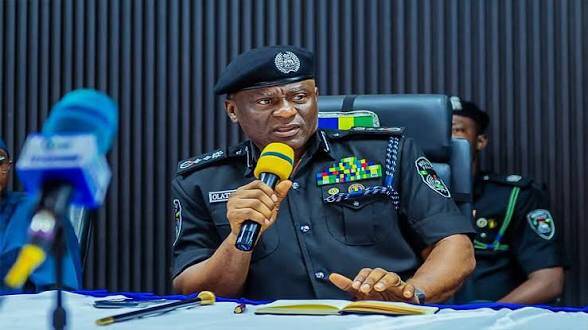
The Inspector-General of Police, Olatunji Disu, has issued a sweeping directive ordering all police formations across Nigeria to channel cases involving terrorism financing, banditry, crude oil theft and other financial crimes to newly established specialised units, a strategic shift aimed at dismantling the financial networks that sustain the country's worsening security crisis. Disu announced the directive on Tuesday, July 28, 2026, during a high-level meeting with the leadership of the Nigerian Financial Intelligence Unit (NFIU) at the Force Headquarters in Abuja, where he declared that tracking illicit financial flows could solve at least 50 per cent of complex criminal cases plaguing the nation.
The police chief's directive comes amid mounting public frustration over the persistent waves of terrorism, banditry, and kidnappings that have devastated communities across the North-West, North-Central, and other parts of the country. Disu stressed that the dynamics of crime are evolving rapidly, with criminal networks now moving laundered proceeds across international borders within seconds through sophisticated schemes. "The dynamics of crime is changing daily everywhere in the world, and within seconds monies are moving over the continent. Monies that have to be laundered, monies that a lot of people want to clean by different deceits. Financial intelligence is a necessity," he said. The IGP emphasised that closer collaboration between the Nigeria Police Force and the NFIU was essential to tackling terrorism, banditry, crude oil theft and other organised crimes. "Following their proceeds will assist to bring down the crime to nothing less than 50 per cent. Following the money, a lot of their crimes will be solved, so we need to collaborate. We need to continue to see ourselves as symbiotic twins," he declared.
To institutionalise this approach, Disu announced that the Force has established a dedicated Proceeds of Crime Section, headed by a Deputy Commissioner of Police with extensive expertise in financial crime investigations. The specialised unit is designed to bolster the nation's Anti-Money Laundering (AML) and Counter-Terrorism Financing (CTF) frameworks, while enhancing the Police Force's standing within the global anti-money laundering architecture. The IGP further directed all officers nationwide to route any cases they uncover involving terrorism, banditry, or the circulation of illicit funds to these specialised teams. "We have directed all our officers to direct cases they discover that have to do with terror, banditry, and where monies have been circulated to teams that are specialised in handling it," he said.
The establishment of the Proceeds of Crime Section represents a significant escalation in the Nigeria Police Force's approach to financial crime. While the Force had previously established Police Anti-Money Laundering Units in January 2025 under the administration of then-IGP Kayode Egbetokun, the creation of a dedicated section headed by a Deputy Commissioner of Police signals a heightened priority for financial intelligence. Disu explained that the unit has already enhanced the Force's visibility and relevance within Nigeria's anti-money laundering architecture, and he appealed to the NFIU to provide more training opportunities for police personnel in financial intelligence and asset tracing. "Let us share intelligence. Let us train together. When trainings come your way, we plead, give us some slots, especially training that has to do with movement of money around. We are sure 50 per cent of this crime can be solved by just following the money," he said.
The NFIU's leadership, represented by its Chief Executive Officer, Hafsat Bakari, welcomed the IGP's directive and described the Nigeria Police Force as a critical partner in the country's anti-money laundering and counter-terrorism financing framework. Bakari noted that financial intelligence has become indispensable in investigating terrorism financing, kidnapping, cybercrime, corruption, human trafficking, narcotics trafficking, illegal mining, arms trafficking and organised crime. "Financial intelligence has increasingly become the thread that connects criminal conduct to those who profit from it. In this regard, the collaboration between the NFIU and the Nigerian Police Force remains essential to ensuring that criminals are not only arrested but deprived of the financial resources that sustain their operations," she said. Bakari commended the Police Force for its crucial role in helping Nigeria successfully clear its Financial Action Task Force (FATF) action plan, an achievement that facilitated the country's exit from the global financial watchdog's grey list. She urged sustained collaboration ahead of the country's 2027 mutual evaluation, warning that "the future of law enforcement is intelligence-driven. Criminals today have financial footprints long before they leave physical evidence".
The IGP's directive comes against the backdrop of Nigeria's recent removal from the FATF grey list in July 2026, a development that followed intensified efforts to combat money laundering and terrorism financing. The Nigeria Financial Intelligence Unit had announced the removal on July 2, 2026, attributing it to deepened collaboration between the NFIU and the EFCC, among other agencies. The country's removal from the grey list is expected to boost investor confidence and reduce the cost of international transactions for Nigerian businesses. However, critics have argued that the removal may have more to do with diplomatic pressure and less with tangible improvements in Nigeria's anti-money laundering framework, pointing to the persistent challenges of corruption and financial crime that continue to plague the country.
The directive also underscores the growing recognition that the financing of terrorism and banditry in Nigeria is increasingly sophisticated, with criminal networks exploiting the country's porous borders and weak financial oversight to move funds. The IGP's emphasis on "following the money" reflects a broader trend in global law enforcement, where financial intelligence has become a critical tool in disrupting criminal networks. By channelling cases to specialised units, the police force aims to build a cadre of officers with the expertise to trace complex financial transactions, identify money laundering networks, and freeze assets linked to terrorism and organised crime.
The announcement has been met with cautious optimism by security analysts and civil society organisations, who have long called for a more intelligence-driven approach to combating insecurity. However, questions remain about the capacity of the Nigeria Police Force to effectively implement the directive, given the longstanding challenges of corruption, inadequate training, and limited resources that have historically undermined the Force's effectiveness. The success of the Proceeds of Crime Section will depend not only on the expertise of its personnel but also on the willingness of the police leadership to shield the unit from political interference and ensure that financial intelligence is used to target all criminal networks, regardless of the political connections of those involved.
As the country prepares for the 2027 general elections, the IGP's directive takes on added significance. The financial networks that sustain terrorism and banditry are often intertwined with political patronage and illicit financing, and any serious effort to disrupt these networks is likely to encounter resistance from powerful interests. The IGP's appeal to the NFIU for training and collaboration suggests an awareness of the challenges ahead, but whether the directive will translate into tangible results remains to be seen. For now, the message from the Force Headquarters is clear: the Nigeria Police Force is shifting its focus from reactive policing to proactive financial intelligence, and those who profit from terrorism and organised crime have been put on notice.
The partnership between the police and the NFIU is expected to deepen in the coming months, with both agencies committing to intelligence sharing, strategic analysis, operational support and capacity development. The IGP's directive to channel terrorism financing cases to specialised units marks a significant step forward in Nigeria's fight against financial crime, but the ultimate test will be whether it leads to the prosecution of high-profile financiers and the dismantling of the criminal networks that have long plagued the nation. As Disu himself acknowledged, "following the money" is not a panacea, but it is an essential tool in the fight against crime. Whether the Nigeria Police Force has the will and the capacity to use it effectively will determine the success of this ambitious new strategy.
📩 Stone Reporters News | 🌍 stonereportersnews.com
✉️ info@stonereportersnews.com | 📘 Facebook: Stone Reporters News | 🐦 X (Twitter): @StoneReportNew | 📸 Instagram: @stonereportersnews
Add comment
Comments