

Reported by: Oahimire Omone Precious | Edited by: Oravbiere Osayomore Promise.
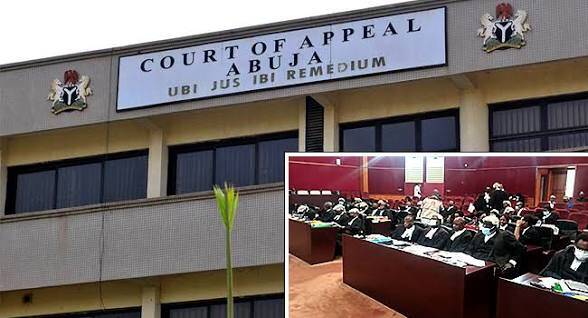
The Court of Appeal sitting in Abuja has set aside a ₦100 million garnishee order absolute that had been granted against the Central Bank of Nigeria (CBN), ruling that the claims against the apex bank were not sustainable. The unanimous decision, delivered by a three-member panel led by Justice Okon Abang on Tuesday, July 28, 2026, effectively discharged the CBN from any liability in a protracted contractual dispute between the Imo State Government and a private contractor.
The matter originated from a 2012 contractual agreement between the Imo State Government and the claimant, Daniel Okoroji. Following an alleged breach of contract, Okoroji initiated legal proceedings and subsequently obtained a garnishee order absolute against the CBN, seeking to recover the purported sums owed by the state government through the apex bank. The garnishee order, a legal mechanism for enforcing a judgment debt by attaching funds held by a third party, had been granted by a lower court, compelling the CBN to pay the contractor from funds believed to be held on behalf of the Imo State Government.
However, the Court of Appeal, in its ruling, found that the contractor's claims against the CBN were not legally sustainable. Justice Okon Abang, who read the lead judgment, held that the appellant's case lacked merit. The court noted that the CBN, which is the appellant in the matter, could not be held liable for a debt owed by a state government, particularly when the funds in question were not clearly established to be under the custody of the apex bank. The panel further held that the trial court had erred in making the garnishee order absolute against the CBN without properly establishing the bank's liability as a garnishee.
The appellate court's decision aligns with a long line of judicial precedents clarifying the circumstances under which the CBN can be joined in garnishee proceedings. In recent years, Nigerian courts have grappled with the question of whether the CBN qualifies as a "public officer" under Section 84 of the Sheriffs and Civil Process Act, which requires the consent of the Attorney-General before funds in the custody of a public officer can be attached. In a landmark judgment delivered on January 16, 2026, the Supreme Court, in Central Bank of Nigeria v. Interstella Communications Ltd, ruled that the CBN is not a public officer and that the Attorney-General's consent is not a prerequisite for garnishee proceedings against it. However, the Court of Appeal has consistently maintained that the CBN cannot be made to pay judgment debts owed by states or other government agencies without a clear legal basis.
The Imo State Government, which was also joined as a respondent in the suit alongside some of its officials, did not contest the appeal. The court's ruling effectively shielded the CBN from liability and sent a clear signal that the apex bank is not a "deep pocket" for the enforcement of debts owed by other government entities. Legal observers have noted that the decision is a significant victory for the CBN, which has faced a barrage of garnishee orders in recent years from contractors and consultants seeking to recover debts owed by states and federal agencies. The ruling also underscores the importance of following due process in garnishee proceedings and ensuring that third-party banks are not unfairly burdened with liabilities that do not belong to them.
This judgment comes on the heels of another major legal victory for the CBN at the Court of Appeal. In February 2026, the appellate court quashed a ₦38.8 billion judgment against the CBN in the Paris Club refund dispute, ruling that the lower court lacked jurisdiction to entertain the matter. The CBN has also successfully defended itself in other garnishee proceedings, including a ₦2.5 billion claim by 110 former employees of Ahmadu Bello University. The latest ruling adds to the growing body of case law clarifying the limits of the CBN's liability in garnishee proceedings and reinforcing the principle that the bank cannot be compelled to pay debts it does not owe.
As the 2027 general elections approach, legal experts have warned that the rise of garnishee orders against government agencies and the CBN could create significant fiscal challenges, particularly if courts continue to grant such orders without proper scrutiny. The Court of Appeal's decision in the Okoroji case serves as a reminder that while garnishee proceedings remain a legitimate tool for enforcing judgment debts, they must be pursued with diligence and must clearly establish the liability of the garnishee. For now, the CBN has been discharged from the N100 million claim, and the contractor must now look to the Imo State Government for the satisfaction of his judgment debt.
📩 Stone Reporters News | 🌍 stonereportersnews.com
✉️ info@stonereportersnews.com | 📘 Facebook: Stone Reporters News | 🐦 X (Twitter): @StoneReportNew | 📸 Instagram: @stonereportersnews
Add comment
Comments