

Reported by: Oahimire Omone Precious | Edited by: Oravbiere Osayomore Promise.
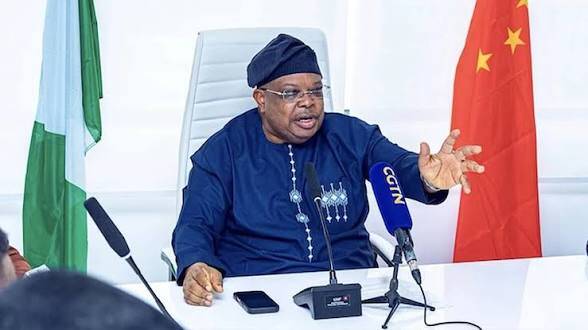
The Federal Government has announced plans to phase out electricity subsidy payments from 2027 as part of a broader reform agenda aimed at restoring financial sustainability to Nigeria's beleaguered power sector. Minister of Power, Joseph Tegbe, made the disclosure on Friday, July 31, 2026, during a media interactive session in Abuja, where he also ruled out any immediate increase in electricity tariffs and assured Nigerians that the policy would not deprive consumers of access to power services.
Tegbe stated that the government, under the directive of President Bola Tinubu, is committed to clearing the mounting legacy debts that have crippled the electricity industry while putting in place sustainable structures to prevent future accumulation. "We have the mandate of Mr President to clear the legacy debt and come up with sustainable structures to make sure this doesn't pile up any more," Tegbe said. "I promise you, next year, by God's grace, we will put a stop to this so-called subsidy in the power sector. Mr President, we will not deprive Nigeria of anything. We'll make sure Nigerian consumers continue to have power and improve power services."
The minister emphasised that the subsidy would be phased out gradually, with the government prioritising the protection of vulnerable consumers through mechanisms such as the Power Consumer Assistance Fund. "The phase-out of electricity subsidies will begin from 2027. However, there are no immediate plans to increase electricity tariffs. Our goal is to build a commercially viable power sector while protecting vulnerable consumers," he stated. He added that implementation timelines and consumer protection measures would be unveiled as the reform process progresses.
The announcement aligns with longstanding recommendations by the International Monetary Fund (IMF), which has repeatedly urged Nigeria to eliminate electricity subsidies to strengthen public finances. Successive governments have highlighted the rising cost of subsidising electricity, with the burden previously estimated at approximately N3 trillion as of February 2024. The financial strain on the sector has intensified in recent years, with the Association of Power Generation Companies (APGC) recently disclosing that the Federal Government owes generation companies roughly N6.5 trillion in outstanding obligations.
To address the accumulated debt, the Tinubu administration has introduced a series of financing measures, including the approval of a N4 trillion bond programme to offset verified obligations owed to power generation companies and gas suppliers. In January 2026, the government issued an inaugural N501 billion bond under the Presidential Power Sector Debt Reduction Programme (PPSDRP), followed by a second tranche valued at about N729 billion on July 20, 2026, to continue settling verified legacy debts. Earlier in February, President Tinubu directed all ministries, departments and agencies (MDAs) to apply existing electricity laws in determining how subsidy costs should be shared among the federal, state and local governments in the preparation of the 2026 budget.
Tegbe's latest announcement underscores the administration's determination to restructure the electricity sector, reduce its subsidy burden and improve the long-term financial viability of the industry while maintaining electricity supply to consumers. He also assured Nigerians that visible improvements in electricity supply would soon be felt nationwide, despite the enormous challenges facing the sector. "This is a sector that we all know has a couple of challenges and a lot of efforts is being put into this sector by this current administration. People might not appreciate it but very soon people will appreciate it," he said. According to him, President Tinubu has invested significantly in the sector in recent years, and efforts are underway to ensure Nigerians receive improved electricity services.
The phased removal of electricity subsidies marks a significant shift in Nigeria's power sector policy, as the government seeks to transition from a subsidy-dependent model to a commercially viable electricity market capable of attracting investment and ensuring long-term sustainability. While the announcement has raised concerns about the potential impact on consumers, the government has sought to assuage fears by ruling out immediate tariff hikes and promising to protect vulnerable consumers through targeted support mechanisms. As the reform process unfolds, the coming months will be critical in determining how the government balances the need for fiscal discipline with the imperative of ensuring affordable and reliable electricity for all Nigerians.
📩 Stone Reporters News | 🌍 stonereportersnews.com
✉️ info@stonereportersnews.com | 📘 Facebook: Stone Reporters News | 🐦 X (Twitter): @StoneReportNew | 📸 Instagram: @stonereportersnews
Add comment
Comments