

Reported by: Oahimire Omone Precious | Edited by: Oravbiere Osayomore Promise.
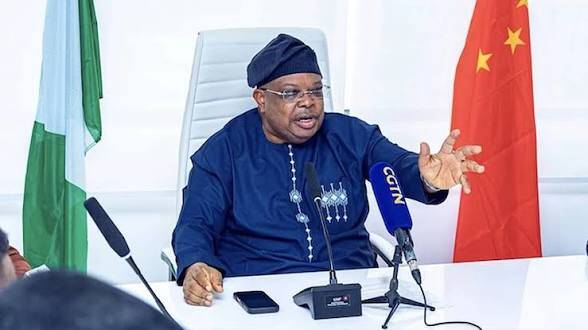
The Federal Government has firmly ruled out any immediate increase in electricity tariffs, with Power Minister Joseph Tegbe declaring that there is no policy by the current administration to raise tariffs beyond existing levels, as the government shifts focus to service improvement, universal metering, and ensuring that Nigerians pay only for the electricity they actually consume. Tegbe made the clarification on Friday, July 31, 2026, during a media interactive session in Lagos, where he pushed back against mounting speculation that had unsettled consumers and sparked public outcry over a potential fresh tariff hike.
Speaking at the national media roundtable on the resetting of Nigeria’s power sector, the minister sought to allay fears that had been fuelled by remarks made by President Bola Tinubu’s Special Adviser on Power Infrastructure, Sadiq Wanka, which had triggered widespread debate over the possibility of another increase in electricity costs. “First, there is no policy by this administration to increase electricity tariffs beyond its current level,” Tegbe stated emphatically. “Our priority is not tariff increase in the immediate term. Our priority is service improvement, universal metering, and ensuring Nigerians pay only for the electricity they actually consume.”
The minister’s assurance comes amid deepening anxiety among consumers who have already endured a series of tariff hikes since the removal of fuel subsidies, with many households and businesses struggling to cope with the rising cost of living. The Federal Government had previously increased electricity tariffs for Band A customers in April 2024, raising rates from N68 per kilowatt-hour to N225 per kilowatt-hour, and again in January 2026, when the Nigerian Electricity Regulatory Commission (NERC) approved a further increase for customers under the Band A classification. However, Tegbe made it clear that the administration was not contemplating another round of increases at this time.
Instead, the government is betting that fixing the mechanics of electricity delivery—metering, grid stability, and revenue collection—can shore up the sector’s finances without touching the tariff line. Tegbe placed metering at the heart of the reform, noting that estimated billing had fuelled decades of distrust between electricity providers and consumers. Through the Presidential Metering Initiative, Nigeria is moving decisively towards universal metering, he said, because consumers deserve transparency, fairness, and the confidence that they only pay for the electricity they actually consume. To accelerate this process, the ministry has inaugurated the Power Force, an initiative that brings together 5,000 Nigerian youths for meter installation across the country, closing the metering gap while developing a skilled workforce through the National Power Training Institute of Nigeria (NAPTIN).
The minister also clarified that the Federal Government has not removed the subsidy on electricity, contrary to public speculation. “I did not say the subsidy is gone. We are addressing the issue, and by next year we will begin implementing measures to resolve it,” Tegbe said, explaining that the government would continue to examine additional mechanisms for protecting vulnerable consumers while simultaneously improving the financial sustainability of the Nigerian Electricity Supply Industry. He noted that the government had reconciled outstanding debts owed to power generation companies, reducing disputed claims from about N6 trillion to an agreed N3.3 trillion as of March 2025, with N501.3 billion already paid and another N700 billion being processed.
On the generation front, Tegbe disclosed that Nigeria had consistently generated 5,000 megawatts of electricity over the past two weeks, attributing the improvement to enhanced operational coordination, improved plant availability, and stronger collaboration across the electricity value chain. “I now receive more prayers than curses over the improvement in electricity supply,” he quipped. However, he cautioned that generation alone would not solve Nigeria’s power challenges, stressing that electricity must be generated, transmitted, distributed, and paid for—all components must function simultaneously.
As part of the government’s sector transformation agenda, the minister announced plans for a comprehensive technical audit of the national transmission network to identify ageing assets, overloaded substations, weak corridors, and protection failures. The government will also harmonise federal and state electricity regulation in collaboration with NERC and state regulatory commissions, and commence strategic investments in three key transmission corridors—Lagos, Enugu–Port Harcourt, and Abuja–Kaduna–Kano—as part of its Grid Stabilisation Programme. Other measures include the implementation of a Super Grid Programme to strengthen the national transmission backbone, reduce technical and commercial losses, and support higher power transfers.
Tegbe expressed confidence that Nigerians would begin to see visible improvements in electricity availability within the next few months, while a stronger grid, lower technical losses, improved market discipline, and expanded electricity access would be achieved over the next two to three years. He also highlighted the increasing adoption of renewable energy, noting that many factories, offices, and commercial facilities now generate more electricity than they consume through solar installations, while a solar farm in Nigeria produces up to 100 megawatts of electricity.
“Our ambition is clear: reliable electricity that powers our homes, competitive electricity that powers our industries, sustainable electricity that attracts investment, and inclusive electricity that reaches every Nigerian,” Tegbe declared. “Resetting the sector is not about buzz words. It is about execution, discipline, coordination, and measurable outcomes. We will measure our outcomes by improvements experienced in the daily lives of Nigerians.”
📩 Stone Reporters News | 🌍 stonereportersnews.com
✉️ info@stonereportersnews.com | 📘 Facebook: Stone Reporters News | 🐦 X (Twitter): @StoneReportNew | 📸 Instagram: @stonereportersnews
Add comment
Comments