

Reported by: Oahimire Omone Precious | Edited by: Oravbiere Osayomore Promise.
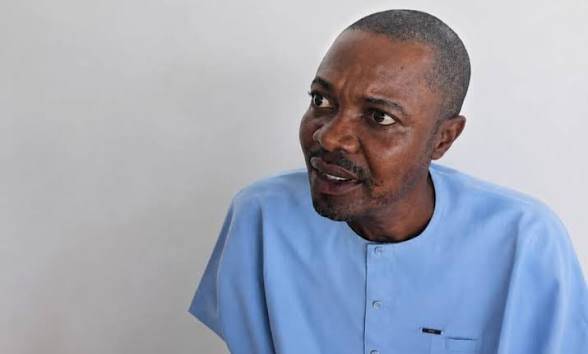
The legal defence team of Prince Adeniyi Adeyemi Matthew, the embattled self-acclaimed Director-General of the controversial Presidential Foreign Investment Promotion Council (PFIPC), has firmly rejected allegations portraying him as the sole architect of the phantom agency, arguing that multiple federal institutions, including the Central Bank of Nigeria, the Budget Office, and the Office of the Secretary to the Government of the Federation, officially recognised and interacted with the council long before the current investigations. In a press statement issued on Monday, August 3, 2026, the lawyers described the controversy surrounding the PFIPC as "a case of systemic institutional validation, not individual impersonation," insisting that their client is being unfairly singled out for actions they said involved several government agencies and institutions.
The defence team said the narrative portraying Adeyemi as "an isolated, master-mind impostor who single-handedly fabricated a federal government agency" was inconsistent with what it described as the council's extensive administrative record across different arms of government. The lawyers questioned why investigators had focused criminal proceedings on their client alone, pointing to what they described as the "verifiable administrative footprint" of the PFIPC. "If the SGF, the Accountant-General, the Central Bank of Nigeria, the Head of Service, the Budget Office, the EFCC, the National Assembly and the heads of Nigeria's primary security architecture all verified, processed, funded and officially interacted with this agency over an extended period, how can a single citizen, Prince Adeniyi Adeyemi Matthew, be held uniquely responsible for failing to detect what the entire apparatus of the State validated?" the lawyers asked in the statement. They added: "It is an administrative impossibility for an unassisted individual to mislead every arm of the federal government simultaneously without official, high-level institutional sanction."
The lawyers further argued that justice could not be served by "prosecuting the mouthpiece while ignoring the state machinery that built, budgeted and bureaucratically birthed the entity." According to the defence team, the Office of the Secretary to the Government of the Federation acknowledged official documentation relating to the council and facilitated office allocation within the Federal Secretariat Complex. The statement also alleged that the Office of the Accountant-General of the Federation and the Central Bank of Nigeria acted on official documentation by issuing administrative budget codes, granting self-accounting status, posting federal civil servants to the council, and opening operational accounts. The legal team further maintained that the Office of the Head of the Civil Service of the Federation approved the council's establishment structure and granted recruitment waivers that enabled the employment of 314 personnel. According to the statement, documentation processed by the Budget Office of the Federation and the National Assembly eventually resulted in the inclusion of a ₦1.302 billion allocation for the council in the 2026 Appropriation Act before it was signed into law by the President.
The lawyers also alleged that senior security officials attended programmes organised by the council and claimed that the Economic and Financial Crimes Commission (EFCC) allocated property to the council, requested a ₦300 million processing consideration, and later presented a plaque of recognition to its leadership. The defence team argued that the alleged involvement of numerous government institutions made it unreasonable to hold their client solely responsible for the controversy and called for a broader investigation into all the agencies involved. "Justice cannot be served by prosecuting the mouthpiece while ignoring the state machinery that built, budgeted, and bureaucratically birthed the entity," the statement added.
The defence team called on the House of Representatives Ad-hoc Committee chaired by Hon. Yusuf Gagdi to allow Adeyemi to personally appear before the panel to present his account. It argued that any report produced without hearing directly from its client would amount to a violation of his constitutional right to a fair hearing. "Any investigative outcome or final legislative report produced without affording our client a direct hearing would be fundamentally flawed, incomplete, and a breach of the constitutional right to a fair hearing (audi alteram partem)," the lawyers said. They formally requested that the panel issue the necessary administrative clearance to allow Adeyemi to appear in person and testify, warning that a final report produced without hearing from him would be incomplete and contrary to his constitutional rights. The lawyers rejected attempts to present him as "an isolated, mastermind impostor" who allegedly fabricated a government institution without the involvement of public officials or agencies.
The PFIPC controversy dates back to October 2025 when the President's Chief of Staff, Femi Gbajabiamila, petitioned the State Security Service and the Nigeria Police Force over the alleged establishment and operation of the council, which the Federal Government said was never lawfully created. Following the petition, the police filed eight charges against Adeyemi and two others, accusing them of forgery, impersonation and obtaining by false pretence. The case suffered several adjournments before the Federal High Court in Abuja. Last month, following the prosecution's oral application after Adeyemi failed to appear for his arraignment, Judge Mohammed Umar ordered his arrest. He was later arrested by the police less than 12 hours after the order and remains in police custody pending further proceedings scheduled for September 30, 2026. Meanwhile, the House of Representatives opened a separate investigation into how the council obtained official recognition, office accommodation and budgetary allocations despite questions over its legal status. At its latest hearing, the ad hoc committee directed the Inspector-General of Police, Olatunji Disu, to produce Adeyemi before lawmakers, prompting Monday's statement from his lawyers.
The defence team has made it clear that they will not allow their client to be made a scapegoat for what they describe as systemic institutional failures. As the legal and legislative battles continue, the PFIPC scandal has exposed significant vulnerabilities in Nigeria's public service system, where forged documents and counterfeit correspondence were able to secure official recognition, government accommodation, and a multi-billion naira budget allocation. The lawyers' demand for a broader investigation into the roles played by various government agencies has added a new layer of complexity to the scandal, raising uncomfortable questions about how a phantom agency was able to operate within the federal bureaucracy for an extended period without detection. For Adeyemi, who remains in police custody, the hope is that his legal team's defence will shift the spotlight from his alleged individual wrongdoing to the institutional failures that allowed the PFIPC to exist in the first place.
📩 Stone Reporters News | 🌍 stonereportersnews.com
✉️ info@stonereportersnews.com | 📘 Facebook: Stone Reporters News | 🐦 X (Twitter): @StoneReportNew | 📸 Instagram: @stonereportersnews
Add comment
Comments