

Reported by: Ijeoma G | Edited by: Oravbiere Osayomore Promise.
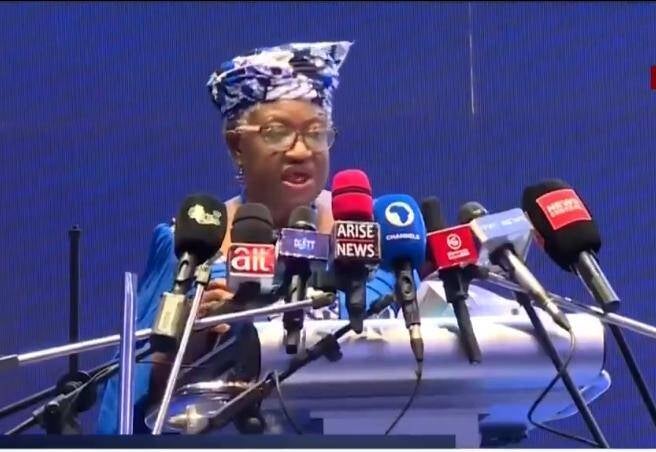
The Director-General of the World Trade Organisation, Dr Ngozi Okonjo-Iweala, has delivered a blunt assessment of Nigeria's development challenges, declaring that the country's poor maintenance culture is a major obstacle to real progress and that neither natural resources nor annual budget allocations can compensate for the failure to preserve public infrastructure. Speaking as the keynote speaker at the Delta State Economic and Investment Summit 2026 in Asaba on Monday, August 3, 2026, the former Nigerian Finance Minister told an audience of government officials, investors, and business leaders that Nigeria must urgently embrace a culture of maintenance if it hopes to achieve sustainable development.
Okonjo-Iweala, who is also a former Managing Director of the World Bank, did not mince words in her assessment of the country's approach to public assets. "The fact is that endowments alone do not add value. Budgetary allocations alone do not lead to new roads or good maintenance. We lack a maintenance culture in the country. I have to say that. I'm Nigerian but we need that," she said. Her remarks highlighted a longstanding concern among policy experts who have repeatedly warned that Nigeria's focus on launching new projects, often accompanied by elaborate ground-breaking ceremonies, is frequently followed by neglect and rapid deterioration of the very infrastructure that was built at great public expense. According to her, effective maintenance is a critical component of economic growth, as it helps maximise public investments, extends the lifespan of infrastructure, and reduces the financial burden associated with replacing neglected facilities.
The WTO chief argued that while governments often celebrate the commissioning of new roads, schools, hospitals, and power plants, far less attention is paid to preserving what has already been built. This neglect, she warned, leads to rapid deterioration and repeated expenditure on repairs or reconstruction, wasting public funds that could have been used for new development. "Endowments alone do not add value; budgetary allocations alone do not lead to new roads and good maintenance," she reiterated, stressing that development is measured not only by the size of government budgets but by the quality, durability, and functionality of projects delivered. She also called for better ports, digital infrastructure, and lower trade costs, insisting that execution is what matters and that successful execution requires focus and prioritisation.
Okonjo-Iweala's intervention came as she endorsed Delta State Governor Sheriff Oborevwori's $100 million Viability Gap Fund, describing the initiative as a bold and practical step that could help turn investment commitments into actual projects and create more economic opportunities for residents. She expressed confidence that Delta possesses all the ingredients to emerge as Nigeria's next great industrial hub, standing alongside Lagos as an engine of the national economy. "I am convinced that Delta possesses the ingredients to become Nigeria's next great industrial hub, standing alongside Lagos as an engine of the national economy. The emergence of a new growth pole here in Delta State would be good for Nigeria as a whole," she said. She urged the state to focus on sectors where it has clear competitive advantages, including agriculture, the blue economy, oil and gas, digital technology, artificial intelligence, and industrial manufacturing.
The summit, themed "Harnessing Our Strengths, Unlocking Our Potentials," brought together Vice President Kashim Shettima, pan-Africanist Professor Patrick Lumumba, and delegations from Brazil and China, among other dignitaries and investors. Okonjo-Iweala challenged Delta to position itself as a global destination for skilled labour, manufacturing, and investment by creating an ecosystem where industries can thrive and businesses can compete internationally. She advised the state not to spread its resources too thinly but to identify two or three strategic value chains where it had clear advantages and build the entire value chain from production to processing, standards, finance, and market access.
On the blue economy, she noted that Nigeria currently imports about 573,000 metric tonnes of fish and fish products worth almost $866 million every year, and that Delta could become Nigeria's blue economy hub by building fisheries, cold chain facilities, port services, and marine logistics. She also praised the state's fiscal discipline, noting that Delta ranks among Nigeria's best-performing states in debt sustainability, and urged the government to maintain fiscal prudence as a foundation for building the economy of the future. She also stressed the need to improve infrastructure, regulatory processes, and energy supply to support industrial development and attract both local and foreign investors.
Okonjo-Iweala's remarks have reignited a long-running debate about Nigeria's approach to public infrastructure, with experts and citizens alike pointing to the numerous abandoned or dilapidated roads, hospitals, and schools across the country as evidence of a systemic failure to maintain what has been built. Her message, delivered with characteristic candour, served as a powerful reminder that sustainable development depends as much on preserving existing assets as it does on creating new ones. As one of Nigeria's most respected voices on economic policy, her call for a shift from a culture of building to a culture of maintenance is likely to resonate far beyond the walls of the Asaba summit, challenging governments at all levels to take seriously the responsibility of protecting the public investments that citizens have paid for.
📩 Stone Reporters News | 🌍 stonereportersnews.com
✉️ info@stonereportersnews.com | 📘 Facebook: Stone Reporters News | 🐦 X (Twitter): @StoneReportNew | 📸 Instagram: @stonereportersnews
Add comment
Comments