

Reported by: Oahimire Omone Precious | Edited by: Oravbiere Osayomore Promise.
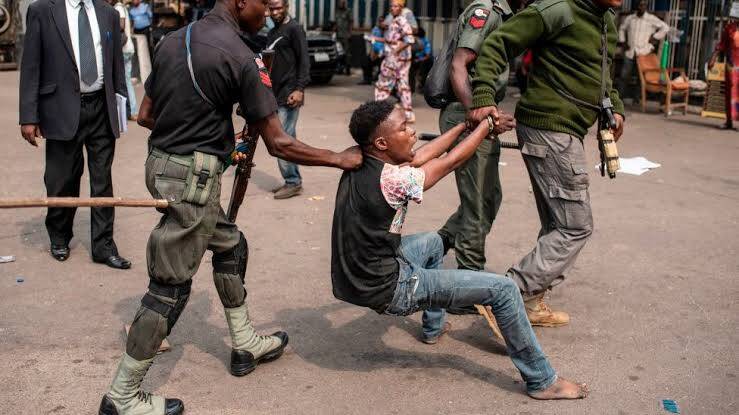
Lawyers, civil society organisations, and human rights stakeholders in Nigeria's South-East have raised fresh concerns over alleged human rights abuses in the region, accusing security agencies and other state actors of arbitrary arrests, torture, unlawful detention, intimidation, and other violations. The stakeholders, who made the call during the launch of the South-East Human Rights Bureau (SEHRB) in Enugu on July 23, 2026, demanded an end to torture, arbitrary arrests, prolonged detention, enforced disappearances, and other alleged human rights violations in the region. The bureau was established by the Rule of Law and Accountability Advocacy Centre (RULAAC) in collaboration with the Nigerian Bar Association, South-East-based civil society organisations, human rights institutions, and development partners, with support from the Ford Foundation.
The two-day regional conference held on July 23 and 24, 2026, in Enugu brought together stakeholders from government institutions, security agencies, the legal profession, civil society, academia, and human rights organisations. Participants stressed that the pursuit of security should not come at the expense of fundamental rights guaranteed under Nigeria's Constitution. According to the conference communiqué released on Tuesday, August 4, 2026, stakeholders concluded that the worsening insecurity across the five South-East states had exposed widespread allegations of arbitrary arrests, torture, unlawful detention, enforced disappearances, extrajudicial killings, shrinking civic space, and gender-based violence. They argued that while governments have a constitutional responsibility to protect lives and property, security operations that disregard human rights only deepen public distrust, fuel grievances, and ultimately undermine the peace they seek to establish.
The conference formally inaugurated the South-East Human Rights Bureau as a permanent regional institution to coordinate human rights monitoring, documentation, strategic litigation, advocacy, and collaboration among civil society groups, lawyers, journalists, researchers, traditional rulers, public institutions, and development partners. The conference also unveiled an Open-Source Reporting Platform designed to enable victims and human rights defenders to securely document alleged abuses, preserve digital evidence, verify incidents, identify patterns of violations, and support litigation and policy reforms. Participants stressed that credible documentation would strengthen accountability by ensuring that allegations of abuses are backed by verifiable evidence capable of supporting judicial and institutional interventions.
In his welcome address, RULAAC Executive Director Okechukwu Nwanguma said the bureau represented the implementation of one of the most important recommendations adopted at the 2025 regional summit. According to him, experience has shown that "lasting security cannot be achieved through force alone." He said sustainable peace requires accountable institutions, respect for constitutional rights, effective governance, citizen participation, and public confidence in state institutions. Nwanguma explained that the bureau would coordinate documentation of violations, facilitate strategic litigation, support victims' access to justice, strengthen collaboration among stakeholders, and generate credible evidence to support accountability. Participants also endorsed the establishment of a Strategic Litigation and Class Action Initiative to provide legal remedies for victims of serious human rights violations and hold alleged perpetrators accountable through the courts.
The concerns raised by lawyers and civil society organisations are consistent with findings previously published by Amnesty International concerning the human rights situation in the South-East. In July 2026, Amnesty International urged the Federal Government to conduct prompt, independent, impartial, transparent, and effective investigations into allegations of human rights violations in the region. The organisation said its assessment covered violations allegedly committed by both state and non-state actors, including security forces, the state-backed Ebube Agu security outfit, so-called "unknown gunmen," and members of the Indigenous People of Biafra (IPOB) and its armed wing, the Eastern Security Network (ESN). Presenting Amnesty's findings in Awka, researcher Maurice Chukwu said the South-East experienced widespread violence between January 2021 and December 2024, including unlawful killings, torture, and other forms of ill-treatment, enforced disappearances, and arbitrary arrests.
The push for accountability comes amid a series of legal actions challenging alleged rights abuses in the region. In June 2026, a team of legal practitioners led by Barristers Aloy Ejimakor and Patrick Agazie filed a class action suit against the Federal Government, the Attorney General of the Federation, and the Nigerian Army over what they described as the "indiscriminate proliferation" of military checkpoints across the South-East. The suit, filed at the High Court of Enugu State on June 17, 2026, on behalf of residents of the South-East, is seeking several judicial declarations and reliefs over alleged human rights violations linked to military checkpoints in Anambra, Enugu, Ebonyi, Imo, and Abia states. The plaintiffs are asking the court to declare that the establishment and operation of multiple military checkpoints and roadblocks in the region violate constitutionally guaranteed rights, including dignity, liberty, freedom of movement, privacy, and freedom from discrimination. According to the suit, the presence of multiple checkpoints has led to allegations of harassment and other rights violations, including arbitrary arrests, unlawful detention, and extortion.
The plaintiffs further alleged that some residents are subjected to profiling at checkpoints based on ethnicity, appearance, dress style, hairstyles, tattoos, language, and perceived affiliations, which they describe as unlawful and discriminatory. Among the reliefs sought, the applicants are asking the court to order a review of military checkpoint operations across the South-East, allowing only those expressly authorised by law or justified by exceptional security needs. They are also seeking an order directing the Chief of Army Staff and the Nigerian Army to establish an independent mechanism to investigate alleged misconduct at checkpoints, including cases of brutality and unlawful detention reported since 2018. The suit is demanding ₦500 billion in general and exemplary damages against the defendants for alleged violations of fundamental rights.
The development comes against the backdrop of years of insecurity in the South-East, where residents have faced violence from armed groups and criminal networks while security agencies have also been accused by rights organisations of excessive use of force and violations during counter-insurgency and security operations. The stakeholders have called for stronger collaboration among security agencies, government institutions, civil society organisations, communities, and development partners to promote early warning systems, conflict prevention, and peaceful resolution of disputes. They have also called for rights-based policing, respect for court orders, regular human rights training for security personnel, and greater judicial independence. The participants argued that the protection of civic freedoms should remain an essential part of Nigeria's democratic development, even as authorities confront genuine security threats.
As the South-East continues to grapple with security challenges, the demand for accountability and respect for human rights has become increasingly urgent. The launch of the South-East Human Rights Bureau and the Open-Source Reporting Platform represents a significant step towards strengthening human rights monitoring and documentation in the region. However, the true test will be whether these initiatives can translate into meaningful accountability and justice for victims of abuses. For the people of the South-East, the message is clear: sustainable security cannot be achieved through force alone, and lasting peace requires justice, accountability, and respect for the fundamental rights of all citizens.
📩 Stone Reporters News | 🌍 stonereportersnews.com
✉️ info@stonereportersnews.com | 📘 Facebook: Stone Reporters News | 🐦 X (Twitter): @StoneReportNew | 📸 Instagram: @stonereportersnews
Add comment
Comments