

Reported by: Oahimire Omone Precious | Edited by: Oravbiere Osayomore Promise.
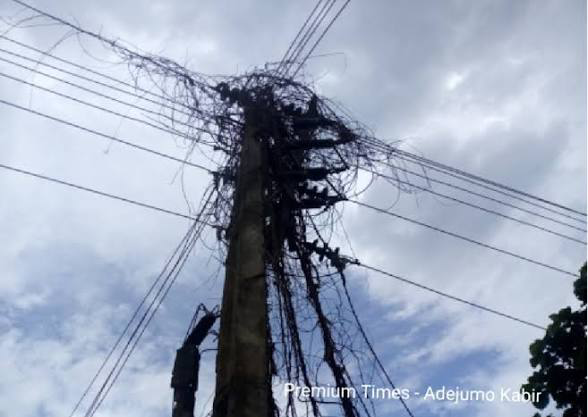
The Nigerian Independent System Operator has moved to clarify the reason behind the recent drop in electricity supply to millions of consumers in Lagos, Abuja, and the northern states, explaining that the power cuts were not caused by a shortage of generation but by a series of transmission line failures that reduced the grid's ability to move available power to where it was needed.
In a statement issued on Sunday, August 30, 2026, NISO said the changes in power allocations to distribution companies serving the Lagos, Abuja, and Northern corridors were caused by multiple transmission line outages that affected available transmission capacity and the configuration of the network at different times. Adjustments were made as part of normal system operations to keep the interconnected network within secure operating limits and prevent a wider system disturbance.
The operator stressed that having enough electricity generation does not automatically mean that power can be delivered to a particular location. "Power transfer is dependent on the availability and capacity of transmission infrastructure and the prevailing configuration of the network," NISO said.
For the Lagos axis, the situation was particularly severe. NISO said the area was hit by successive outages involving the Olorunsogo-Ayede 330kV Line 1, Benin-Egbin 330kV Line 1, and Benin-Omotosho 330kV Line 1, while the Osogbo-Ikeja West circuit remained unavailable for an extended period. The cumulative loss of these critical circuits reduced the amount of electricity that could safely be transmitted into Lagos. As a result, NISO reviewed and cut allocations to Eko Electricity Distribution Company, Ikeja Electric, and the Sakete international supply.
The northern corridor also suffered major disruptions. NISO said the Shiroro-Mararaba 330kV Line 1 tripped between August 24 and 26, affecting power allocation to Abuja and the northern part of the country because the remaining circuit had to carry the load. The situation worsened at 6:47 a.m. on August 27, when the Shiroro-Mando 330kV Line 2 and Mando-Jos 330kV Line 1 tripped simultaneously. At that point, the Mando-Jos circuit was the only available transmission line serving Jos and the North-East, while the alternative Apir-Lafia 330kV Lines 1 and 2 had been out of service for an extended period due to faults. The simultaneous outages significantly reduced transmission supply to Jos and the North-East, prompting NISO to cut allocations to Kano, Kaduna, Jos, Yola, and other affected areas.
The Abuja axis experienced a shorter but still significant disruption on August 29, when the Shiroro-Katampe 330kV Line 1 and Gwagwalada-Katampe 330kV Line 1 tripped simultaneously at 3:55 a.m.. However, both circuits were restored within hours—at 7:25 a.m. and 7:20 a.m., respectively—allowing transmission capacity to the Federal Capital Territory to be recovered.
NISO said the incidents demonstrate the interconnected nature of Nigeria's power system, where an outage on a single critical transmission circuit can affect electricity supply far beyond the location of the fault. The operator maintained that generation availability alone does not translate into deliverable power for DisCos, stressing that adequate transmission capacity and a secure network configuration are equally essential. Where transmission constraints prevent the safe transfer of available generation, NISO may temporarily redispatch generation, curtail load, or revise DisCo allocations to maintain system security and prevent wider network disturbances. The operator reiterated that the recent changes in power allocations were caused by transmission line outages, constrained transmission capacity, and prevailing network configurations—not a shortage of generation.
📩 Stone Reporters News | 🌍 stonereportersnews.com
✉️ info@stonereportersnews.com | 📘 Facebook: Stone Reporters News | 🐦 X (Twitter): @StoneReportNew | 📸 Instagram: @stonereportersnews
Add comment
Comments