

Published by Osasere Edomwonyi Ikpoba
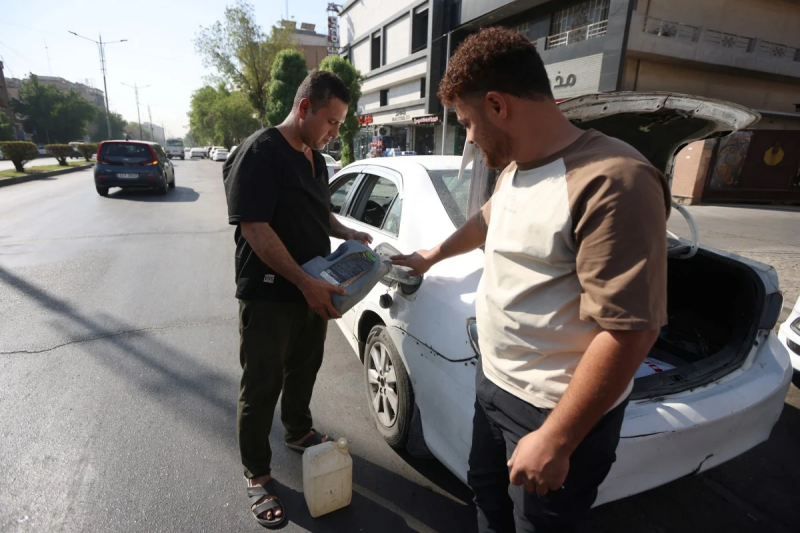
Drivers in Baghdad and cities across Iraq formed long, anxious lines outside fuel stations on Saturday, September 5, 2026, as a deepening gasoline shortage—exacerbated by the ongoing regional war—exposed the profound paradox at the heart of one of the world's largest oil-producing nations. Despite sitting on vast crude reserves and exporting millions of barrels daily, Iraq is scrambling to keep its own population moving, with the conflict choking off the imports of refined fuel its domestic refineries cannot produce enough of to meet demand.
The shortages have been felt most acutely at government-run fuel stations in Baghdad and other provinces, where long queues have been reappearing every few days as regional hostilities drag on. Ibrahim Hashem, a Baghdad resident, waited for two hours outside a fuel station on Friday without any luck, returning early the next day hoping to fill his car. “It is unreasonable that we produce so many barrels of oil a day, yet still do not have enough gasoline to meet our daily needs,” Hashem told AFP, his frustration echoing that of countless others. “We already suffer from traffic congestion because of the roads and lack of services. Now, it has become worse due to the gasoline shortage”.
The crisis is not confined to the capital. Severe gasoline shortages have spread across Kirkuk, several central and southern Iraqi provinces, and the Kurdish region, forcing motorists into lengthy queues as technical problems at refineries, delayed imports, and panic-buying strain supplies. In Kirkuk, the shortage of improved gasoline has been acute for nearly a week due to production halts at supplying refineries. One motorist waiting in line told Kurdistan24: “We live in Iraq, where they create a new problem for us every day—today it is gasoline, and yesterday it was gas”.
At the heart of the crisis lies a fundamental supply-and-demand imbalance. Iraq's average daily gasoline consumption is approximately 33 million litres, but during periods of panic, demand can surge to 38 million litres. Domestic production covers roughly 31 to 33 million litres per day, leaving a gap of about five million litres that must be filled by imports. However, the regional war has severely disrupted maritime traffic through the strategically vital Strait of Hormuz, a key chokepoint for fuel shipments into Iraq. The Oil Ministry has acknowledged that “regional events and the ongoing conflict are causing logistical challenges to tanker traffic, delaying their arrival at Iraqi ports”. Oil Ministry spokesperson Salim al-Rukabi confirmed the shortfall fluctuates daily but stands at around five million litres, with regional events creating issues for the movement of ships and causing them to be delayed in reaching Iraqi ports.
Iraq's dependence on imported fuel is a legacy of its underdeveloped refining sector. While it is OPEC's second-largest crude producer, its domestic refineries simply do not produce enough gasoline and diesel to meet national demand. Before the war, Iraq produced around four million barrels per day, exporting an average of 3.4 million barrels daily, mostly through Hormuz. But the conflict has forced Iraq to curb production and scramble for alternative routes. In a sign of the severity of the disruption, Iraq has even begun exporting crude and naphtha through Syrian ports to bypass the blocked Gulf shipping lanes. Last month, Iran's state news agency IRNA said Tehran had granted permission to “a number of Iraqi oil tankers” to pass through Hormuz, but this has not been enough to stem the crisis. The impact of the war has also been felt beyond the pump. Drone strikes have targeted oil refineries, and the conflict has prevented the delivery of chemical materials essential for gasoline production from reaching the region.
Iraqi Oil Minister Bassem Mohammed Khudair has sought to reassure the public, stating that the shortage is “temporary” and that new shipments will arrive soon to help stabilise supplies. The ministry has urged citizens to purchase only what they need and to avoid crowding fuel stations for small amounts of gasoline. But for thousands of Iraqi motorists spending hours in line, the promise of future shipments offers little immediate relief, and the underlying crisis—one in which an oil-rich nation cannot fuel its own cars—remains a paradox that no government statement can easily resolve.
📩 Stone Reporters News | 🌍 stonereportersnews.com
✉️ info@stonereportersnews.com | 📘 Facebook: Stone Reporters News | 🐦 X (Twitter): @StoneReportNew | 📸 Instagram: @stonereportersnews
Add comment
Comments