

Reported by: Oahimire Omone Precious | Edited by: Oravbiere Osayomore Promise.
Abuja, May 29, 2026 – The Nigeria Centre for Disease Control and Prevention (NCDC) has placed Lagos, the Federal Capital Territory (FCT) and eight other states on a high‑alert preparedness watch for a rare strain of Ebola, warning that the risk of the virus being imported into Nigeria has now been assessed as “high”.
In a nationwide public health advisory sent to health commissioners in all 36 states and the FCT, the NCDC said the country’s vulnerability stems from ongoing regional transmission of the Bundibugyo Ebola virus, growing cross‑border movement and the presence of major international airports, seaports and informal trade routes. The alert came after the World Health Organisation (WHO) declared the outbreak – which has already claimed 247 lives – a Public Health Emergency of International Concern (PHEIC).
The NCDC advisory, dated 27 May 2026, classified 10 states as high‑risk: Lagos, the FCT, Rivers, Kano, Enugu, Borno, Akwa Ibom, Cross River, Taraba and Adamawa. The agency said those states share characteristics that make them most vulnerable to an imported case: international airports, seaports, porous land borders, heavy population movement and major transport corridors. A separate category of “moderate‑risk” states includes Ogun, Nasarawa, Kaduna, Plateau, Kogi, Niger, Jigawa, Katsina, Bauchi, Ebonyi, Abia and Bayelsa, though the NCDC stressed that preparedness must be nationwide. “The immediate objective … is to ensure that every state and the FCT can reasonably detect, contain, and respond swiftly to any suspected case while protecting health workers and sustaining essential health services,” the agency stated.
According to NCDC data, the Bundibugyo virus has already infected 1,077 suspected people in the Democratic Republic of Congo and Uganda, killing 247 of them – a case fatality rate of about 24.6 percent. The outbreak has also triggered international concern: suspected cases have been reported in India, Canada has imposed temporary travel restrictions on residents of Uganda, DRC and South Sudan, and Uganda has reportedly introduced border closure measures. The NCDC said its dynamic risk assessment, conducted with development partners, concluded that “the overall risk of importation of the disease into Nigeria has been assessed as HIGH due to increasing ongoing regional transmission, international travel, regional population movement, major airports, seaports, porous land borders, informal crossings and trade routes.”
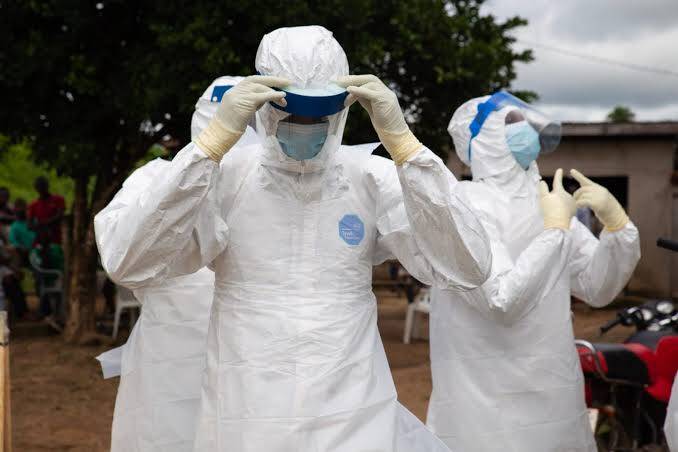
Unlike the more common Zaire Ebola strain – for which vaccines and some antibody treatments exist – the Bundibugyo variant currently has no approved vaccine or specific treatment. The NCDC warned that existing Ebola vaccines are not effective against it, making early detection, isolation, contact tracing and strict infection prevention the country’s only defences. Health workers were directed not to wait for bleeding symptoms before suspecting Ebola. “Health workers must not wait for bleeding before suspecting Ebola in any patient with compatible symptoms and relevant travel or exposure history,” the advisory said. Early signs – fever, fatigue, headache, vomiting and diarrhoea – often mimic malaria or Lassa fever, increasing the chance of missed diagnosis.
The NCDC has activated its National Emergency Operations Centre in “alert mode” to coordinate federal and state responses. All state governments have been ordered to submit readiness reports within 72 hours, activate isolation centres, intensify surveillance at all points of entry, and begin public sensitisation campaigns to counter panic and misinformation. In Lagos, Africa’s busiest commercial hub and the country’s most likely entry point, Commissioner for Health Prof. Akin Abayomi insisted that no suspected Ebola case had been detected and that the state’s biosecurity architecture remained fully activated. The Federal Government has also assured Nigerians that there is no confirmed case of Ebola in the country, while stressing that all precautionary measures have been taken.
The alert recalls Nigeria’s successful containment of Ebola during the 2014 outbreak, when an infected Liberian‑American traveller, Patrick Sawyer, arrived in Lagos and exposed dozens of people. Rapid contact tracing, aggressive isolation and public awareness helped Nigeria stop the spread within months – a feat the WHO later praised as one of Africa’s most effective containment efforts. However, the absence of a licensed vaccine or specific treatment for the Bundibugyo strain makes this outbreak far more dangerous. As the NCDC’s Director General, Dr. Jide Idris, warned, “The window for preparedness is before the first suspected case is reported.”
📩 Stone Reporters News | 🌍 stonereportersnews.com
✉️ info@stonereportersnews.com
📘 Facebook: Stone Reporters News
🐦 X (Twitter): @StoneReportNew
📸 Instagram: @stonereportersnews
Add comment
Comments